


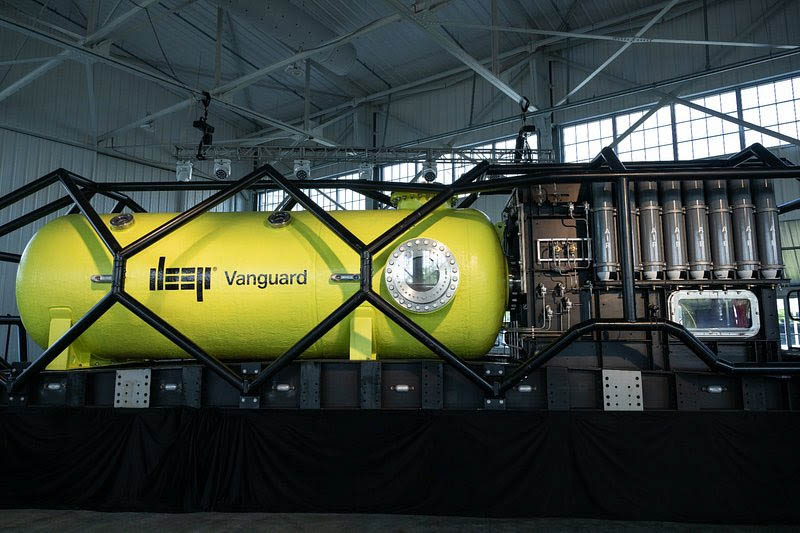

A new chapter in underwater exploration is about to begin in the Florida Keys National Marine Sanctuary, where subsea technology company DEEP has confirmed the deployment site for its Vanguard human habitat.
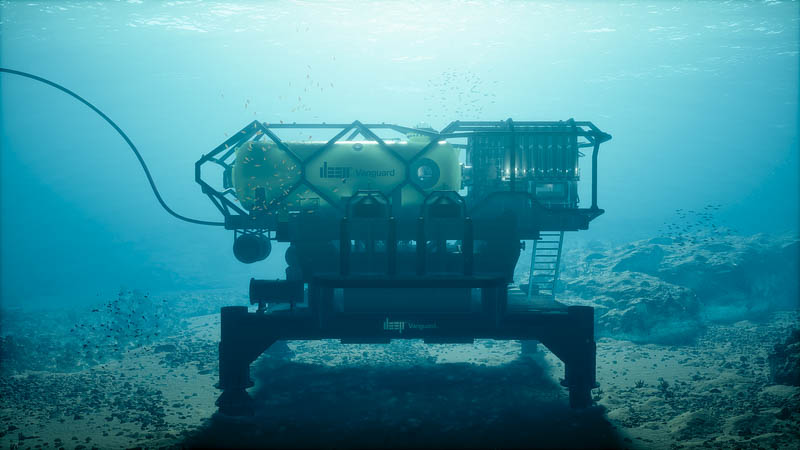
The pilot subsea habitat will be installed at Tennessee Reef, with deployment scheduled for the end of April 2026, weather permitting. Final permits for installation within the sanctuary were granted in March, clearing the way for what is being positioned as the first subsea human habitat deployed in the United States in four decades.

A Controlled Environment for Long-Term Ocean Research
The selection of Tennessee Reef was driven by a combination of environmental, operational, and scientific factors. Located within a controlled-access area of the sanctuary, the site offers a balance between ecological protection and accessibility for sustained human activity.

DEEP confirmed that detailed benthic surveys identified a suitable sand patch for installation, ensuring the habitat will not impact living coral or sensitive marine ecosystems. The reef’s proximity to both shallow coral structures and deeper surrounding waters provides a strong platform for a wide range of scientific studies, from reef monitoring to broader oceanographic research.
Vanguard: Living and Working on the Seafloor
Vanguard is designed to support up to four aquanauts living and working underwater for extended periods, enabling a continuous presence on the seafloor for days at a time. The system is intended to expand what is possible in marine science, conservation, and real-time observation of ocean environments.
The habitat will be installed on a foundational baseplate at a depth of 18 metres, with the living compartment positioned at 14 metres. Its steel structure, fitted with acrylic viewports, is engineered for sustained subsea operations while providing direct visual access to the surrounding marine environment.
The project marks a significant step toward DEEP’s broader ambition of establishing a sustained human presence underwater. Vanguard serves as a pilot platform for the company’s larger Sentinel programme, which is being developed to support larger crews and longer-duration missions.
Norman Smith, Chief Technology Officer at DEEP, described the deployment as the beginning of a new phase for subsea habitation, focused on enabling continuous human presence on the seafloor in support of science, learning, and ocean stewardship.
Shore Support and Safety Infrastructure
Operations will be coordinated from DEEP Station Florida, a shoreside facility located in Marathon in the Florida Keys. The base will support habitat operations, including aquanaut training, system monitoring, and emergency response.
Its proximity to the deployment site is a key safety consideration, allowing for rapid evacuation if required. The station will also house hyperbaric medical equipment, ensuring readiness for any diving-related incidents.
From a certification standpoint, Vanguard is working toward classification by DNV, which has provided independent technical oversight throughout the project. If achieved, this would make Vanguard the first subsea habitat to receive DNV class approval, setting a benchmark for safety and engineering standards in underwater habitation.
Jonathan Struwe, Head of Underwater Technology at DNV Maritime, noted that DEEP has aligned its systems and materials with high subsea engineering standards from the earliest stages of development.
A Milestone for US Underwater Exploration
The deployment of Vanguard represents more than a technological milestone. It signals a renewed commitment to human-led ocean exploration in US waters, particularly within protected marine environments where long-term observation is increasingly important.
By combining controlled access, advanced engineering, and scientific intent, the Tennessee Reef installation has the potential to reshape how researchers interact with reef ecosystems, shifting from short-duration dives to continuous, immersive presence.
For the diving community and the wider marine sector, the project places the Florida Keys back at the forefront of subsea innovation, reconnecting modern exploration with a legacy that has remained largely dormant for decades.
Comments