

Affiliate Disclosure: Some content on The Scuba News may include affiliate links. Find out how this supports our work.
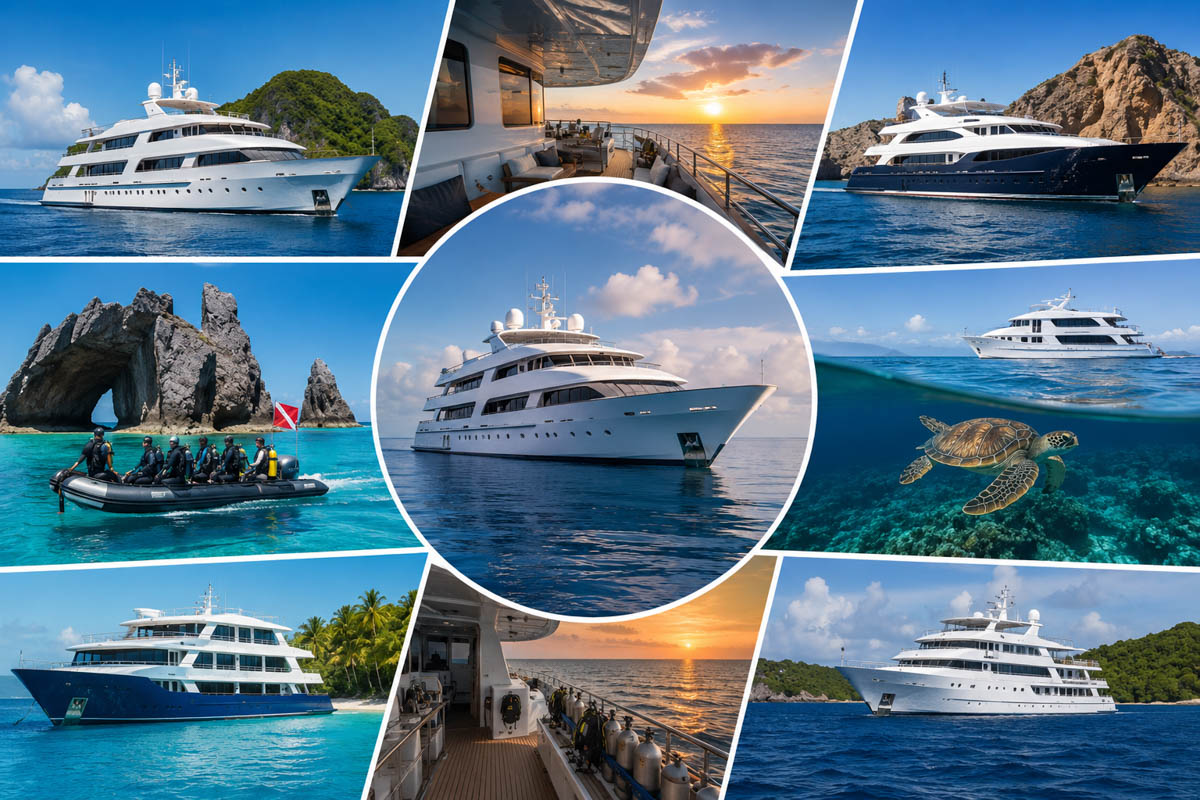
For many divers, booking a liveaboard represents the ultimate scuba diving adventure. Waking up surrounded by pristine reefs, diving remote sites that day boats cannot reach, and spending every day immersed in the underwater world is often what transforms a diving holiday into a truly unforgettable experience.
Yet with hundreds of liveaboards operating across destinations such as the Red Sea, Maldives, Indonesia, Galápagos, Raja Ampat, the Philippines, Socorro, and beyond, choosing the right vessel can feel overwhelming.
Prices range from a few hundred dollars to many thousands. Some boats cater to beginner divers seeking comfortable reef diving, while others focus on challenging currents, pelagic encounters, and expedition-style adventures. Cabins, facilities, itineraries, and diving schedules vary enormously.
The good news is that finding the perfect liveaboard becomes much easier once you understand the key factors that separate one experience from another.
Start With Your Diving Goals
Before comparing boats, determine what you want from the trip itself.
Many divers begin their search by looking at vessels when they should really be looking at experiences.
Ask yourself:
- Do you want to see sharks?
- Are you hoping to photograph macro life?
- Is wreck diving your priority?
- Do you want large pelagic encounters?
- Are you looking for relaxed diving with plenty of comfort?
- Is this your first liveaboard?
A diver seeking manta rays in the Maldives will require a very different itinerary from someone wanting hammerhead sharks in the Galápagos or historic wrecks in the Red Sea.
The destination should always drive the boat selection process, not the other way around.
Match the Trip to Your Experience Level
One of the biggest mistakes divers make is booking a trip beyond their comfort level.
Some itineraries are specifically designed for experienced divers and may involve:
- Strong currents
- Drift diving
- Negative entries
- Remote locations
- Multiple dives per day
- Challenging sea conditions
Destinations such as Raja Ampat, Socorro, Cocos Island, and the Galápagos can be extraordinary, but they are often best enjoyed by divers with solid experience and confidence in the water.
Conversely, many Red Sea, Maldives, Thailand, and Caribbean liveaboards offer excellent options for less experienced divers.
Always check:
- Minimum certification requirements
- Minimum logged dives
- Nitrox recommendations
- Advanced certification requirements
A trip that matches your abilities will almost always be more enjoyable than one that constantly pushes your limits.
Understand the Different Types of Liveaboards
Not all liveaboards offer the same style of experience.
Budget Liveaboards
Budget vessels focus on delivering excellent diving at the lowest possible price.
Expect:
- Functional cabins
- Shared facilities in some cases
- Simpler meals
- Fewer luxury amenities
For many divers, particularly those who spend most of their time underwater, budget liveaboards represent exceptional value.
Mid-Range Liveaboards
This category represents the majority of vessels worldwide.
Expect:
- Private cabins
- Comfortable lounges
- Good food
- Well-equipped dive decks
- Professional crews
These boats often provide the best balance between price and comfort.
Luxury Liveaboards
Luxury vessels focus on premium experiences.
Features may include:
- Spacious suites
- Fine dining
- Spa services
- Premium beverages
- Smaller guest-to-crew ratios
- High-end photography facilities
Luxury liveaboards can be ideal for divers travelling with non-diving partners or those celebrating a special occasion.
Cabin Selection Matters More Than Many Divers Realise
Many first-time liveaboard guests choose the cheapest cabin available without considering location.
Cabin placement can significantly impact comfort.
Lower Deck Cabins
Usually the most affordable option.
Benefits include:
- Lower pricing
- Reduced motion in rough seas
Potential drawbacks:
- Smaller portholes or no windows
- Engine noise on some vessels
Main Deck Cabins
Often provide:
- Better natural light
- Easier access to communal areas
- Larger layouts
Upper Deck Cabins
Typically offer:
- Best views
- More privacy
- Premium positioning
For divers prone to seasickness, lower deck cabins near the vessel’s centre often provide the most stable ride.
Evaluate the Diving Schedule
One liveaboard’s idea of intensive diving may differ significantly from another’s.
Most itineraries offer between three and five dives per day.
Before booking, review:
- Total number of dives
- Night diving opportunities
- Surface intervals
- Typical dive durations
- Availability of nitrox
Photographers often appreciate longer dive times and more flexible schedules.
Meanwhile, some divers prefer fewer dives and more relaxation.
There is no right answer, only the option that best suits your style.
Research the Itinerary Carefully
Many destinations offer multiple routes.
The Red Sea provides an excellent example.
Different itineraries may focus on:
- Northern wrecks
- Brothers Islands
- Daedalus Reef
- Elphinstone Reef
- Deep South routes
- Combined itineraries
Similarly, Indonesia offers entirely different experiences between Raja Ampat, Komodo, Alor, Banda Sea, and the Forgotten Islands.
Don’t simply book a destination. Book the specific route that aligns with your interests.
Read Recent Guest Reviews
Marketing photos show a boat on its best day.
Guest reviews reveal what the experience is really like.
Pay close attention to comments regarding:
- Crew professionalism
- Food quality
- Cabin cleanliness
- Safety standards
- Dive guide quality
- Equipment maintenance
Look for patterns rather than individual complaints.
If multiple reviewers mention the same issue repeatedly, it may indicate a genuine concern.
Likewise, consistent praise often highlights a vessel’s strengths.
Safety Should Never Be an Afterthought
A well-run liveaboard should make safety a visible priority.
Look for:
- Oxygen availability
- Emergency communication systems
- Life rafts
- Safety briefings
- Experienced dive guides
- Regular maintenance
Reputable operators are usually transparent about their safety procedures.
If information appears difficult to find, ask questions before booking.
Consider Group Size
Guest numbers can dramatically influence the experience.
Smaller boats often provide:
- More personalised service
- Less crowded dive decks
- More intimate atmospheres
Larger vessels may offer:
- Greater stability
- More amenities
- Additional facilities
Neither option is inherently better.
Some divers love the social atmosphere of larger boats, while others prefer smaller expedition-style experiences.
Think Beyond the Advertised Price
The cheapest advertised fare is rarely the final cost.
Additional expenses may include:
- Marine park fees
- Port fees
- Fuel surcharges
- Equipment rental
- Nitrox packages
- Crew gratuities
- Transfers
- Domestic flights
Always calculate the total trip cost before making comparisons.
A slightly more expensive liveaboard may ultimately offer better value once all extras are considered.
Booking at the Right Time
Many of the world’s most popular liveaboards sell out months in advance.
Peak seasons in destinations such as Raja Ampat, the Maldives, Galápagos, and Socorro often fill quickly.
Booking early generally provides:
- Better cabin selection
- More itinerary choices
- Lower pricing
- Access to promotional offers
Last-minute deals do exist, but flexibility is usually required.
Why Many Divers Use Liveaboard.com
Comparing hundreds of vessels individually can be time-consuming.
Many divers use Liveaboard.com because it allows them to:
- Compare destinations worldwide
- Read verified guest reviews
- Filter by budget
- Compare itineraries
- View cabin options
- Check availability
The platform brings together liveaboards from many of the world’s leading dive destinations, making it easier to identify vessels that match your budget, experience level, and travel goals.
The Bottom Line
Choosing the right liveaboard is about far more than finding the lowest price or the newest boat.
The most memorable trips happen when the destination, itinerary, vessel, crew, and diving style all align with your personal goals.
Take the time to research destinations, evaluate itineraries, read reviews, and understand exactly what kind of diving experience you’re seeking.
Do that, and you’ll dramatically increase your chances of stepping aboard a liveaboard that exceeds expectations and delivers the adventure you’ve been dreaming about.
