





U.S. officials say stomp it!

While the “stomp it” mantra is famous in the U.S., the advice in Ontario as of May 2026 is slightly different because the insect is not yet considered “established” here. In the U.S., they are in “kill on sight” mode; in Canada, we are still in “detect and report” mode.

A menace to over 100 species, this invasive pest poses an especially grave danger to vineyards and winemakers.

If you see a Spotted Lanternfly (SLF) in Ontario, here is the official Canadian game plan:
1. Don’t Just Stomp—Capture
Because the Canadian Food Inspection Agency (CFIA) needs to verify every sighting to track the spread, they need the physical evidence.
- Snap It: Take a high-quality photo of the insect.
- Catch It: If possible, place it in a sealable container or a baggie. You can put it in the freezer to kill it humanely while preserving the specimen for officials.
- Report It: Submit your finding immediately to the CFIA online or via the iNaturalist app.
2. The Current Situation (May 2026)
Recent reports, including a notable discovery in St. Catharines earlier this month, involved dead specimens found in shipments of planting pots from Pennsylvania.
- Status: There are currently no known reproducing populations in Canada.
- The Risk: These bugs are “hitchhikers.” They don’t fly well across the Great Lakes, but they cling to cars, trucks, and shipping crates.
- The Target: They are a massive threat to Ontario’s $5.4 billion grape and wine industry, as well as apples, hops, and maple trees.
3. What to Look For
The Spotted Lanternfly changes appearance throughout the year:
- Spring (Now): Look for nymphs. They start as tiny black beetles with white spots and eventually turn bright red with white spots and black stripes.
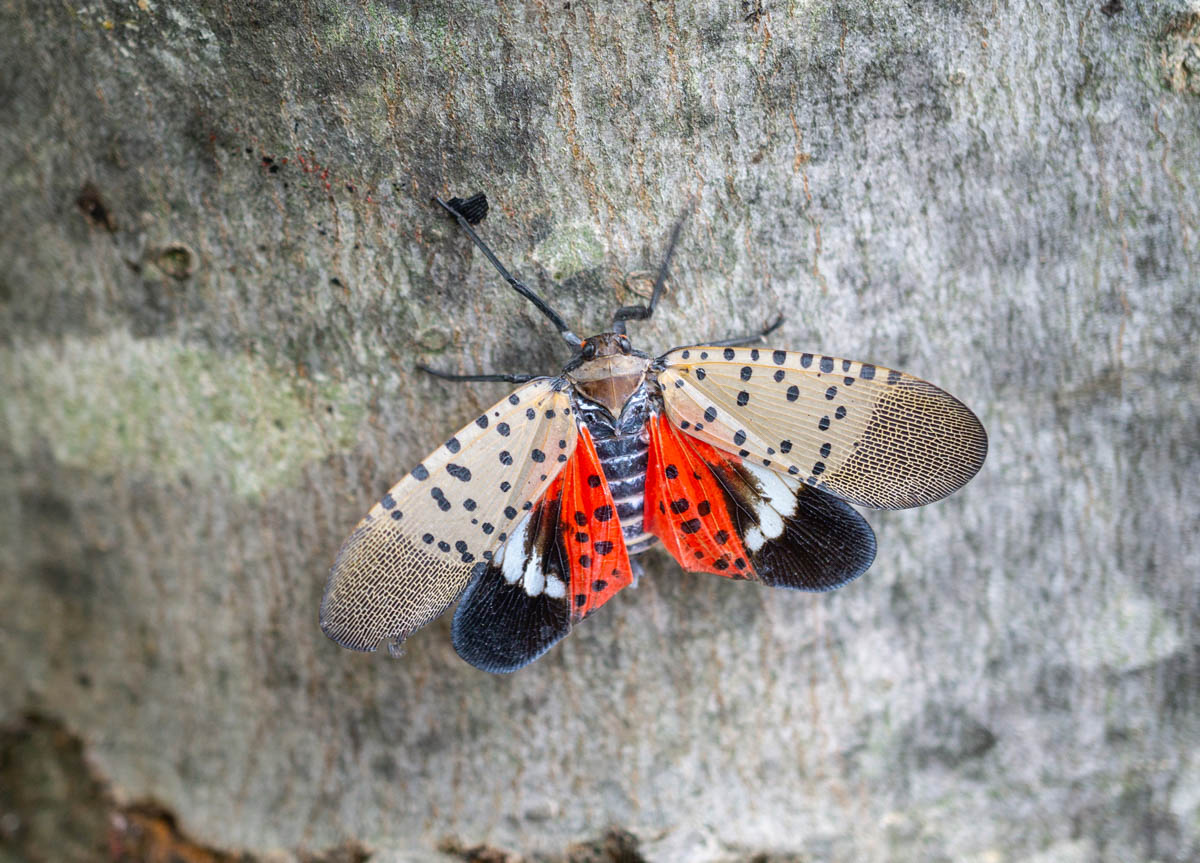
- Summer/Fall: Adults are about 1 inch long. When resting, they look greyish with black spots. When they fly, they reveal bright red hind wings.
- Year-round: Look for egg masses. They look like flat, brownish-grey smears of mud on tree bark, smooth stones, or even the undersides of vehicles.
4. The “Tree of Heaven” Connection
The lanternfly’s favorite host is another invasive species: the Tree of Heaven (Ailanthus altissima). If you have these trees on your property, you are at a higher risk of seeing the lanternfly. Experts recommend removing these trees to take away the lanternfly’s “home base.”
The Bottom Line: In the U.S., stomping is the civic duty. In Ontario, capturing and reporting is the priority so the CFIA can stop a full-blown infestation before it starts.
Comments