



Dive into the depths of Conception Bay, Newfoundland, with us on Bluefin Adventures! In this episode, my dive buddy, his wife and I head out on a friend’s boat for an underwater foraging mission. We hit the ocean floor to collect fresh scallops while encountering some truly incredible marine life along the way. Whether you’re here for the local catch or the stunning underwater scenery, there’s something for every ocean lover.
Scallops are a nutritional powerhouse. Because roughly 80% of their calorie content comes strictly from protein with under 1 gram of fat per 3-ounce serving, they rank among the leanest protein sources available in any diet.
Key Nutritional Highlights
- Vitamin B12: Essential for brain function, nervous system health, and red blood cell production.
- Trace Minerals: High in zinc, magnesium, and selenium. Selenium acts as a powerful antioxidant that protects cells against oxidative damage and supports thyroid function.
- Heart-Healthy Omega-3s: Though low in total fat, a high percentage of that fat consists of EPA and DHA omega-3 fatty acids.
- Low Heavy Metals: Unlike larger predatory fish (like swordfish or tuna), scallops sit lower on the food chain and generally contain significantly lower levels of mercury.
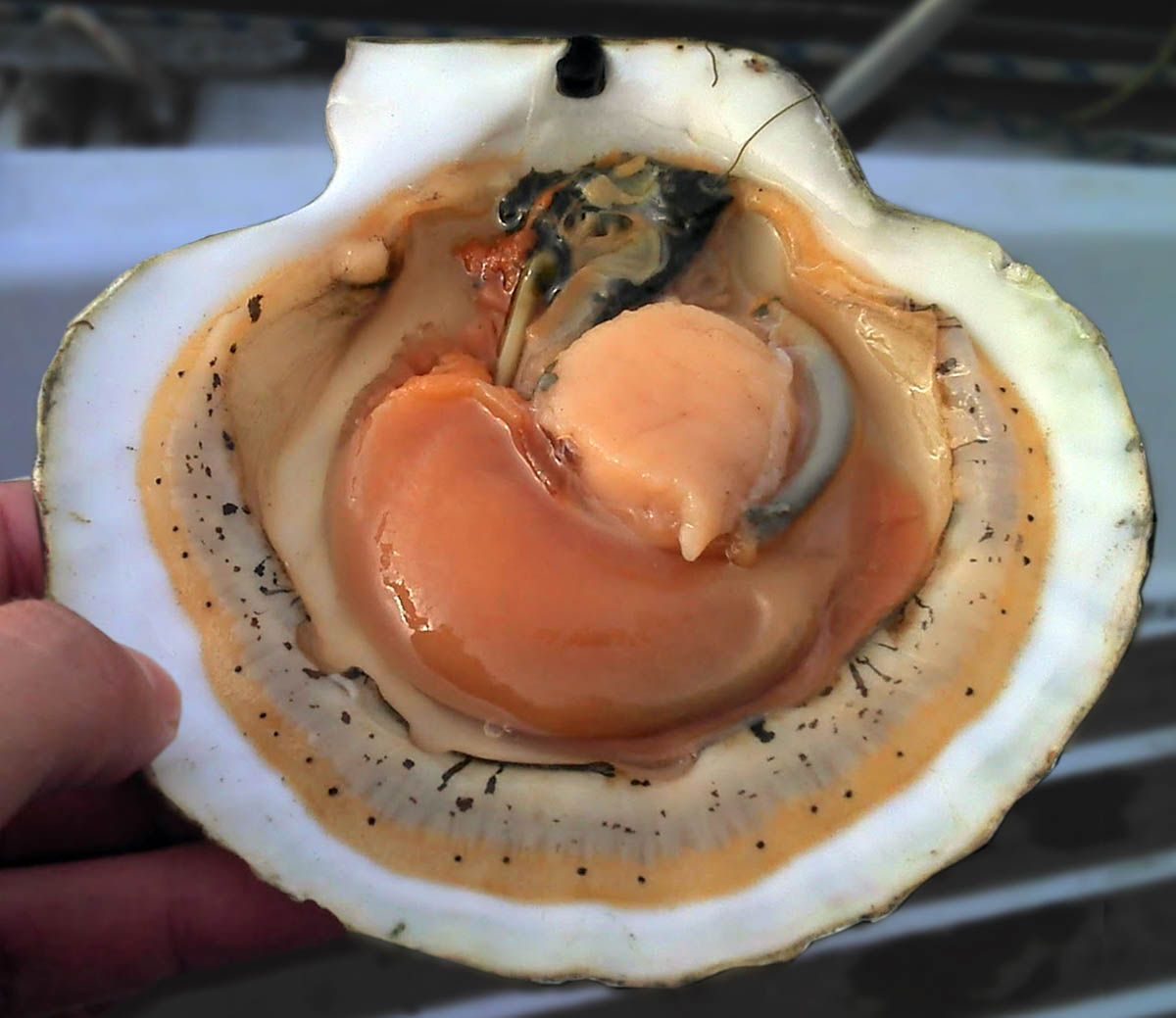
Scallops belong to the taxonomic family Pectinidae within the superfamily Pectinoidea, representing a globally distributed group of marine bivalve molluscs inhabiting oceans worldwide without ever entering freshwater environments. While most bivalves remain sessile, scallops are distinctly mobile and primarily live recumbent on sandy seafloor substrates, though some species cement to rocks as adults or attach to seagrass using secreted byssal threads.
When detecting predators like starfish, scallops actively escape by repeatedly clapping their shells together to create jet propulsion, driving themselves through the water in swift, erratic bursts. To monitor their environment and detect movement, they possess a surprisingly well-developed nervous system paired with a ring of dozens of simple, light-sensitive blue eyes lining the margin of their mantles.
Scallop fishing throughout Newfoundland and Labrador
The management of both recreational and commercial scallop harvesting is overseen strictly by Fisheries and Oceans Canada (DFO). Recreational participants must obtain a valid license and adhere to a daily bag limit of 50 scallops, with a maximum possession limit set at 100. Harvest methods for recreational fishers are restricted to environmentally conscious approaches, including free-diving, scuba diving, dip-netting, or deploying a single hand-pulled drag per boat without any mechanical or hydraulic assistance.
The recreational season generally spans most of the year, running from early January through December 31. Hand-gathering via diving remains a favored practice for its sustainability in shallow coastal waters. Meanwhile, commercial harvesting and smaller permitted operations rely on boat-towed drags. These commercial efforts are bound by stringent controls, including designated Scallop Fishing Areas (SFAs), strict regional seasons, and predetermined Total Allowable Catches (TAC).
Comments