



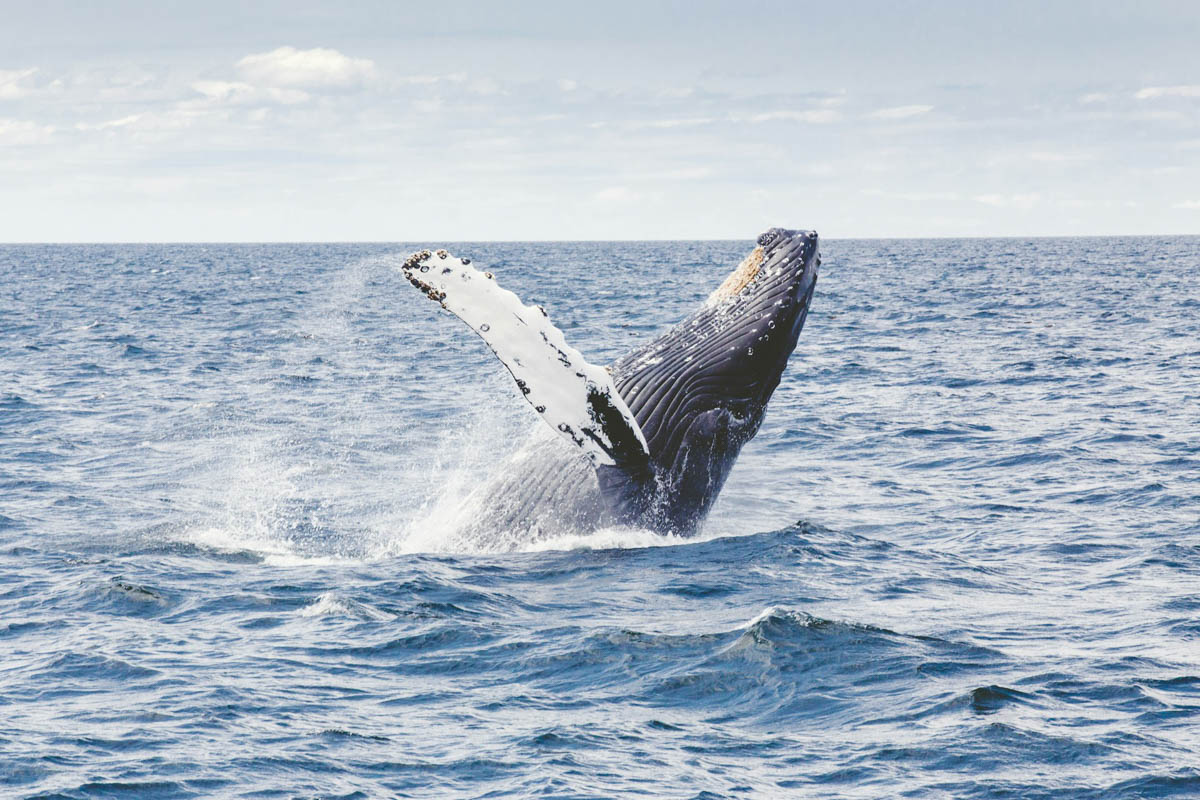

One of the world’s most unusual humpback whale populations could eventually be recognised as a distinct subspecies after new genetic research found strong evidence that Arabian Sea humpbacks have followed their own evolutionary path for tens of thousands of years.
The peer-reviewed study published in Frontiers in Marine Science compared Arabian Sea humpback whales with the three currently recognised humpback whale subspecies and found substantial genetic differentiation between them.
Researchers say the findings support recognition of a fourth subspecies, which would be named Megaptera novaeangliae indica.

Formal recognition has not yet taken place. The proposed classification will need to be considered through the established taxonomic process, including the Society for Marine Mammalogy’s Committee on Taxonomy.
That distinction is important because the Arabian Sea whales are already exceptional among the world’s humpbacks. Unlike other known populations, they do not undertake the enormous seasonal migrations normally associated with the species.
Instead, they remain in tropical and subtropical waters throughout the year, feeding and breeding within the same broad region.
More Than 25 Years Of Research In Oman
The latest findings build on more than 25 years of whale research in Oman.
The study was led by the Wildlife Conservation Society in collaboration with the Environment Society of Oman, Oman’s Environment Authority and other international partners.
According to the Wildlife Conservation Society’s announcement of the research, researchers analysed mitochondrial DNA from 2,285 humpback whales sampled across the species’ global range.
They found high levels of genetic differentiation between the Arabian Sea population and the recognised humpback whale subspecies found in the North Atlantic, North Pacific and Southern Hemisphere.
The Arabian Sea population also displayed the lowest genetic diversity among the ocean regions examined.
Lead author Dr Rita Amaral said the whales have long presented scientists with an unusual ecological puzzle, with the latest results indicating that Arabian Sea humpbacks have followed an independent evolutionary trajectory for tens of thousands of years.
The researchers estimate that lineages within the Arabian Sea population diverged approximately 43,000 to 113,000 years ago.
Whales That Do Not Make The Great Migration
Humpback whales are famous for undertaking some of the longest migrations of any mammal.
Most populations move between productive higher-latitude feeding areas and warmer tropical or subtropical breeding grounds.
Arabian Sea humpbacks appear to have broken that pattern.
Research indicates that they remain within tropical and subtropical waters throughout the year and follow a Northern Hemisphere breeding cycle.
Their unusual behaviour is accompanied by another distinction: their song.
Arabian Sea humpback whales produce distinctive songs recorded within the region, adding behavioural evidence to the growing genetic case that this population has remained isolated from other humpback whales.
Research into the population’s movements has also reinforced its unusual nature. A satellite-tracking study published in Frontiers in Marine Science examined whales tagged off Oman and highlighted the Arabian Sea population’s unusual residency within tropical and subtropical waters.
An 1883 Whale Helps Solve The Puzzle
Part of the evidence supporting the proposed subspecies has come from an animal collected more than 140 years ago.
Researchers examined the historic type specimen described as Megaptera indica in 1883. The whale was collected near Basra, Iraq, and material from the specimen is held by the Muséum National d’Histoire naturelle in Paris.
Morphological examination and ancient DNA analysis confirmed that the specimen was a humpback whale.
More importantly, its genetics linked it closely with Arabian Sea humpback whales living today.
That connection provides the basis for the proposed scientific name Megaptera novaeangliae indica if the population ultimately receives formal subspecies recognition.
The historic specimen therefore provides an unusual bridge between 19th-century natural history and modern genetic research.
A Tiny And Vulnerable Population
The genetic distinction also highlights how vulnerable these whales may be.
Research cited in the recent scientific literature estimates an abundance of only around 82 Arabian Sea humpback whales off Oman, with considerable uncertainty around that figure.
The latest genetic research also points to low genetic diversity within the population, adding to concerns about its long-term resilience.
The whales face multiple human pressures across their range.
These include entanglement in fishing gear, collisions with vessels, underwater noise and pollution.
Changes affecting monsoons and ocean productivity could create additional pressure by altering the distribution and availability of prey.
For a population already thought to number only in the dozens within its best-studied area, even relatively small increases in mortality could carry significant consequences.
Conservation Across The Arabian Sea
Protecting Arabian Sea humpback whales presents a challenge extending far beyond the waters of any single country.
The Arabian Sea Whale Network said the new genetic evidence reinforces the population’s unique evolutionary history and strengthens the scientific basis for coordinated conservation across the region.
Researchers and conservation organisations have been working towards an Arabian Sea Humpback Whale Conservation Management Plan involving governments, scientists and other stakeholders across the whales’ range.
Oman has played a particularly important role in building the scientific evidence.
Research there has developed from small-boat surveys, photographic identification and tissue sampling into a much broader programme incorporating satellite tracking, acoustic monitoring, genetics and health assessments.
Samples collected during those earlier expeditions are now helping scientists answer questions that could ultimately change the formal classification of the humpback whale itself.
A Fourth Humpback Whale Subspecies?
Three humpback whale subspecies are currently recognised, associated with the North Atlantic, North Pacific and Southern Hemisphere.
The Arabian Sea population has not yet joined them.
What the new research provides is a substantially stronger scientific case for recognising it separately.
Genetics, behaviour, ecology, song and evidence from a 19th-century specimen increasingly point in the same direction: Arabian Sea humpback whales represent an unusually isolated lineage that has persisted for tens of thousands of years.
Whether they formally become Megaptera novaeangliae indica will depend on the taxonomic review process.
Whatever the eventual classification, however, the conservation implications are already significant.
The Arabian Sea holds a very small population of humpback whales unlike any other known population in the world, and preserving that evolutionary distinction will require coordinated protection across its range.
Comments