



Dive centres with their own swimming pools could be sitting on an asset capable of doing considerably more than supporting scuba courses.
ScubaFit has begun promoting a collaboration with aquatic fitness company Aqua Body Strong that aims to help dive centres, scuba schools, resorts and other aquatic facilities introduce fitness programming alongside their traditional training activities.
The concept brings together ScubaFit founder Gretchen M. Ashton’s long-running work in diver fitness with a range of pool-based fitness programmes and equipment developed by Aqua Body Strong.
Ashton is now an instructor for Aqua Board and Aqua Combat classes and believes the combination could give dive businesses another way to use pool facilities while also encouraging fitness, water confidence and continued engagement among divers.
“The pool is one of the most valuable assets a dive center has,” Ashton said in announcing the initiative. “Aqua Body Strong gives operators a practical and exciting way to use that space for fitness, confidence-building, and community engagement.”
Beyond Scuba Training
For dive businesses that own or have regular access to pools, the traditional commercial model tends to revolve around confined-water scuba training, try-dives and skills development.
The proposition being put forward by ScubaFit and Aqua Body Strong is that those same facilities could potentially accommodate a much wider programme of activity.
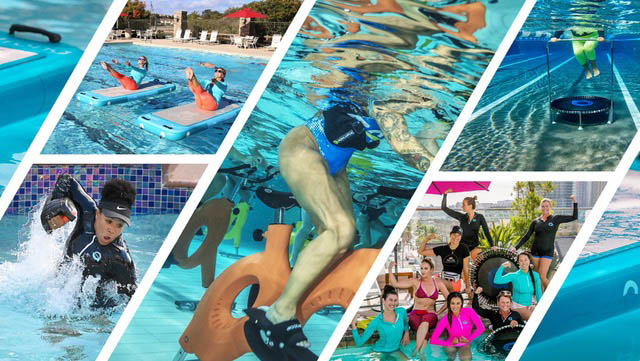
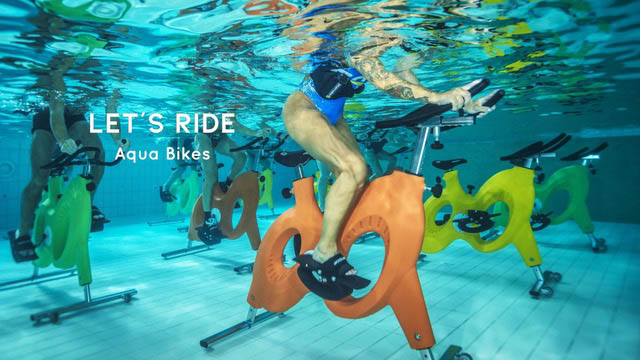
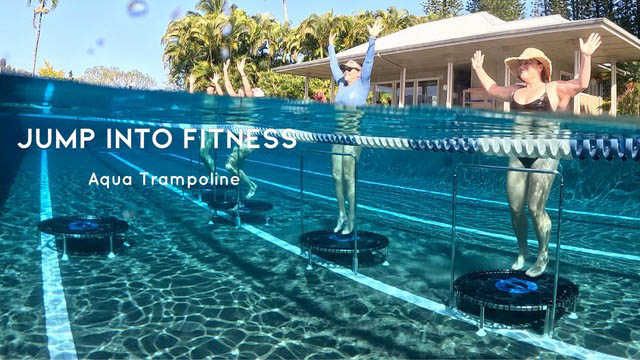
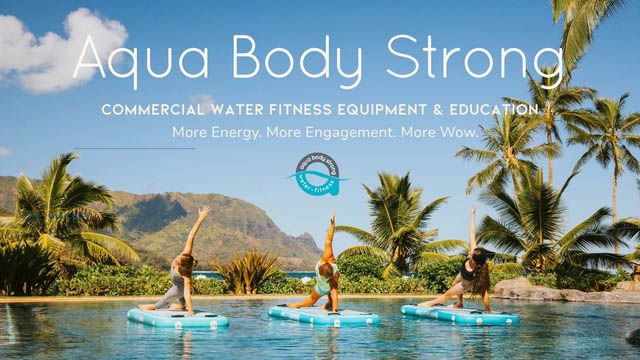
Founded by Gia Lucy in 2017, Aqua Body Strong combines specialised aquatic equipment with instructor certification and training and a range of structured class formats. Equipment options include aqua boards, aqua bicycles, aqua treadmills, aqua trampolines and Aqua Combat bags and gloves.
The company markets its systems to aquatic centres, resorts and other facilities as a means of broadening pool programming.
Bringing that model into diving creates an interesting crossover.
A dive centre could potentially use aquatic fitness sessions not only for existing divers but also for people who have no immediate intention of learning to scuba dive. That creates the possibility of bringing a different audience through the doors while making greater use of facilities that may otherwise have periods of relatively low utilisation.
Whether that translates into meaningful additional revenue will inevitably depend on factors including the individual facility, local demand, staffing, pool availability and the cost of introducing programmes and equipment.
But the idea comes at a time when many operators across the dive industry continue to look for ways to maintain relationships with customers beyond individual certification courses and occasional dive trips.
Fitness And Diving
The connection between physical fitness and diving is not new territory for Ashton.
Through ScubaFit, she has developed fitness programmes specifically around diving, while Ashton co-authored the ScubaFit Diver Distinctive Specialty with dive professional Stephen Mendel.
PADI has previously highlighted Ashton’s work and the development of the distinctive specialty, which grew from her efforts to combine her backgrounds in fitness and scuba diving.
The latest Aqua Body Strong initiative takes that principle in a somewhat different direction.
Rather than concentrating solely on preparing an individual diver physically, it asks whether fitness programming could become part of the wider operation of a dive business.
Structured pool sessions could potentially provide conditioning and cross-training opportunities for divers between trips and courses while also creating activities capable of reaching the wider local community.
Aqua Body Strong says its programmes are designed around areas including strength, balance, endurance and coordination, with its equipment and instructor education targeted at commercial aquatic facilities.
For dive operators, water confidence provides another potential connection between the two worlds.
Someone attending aquatic fitness sessions may never become a scuba diver, but bringing more people into a dive centre’s aquatic environment also introduces the business to customers it might otherwise never reach.
A Different Way To Look At The Pool
That makes the initiative as much a business proposition as a fitness programme.
Dive centres have traditionally generated income through combinations of diver training, equipment sales, servicing, travel and diving activities. Facilities with pools have the additional challenge of ensuring that an expensive physical asset is being used effectively.
ScubaFit and Aqua Body Strong are effectively proposing another potential use for that infrastructure.
For Ashton, it is also an extension of a much longer effort to bring fitness more firmly into the diving conversation.
ScubaFit says its diver education is available beyond PADI instructors and that its course is also recognised for continuing education within the fitness industry. The organisation has spent years developing diver-specific workouts, educational material and instructor resources.
Facilities interested in introducing the Aqua Body Strong concept can find information about equipment, instructor education and pool programming through Aqua Body Strong, while ScubaFit provides further information about fitness specifically developed around scuba diving.
The Aqua Body Strong collaboration now places some of that thinking within a broader commercial context.
There is still a much bigger question for the diving industry: whether fitness and conditioning should become a more established part of the relationship between dive businesses and their customers, rather than something divers largely pursue independently.
That is a subject The Scuba News intends to explore separately.
For now, the ScubaFit and Aqua Body Strong initiative provides one example of how a dive centre pool might be viewed not simply as somewhere to teach scuba skills, but as a facility capable of supporting a much wider programme of activity.
Comments