

When ten scuba cylinders leave a fill station and only nine come back, a simple count cannot tell the whole story. Michael John Snow explains why identifying individual equipment, recording what is known and communicating between shifts can make all the difference to a dive centre’s daily operations.
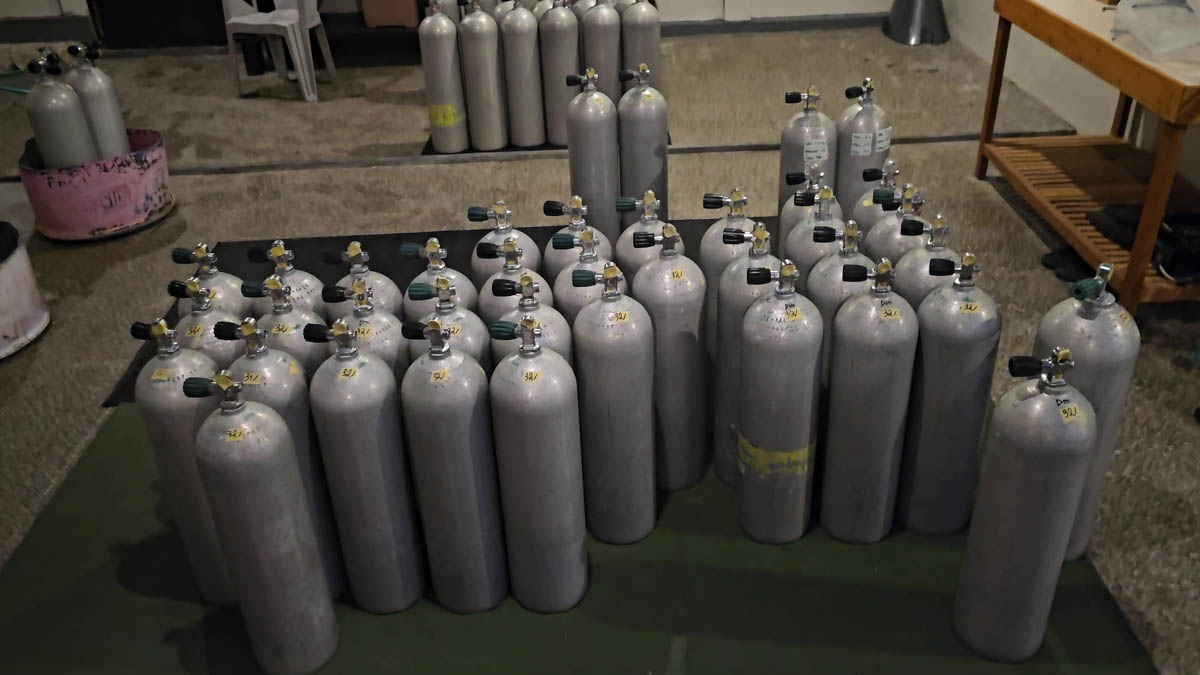
There’s a cylinder standing a little apart at the front right of the green mat in this picture. If you were helping me load the van, I could point and say, “That one too, please.”
If you rang me from the quay later to ask which one I meant, I’d be stuck.
That’s why I read the number on the shoulder while the cylinder is still in front of me.
Ten Cylinders Go Out. Nine Come Back.
Say I’m looking after the equipment at a fill station. A local dive shop, let’s call it Harbour Lane Diving, wants ten cylinders for its boat.
Ben, the driver, reads the numbers to me as we load the van. I put each one against the shop’s name and the date. Today they run from 21 to 30.
That afternoon, Ben brings nine back.
“I thought we cleared the boat,” he says. “Which one are you after?”
We check them off as they come out of the van. The last one he hands me is 23.
I look down the list.
“It’s 27, Ben. Would you have a look when you get back?”
Even if we’d counted ten, I’d still want to read the numbers. One cylinder from the boat’s own rack could have made the count come out right.
He’d have mine and I’d have his.
Record What You Know, Not What You Assume
Ben reckons cylinder 27 is still on board.
If I write “on boat”, whoever opens up tomorrow is entitled to think somebody has seen it there.
So I put down what we’ve actually agreed:
“Ben to check the rack. Mike to ring before closing.”
He knows which cylinder he’s looking for, and I’m the one who owes him a call.
When I ring, he’s found it. He’ll bring it in with the morning collection.
I add that to the handover and leave the return date blank.
The skipper wants ten cylinders for the first dive, so I ask the fill operator to put a spare aside.
Now the boat can load even if Ben is late.
A Register Is Only Useful If People Can Follow It
In Excel, I’d give each cylinder a row for this hire, with the shop’s name and the dates out and back.
On paper, I can circle the one number I haven’t crossed off.
The important part isn’t whether the record is kept on a screen or in a notebook.
It’s whether the person opening tomorrow can tell which cylinder is outstanding, who has agreed to look for it and what happens next.
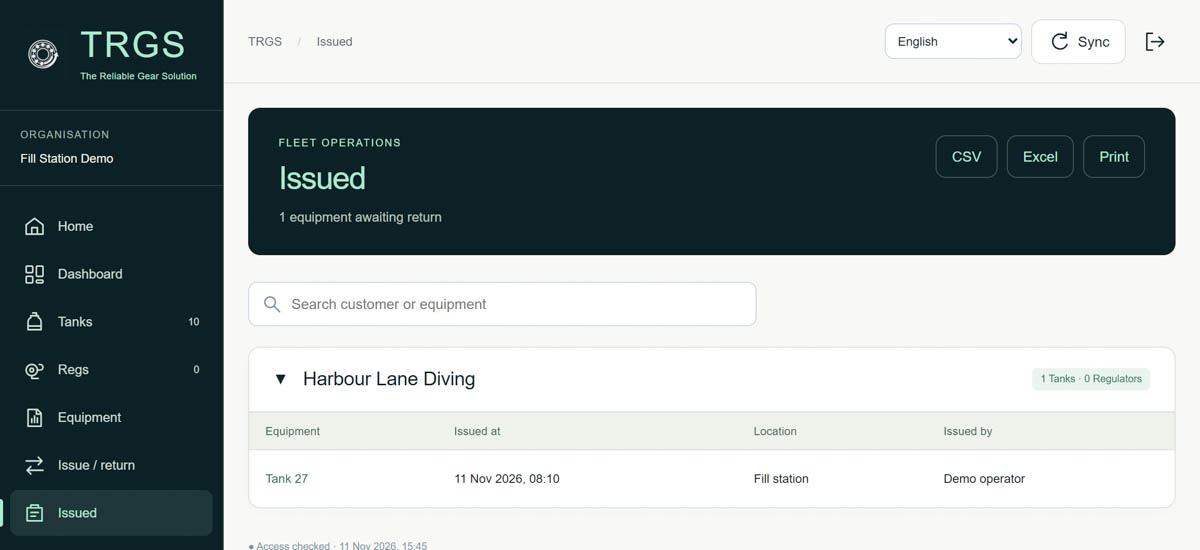
I built The Reliable Gear Solution (TRGS) so we could scan those numbers as we loaded the van.
Once I’ve booked the nine back in, I can open the Issued screen on the desktop, select Harbour Lane Diving and read Ben the one number left against his shop.
The example shown here uses fictional records to demonstrate the process.
The Real Problem Might Not Be the Missing Cylinder
One cylinder coming back a day late is easy enough to work around.
If the fill crew are borrowing a spare every Friday, I want to know why.
Before I sign off buying more cylinders, I’d go down to the quay and help unload the boat.
The person passing me the cylinders might be able to tell me in five minutes what a month of counting them hasn’t.
His work focuses on equipment accountability, operational records and practical systems for managing diving equipment.
Disclosure: Michael John Snow is the developer of TRGS, which is referenced as an example in this contributed article. The equipment tracking principles described can also be implemented using paper records or spreadsheets.
