

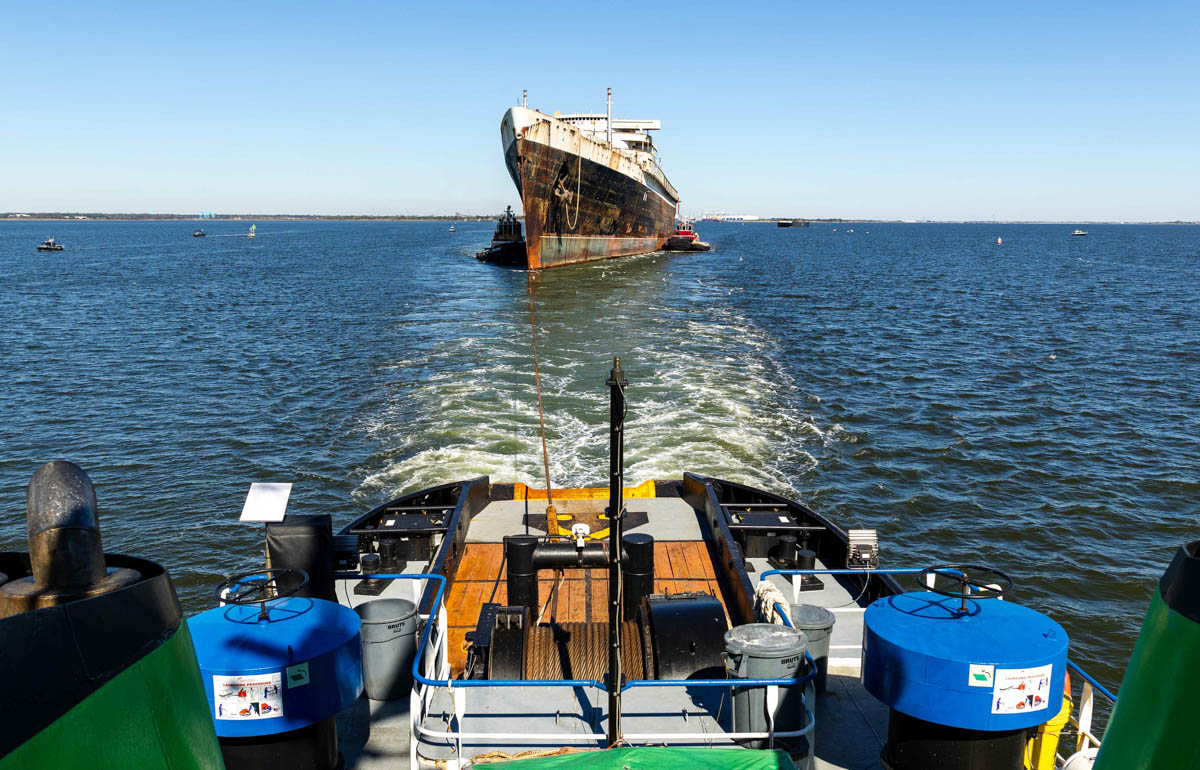
The historic SS United States has completed its final journey, sinking beneath the Gulf of Mexico off Florida on November 11, 2026, to become the world’s largest deliberately deployed artificial reef.
The 990-foot (302-metre) former ocean liner disappeared beneath the surface at approximately 9 p.m. Eastern Time, following a controlled sinking operation that took significantly longer than organisers had initially expected.
The deployment took place approximately 22 nautical miles southwest of Destin-Fort Walton Beach, Florida, bringing to an end months of preparation and decades of uncertainty over the future of one of America’s most celebrated passenger ships.
A Longer Final Descent Than Expected
The operation began during the afternoon of November 11, with contractors gradually flooding the vessel to send it to the seabed without using explosives.
Although the sinking had initially been expected to take considerably less time, the enormous ship remained visible above the water for several hours.
According to the Associated Press, one reason for the extended operation was the need to flood 128 fuel and lubricant tanks with water to help the ship settle evenly on the seabed.
As darkness fell, the ship continued to descend before finally leaning to one side and disappearing beneath the surface.
The deployment had originally been scheduled for November 12 but was brought forward by 24 hours because of concerns about deteriorating weather conditions.
As The Scuba News reported on November 10, Okaloosa County officials confirmed the revised schedule and cancelled a planned public farewell ceremony to prioritise maritime safety.
The World’s Largest Artificial Reef
At approximately 990 feet in length, the SS United States surpasses the former aircraft carrier USS Oriskany, which was deliberately sunk off Pensacola in 2006, as the world’s largest deliberately deployed artificial reef.
The ship has been deployed in water approximately 180 feet (55 metres) deep, with its upper structures expected to provide access at shallower depths.
Extensive preparation took place before deployment, including the removal of potentially hazardous materials, the creation of openings for water movement and diver access, and modifications intended to support marine colonisation.
The artificial reef is expected to provide opportunities for recreational and technical divers, although the suitability of individual sections will depend on their depth, condition and the results of post-deployment assessments.
The sinking itself marks the completion of the deployment operation, but confirmation of the wreck’s final orientation, structural condition and operational arrangements for visiting divers remains an important next step.
A New Scientific Laboratory Beneath the Gulf
The project is also expected to make an important contribution to marine research.
The Woods Hole Oceanographic Institution announced on November 11 that researchers will use the newly deployed wreck to investigate how marine organisms colonise large artificial structures and how underwater ecosystems develop over time.
The research offers a rare opportunity to study the formation of a marine community from the beginning, rather than examining an artificial reef years or decades after deployment.
Scientists will be able to monitor biological changes as the ship becomes part of the surrounding marine environment.
The findings could provide valuable information for future artificial reef projects and broader marine habitat research.
From Transatlantic Record Holder to Underwater Landmark
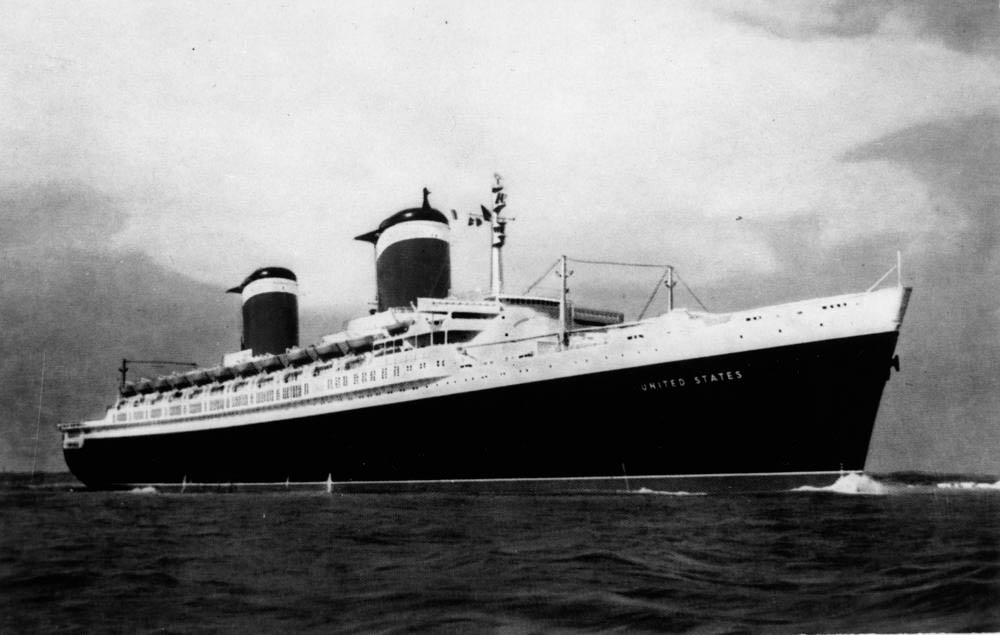
Launched in 1952, the SS United States was once the pride of American passenger shipping.
Designed for speed and technological innovation, the vessel established a transatlantic crossing record during its maiden voyage and remains one of the most significant ocean liners ever constructed in the United States.
The ship carried celebrities, political figures and thousands of transatlantic passengers during its service life before being withdrawn from commercial operations in 1969.
After decades of uncertain ownership and unsuccessful redevelopment proposals, the vessel spent many years docked in Philadelphia.
Its eventual acquisition by Okaloosa County provided a new future for the ship, although the decision to sink such an important piece of maritime history also prompted objections from preservation advocates.
Significant historical components, including the ship’s distinctive funnels, were removed before deployment as part of plans to preserve its heritage through a land-based museum.
The SS United States Conservancy continues to play a role in preserving and documenting the vessel’s history.
What Happens Next for Divers?
With the sinking completed, attention now turns to the condition of the wreck on the seabed and its future as a diving destination.
Destin-Fort Walton Beach already has an extensive artificial reef network, but the arrival of a vessel of this scale creates an entirely new attraction for wreck diving.
The ship’s dimensions, expected depth range and internal configuration offer the potential for a variety of diving experiences, subject to appropriate qualifications, conditions and access arrangements.
Divers should await confirmed site information and guidance from local operators before planning visits. A wreck of this size, particularly immediately following deployment, presents risks that cannot be assessed solely from its published dimensions.
The SS United States has now completed the transition from celebrated transatlantic liner to underwater landmark.
For the diving community, its next chapter is only beginning.

