
Close Menu
    Facebook X (Twitter) Instagram
    New
    • Taiwanese Diving Influencer Li Runrun Dies at 36
    • Iceland Seizes Watson Foundation Anti-Whaling Vessel, the Bandero
    • Five Dead After 9 Louisiana Cases of Potentially Fatal Vibrio Infection Linked to Seawater
    • History Lesson: Found Bottle With Glass Chamber Inside
    • A Dilemma Every Boater Will Face
    • 7 Liveaboard Deals Worth Booking Now – From Just $680
    • Best Eco-Friendly Travel Destinations for Scuba Adventures
    • Cause of Death Revealed for South Carolina Deputy Who Died During Dive Training
    Facebook X (Twitter) Instagram Pinterest YouTube LinkedIn TikTok Threads Mastodon
    Contact Advertise Destinations
    The Scuba News
    Curacao Vacation Guide
    • Home
    • News
      • Commercial Diving News
      • Community News
      • Dive Center News
      • Dive Resort News
      • Environmental News
      • Equipment News
      • Event News
      • Photo and Video News
      • Training News
      • Travel News
    • Events
    • Scuba Features
      • Commercial Diving Features
      • Community Features
      • Dive Center Features
      • Dive Resort Features
      • Environmental Features
      • Equipment Features
      • Event Features
      • Maritime History
      • Photo and Video Features
      • Training Features
      • Travel Features
      • Video Articles
      • What Divers Say
    • Travel
      • Travel News
      • Travel Features
      • Travel Offers
    • Surface Interval
      • Books
      • Movies
      • Podcasts
      • TV
      • Webinars
    • News by Destination
    The Scuba News
    Home » Buying Your First Dive Computer? 7 Mistakes New Divers Make (And How to Avoid Them)
    Equipment Features

    Buying Your First Dive Computer? 7 Mistakes New Divers Make (And How to Avoid Them)

    LeeBy LeeJuly 10, 2026No Comments4 Mins Read
    Facebook Twitter Pinterest LinkedIn Tumblr Email
    Dive Computers
    Affiliate Disclosure: Some content on The Scuba News may include affiliate links. Find out how this supports our work.

    For many newly certified divers, buying a dive computer is the first major equipment purchase they’ll make. While rental computers are perfectly adequate for occasional diving, owning your own computer means you’ll always dive with familiar settings, consistent algorithms, and a complete logbook of every adventure.

    The problem is that the market has never been more crowded.

    Simple entry-level computers sit alongside colour-screen models, smartwatch-style computers, air-integrated systems, and technical diving instruments costing several times as much.

    The good news?

    Most recreational divers don’t need the most expensive computer available. What they do need is one that matches their diving today while leaving enough room to grow tomorrow. Modern entry-level dive computers already include many of the features that were once reserved for premium models. 

    Mistake #1: Buying Based Only on Price

    A cheap dive computer can be excellent value.

    A cheap dive computer that frustrates you every dive is not.

    Instead of asking:

    “What’s the cheapest computer?”

    Ask:

    “Will I still enjoy using this after 100 dives?”

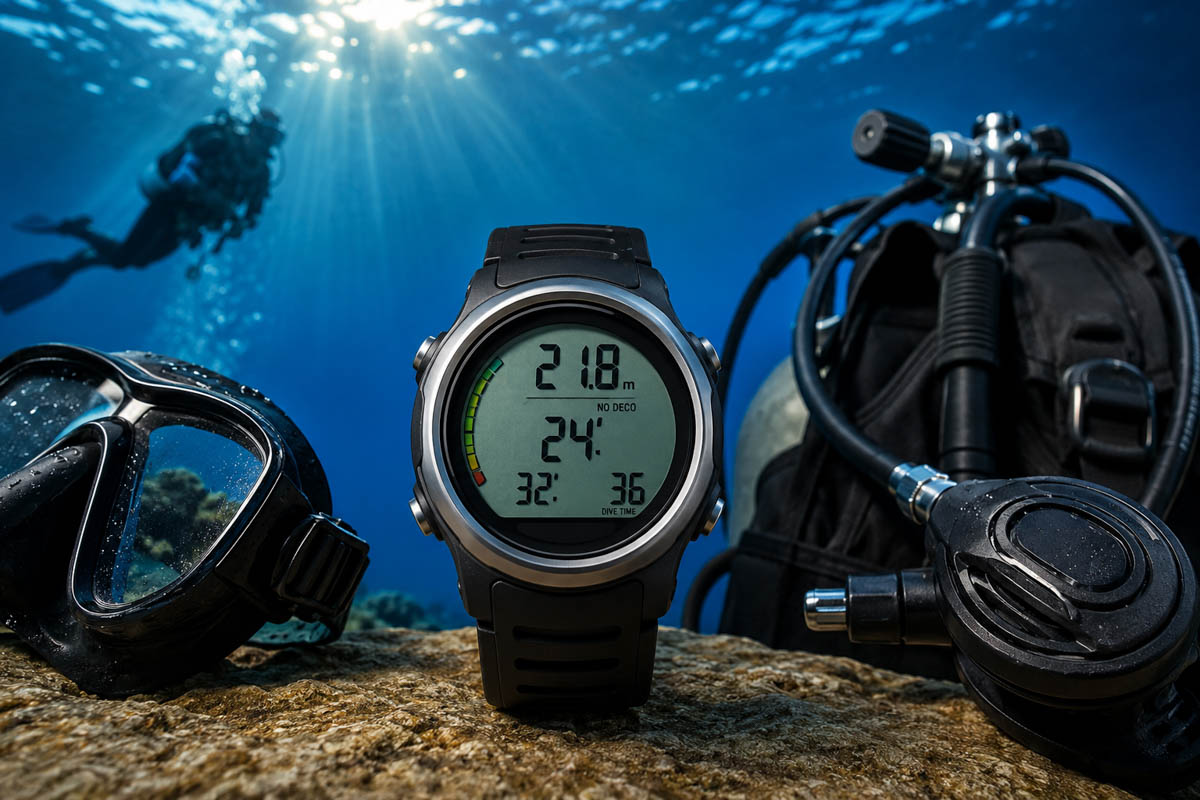
    A clear display, intuitive buttons and easy-to-read information become far more important than saving a small amount of money.

    Browse the latest range of beginner-friendly dive computers available from Scuba.com

    Mistake #2: Ignoring Screen Readability

    You’ll be reading your computer underwater – sometimes in poor visibility, low light or while task-loaded.

    Look for:

    • Large numbers
    • High contrast displays
    • Bright backlighting
    • Simple layouts

    Colour screens are becoming increasingly popular, but even monochrome displays remain excellent if the information is clear.

    Mistake #3: Forgetting About Future Training

    Many new divers complete Open Water and immediately start thinking about:

    • Advanced Open Water
    • Nitrox
    • Wreck diving
    • Night diving

    Buying a computer that supports Nitrox from day one is usually a smart investment, even if you don’t plan on taking the course immediately. Nitrox compatibility has become a standard recommendation for entry-level buyers because it provides flexibility as divers progress. 

    Mistake #4: Paying for Features You’ll Never Use

    Air integration.

    Trimix.

    CCR compatibility.

    Multiple transmitters.

    These are fantastic features…

    …if you’re a technical diver.

    For someone making 20 recreational dives each year, they often add hundreds of dollars without improving the actual diving experience.

    Spend your budget where it matters:

    • Better mask
    • Comfortable exposure protection
    • Reliable regulator servicing
    • More diving

    Mistake #5: Not Thinking About Battery Life

    Some computers use:

    • User-replaceable batteries
    • Rechargeable batteries
    • Factory servicing

    Each has advantages.

    Rechargeable models reduce waste, while replaceable batteries can be reassuring during remote dive trips.

    Understanding how your computer is powered before buying avoids surprises later.

    Mistake #6: Skipping the Accessories

    A dive computer lasts much longer when protected.

    Many divers eventually add:

    • Screen protectors
    • Protective cases
    • Spare charging cables
    • Travel organisers
    • Bungee mounting kits

    These relatively inexpensive accessories can help prevent scratches and damage during travel.

    Browse dive computer accessories and protective cases on Amazon before your next dive trip.

    Mistake #7: Choosing One That’s Too Advanced

    This might sound strange.

    But many experienced instructors recommend buying the simplest computer that comfortably exceeds your current certification level.

    If every menu requires reading the manual underwater, you’ve probably bought more computer than you need.

    Ease of use encourages divers to monitor:

    • No-decompression limits
    • Ascent rate
    • Safety stops
    • Surface intervals

    Those habits contribute far more to safe diving than dozens of advanced functions hidden in complicated menus.

    What Features Should Every Beginner Look For?

    If you’re buying your first dive computer, these features should be near the top of your checklist:

    • ✔ Air and Nitrox modes
    • ✔ Clear, easy-to-read display
    • ✔ Audible and visual alarms
    • ✔ Dive log memory
    • ✔ User-friendly interface
    • ✔ Reliable battery system
    • ✔ Strong manufacturer support

    Fortunately, many respected entry-level computers now include all of these essentials without requiring a premium budget. 

    Our Recommendation

    Rather than chasing the newest gadget or the cheapest price, invest in a computer that you’ll enjoy diving with for years.

    A quality beginner dive computer should feel simple enough on your first open water dive while still supporting your progression into specialties like Nitrox and Advanced Open Water.

    Buy once, learn it well, and let it become one of the most familiar pieces of equipment in your dive kit.

    If you’re ready to compare models, explore the latest dive computers from Scuba.com, then complete your setup with accessories, screen protectors and travel essentials available through Amazon.

    Comments

    Share. Facebook Twitter Pinterest LinkedIn Tumblr Email
    Previous ArticleSix Presumed Drowned in Richmond, B.C. Charter Boat Tragedy Mourned
    Next Article Echoes from the Deep: First Images of Shackleton’s Last Ship, Quest, Released
    Lee
    • X (Twitter)

    Lee has been in the marketing industry for the last 15 years and now specializes in teaching marketing techniques to people in the scuba diving industry. He is founder of Dive Media Solutions which, in addition to providing complete marketing, media, communications and IT solutions exclusively for the scuba diving industry, also produces The Scuba News. You can connect with Lee via Twitter by following @DiveMedia

    Related Posts

    Shearwater Launches Limited Edition Tern TX to Support Marine Conservation

    Dan’s Dive Shop Presents: Scuba Swap and BBQ

    Divers Are Going to Want This: Inside the New Shearwater Perdix 3

    Leave a ReplyCancel reply

    Advertisement
    Scuba Mask Straps
    Advertisement
    Blue
    Advertisement
    Geneinno
    Advertisement
    DiveAssure
    Advertisement
    Scuba Fix at Kirk Scuba Gear
    Advertisement
    Kirk Scuba Gear
    Advertisement
    DiveHeart Courses
    Quick Scuba Search
    Asia Australia Canada Cayman Islands David Suzuki Diver Travel Dive Shows Dive Travel Diving Incident Egypt Environment Environmental News Galapagos Incident Indonesia Ireland Liveaboard Holidays Liveaboards Liveaboards Egypt Liveaboards Galapagos Liveaboards Indonesia Liveaboards Maldives Liveaboards Red Sea Liveaboard Travel Liveaboard Travel Deals Maldives Mexico New Zealand PADI Philippines Red Sea Scuba Diver Travel Scuba Diver Travel Deals Scuba Diving Canada Scuba Diving Egypt Scuba Diving Galapagos Scuba Diving Indonesia Scuba Diving Maldives Scuba Diving Red Sea Scuba Travel Scuba Travel Deals Sharks South Africa Travel UK
    About The Scuba News
    Developed by a small team of dedicated scuba diving media professionals, The Scuba News brings you the best and most up to date scuba diving information from around the world.

    Covering everything from the world of scuba diving including: The Environment, Dive Centers, Dive Resorts, Diving Equipment, Photos and Videos, Diver Training and news which affects the whole scuba community.

    If you have any questions about The Scuba News or you would like to contribute to our news and blog pages please do not hesitate to contact us.
    Scuba News Categories
    • Commercial Diving News
    • Community News
    • Dive Center News
    • Dive Resort News
    • Environmental News
    • Equipment News
    • Event News
    • Photo and Video News
    • Training News
    • Travel News
    Scuba Diving Features
    • Commercial Diving Features
    • Community Features
    • Dive Center Features
    • Dive Resort Features
    • Environmental Features
    • Equipment Features
    • Event Features
    • Maritime History
    • Photo and Video Features
    • Training Features
    • Travel Features
    All content copyright The Scuba News unless otherwise stated. | A DiveMedia Company. Affiliate Disclosure

    Type above and press Enter to search. Press Esc to cancel.