

The first official images of Sir Ernest Shackleton’s last ship, the Quest, have been revealed following a joint mission by the Woods Hole Oceanographic Institution and the Royal Canadian Geographical Society. This extensive visual assessment builds upon the ship’s initial 2024 discovery in the Labrador Sea.
Deep within the Labrador Sea, a joint venture between the Royal Canadian Geographical Society (RCGS) and the Woods Hole Oceanographic Institution has successfully photographed the remains of the Quest. Famous for serving as the final vessel of legendary Antarctic explorer Sir Ernest Shackleton, the historic polar ship rests at a depth of 390 meters. Visuals gathered by the DSV Alvin and the Falcon remotely operated vehicle showcase a striking contrast: the wreckage has transformed into a bustling, vibrant sanctuary for marine life amid an otherwise desolate seabed, yet it also bears visible scars from the damaging effects of bottom trawling.
Launched in 1917, the Quest was a modest, schooner-rigged steamship with a diverse 45-year career spanning commercial work and historic voyages before it ultimately sank in 1962. It achieved lasting fame as the flagship for the 1921–1922 Shackleton–Rowett Expedition. Tragically, it was in the cabin of this very ship that legendary explorer Sir Ernest Shackleton passed away from a heart attack on January 5, 1922, while anchored in South Georgia. Outside of its time in the Antarctic, the vessel spent decades working as a commercial sealing ship and later returned to high-latitude exploration as the main transport for the British Arctic Air Route Expedition to eastern Greenland between 1930 and 1931.
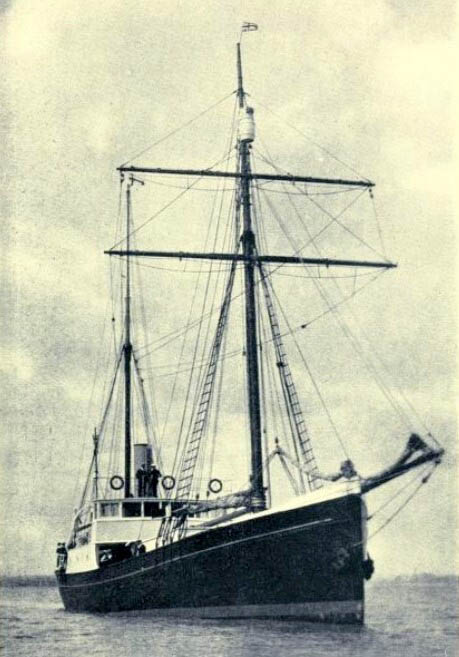

The death of Sir Ernest Shackleton marked the definitive conclusion of the Heroic Age of Antarctic Exploration—an era defined by daring expeditions into a largely unmapped wilderness completely cut off from radio communication and modern transportation. Although the Quest endured for decades after, continuing to sail well into the mid-20th century, the passage of time eventually caught up with her. Plagued by a persistent, unaddressed leak that had worsened over several months, the aging vessel met her end on April 1, 1962. While participating in a commercial sealing voyage, she was ultimately crushed by shifting pack ice in the Labrador Sea.
On June 9, 2024, a specialized search team spearheaded by John Geiger of the Royal Canadian Geographical Society successfully located the Quest. The historic wreckage was discovered resting at a depth of 390 meters on the floor of the Labrador Sea, roughly 85 kilometers off the eastern coast of Labrador and just 2.5 kilometers away from where she originally went down. Remarkably, the ship remains mostly whole and sits nearly vertical on the seabed, with its fractured main mast being the only major visible damage.