
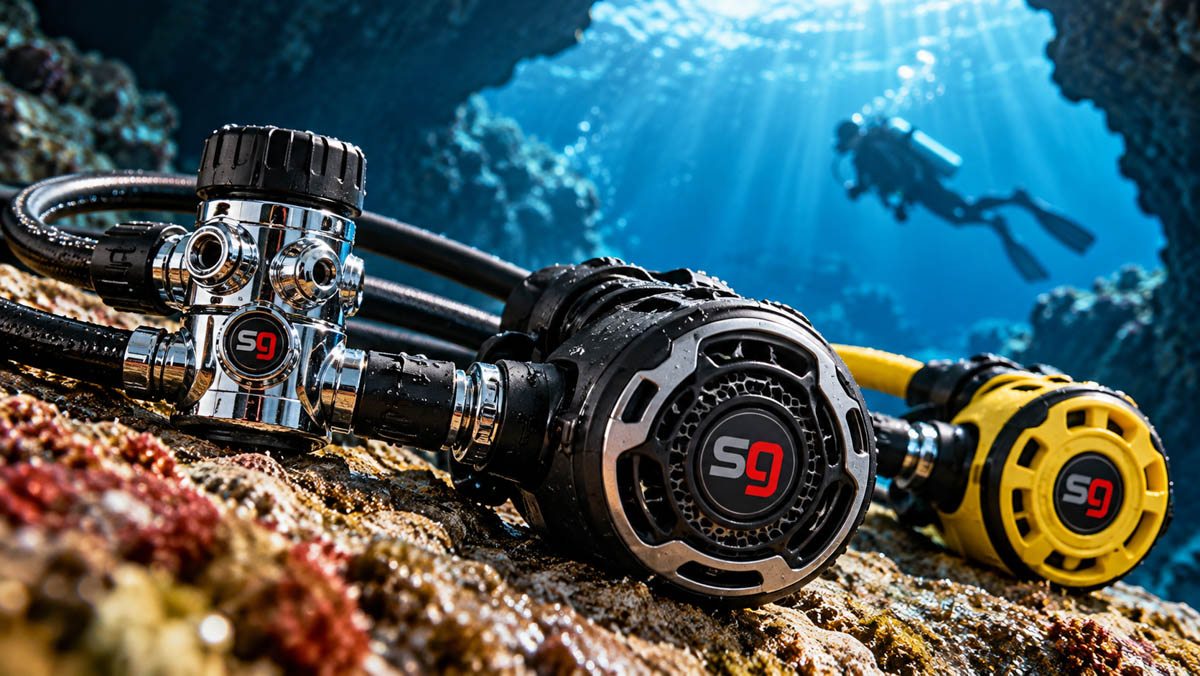
When ScubaGaskets decided to put its name on a complete breathing system, we knew that designing, testing and certifying the equipment was only part of the job.
There was another question we would eventually have to answer:
Who is going to service it?
This question became particularly clear during discussions with end users and professional customers considering ScubaGaskets regulators.
We needed an answer.
From Service Manuals to Technical Training
The technical side of the ScubaGaskets regulator project did not begin yesterday.
During the development of our breathing systems, detailed service manuals were created for both our piston and diaphragm regulator models. Those manuals were developed through actual disassembly, servicing, inspection and technical feedback.
But making a service manual available is not the same as training a technician.
For years, our approach was relatively simple.
If an experienced scuba technician could demonstrate previous manufacturer training, ScubaGaskets could provide our service documentation and authorise that technician to work on our equipment.
It worked while the number of ScubaGaskets regulators in the field was small.
But as we move from supplying service parts to becoming a regulator manufacturer ourselves, we believe our training system needs to grow with us.
Previous experience should be the starting point, not the entire qualification.
Enter ASSET
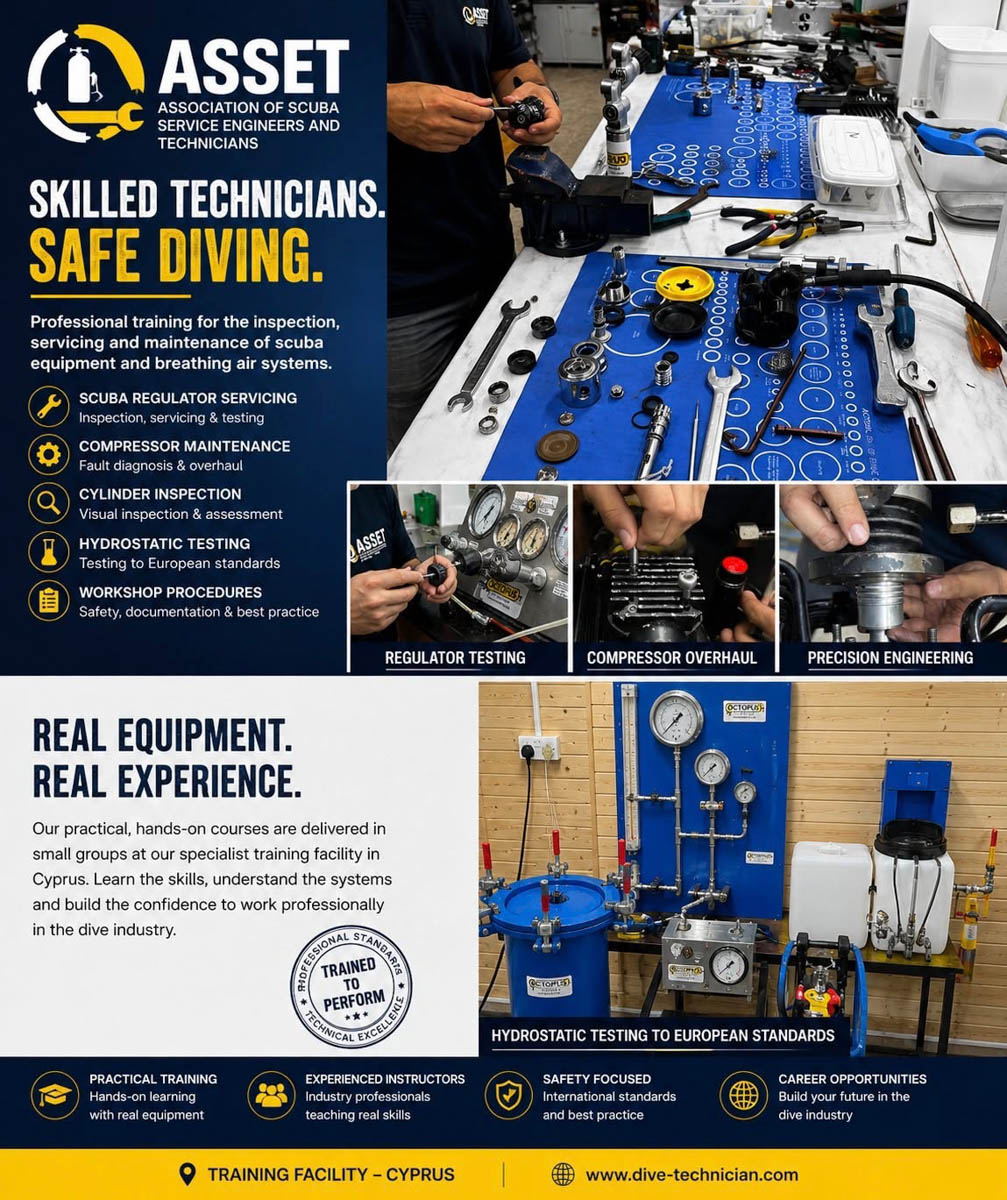
For that reason, ScubaGaskets has appointed the ASSET facility in Protaras, Cyprus, operated by the Association of SCUBA Service Engineers and Technicians, as its official technical training centre for ScubaGaskets regulator systems.
This was not a decision made simply by looking at a website or exchanging a few emails.
The founder of ScubaGaskets personally attended ASSET courses.
He sat in the classroom.
He worked through the training material.
He observed how the technical subjects were taught, including scuba tanks, air compressors, regulators and dry suits.
He also had the opportunity to evaluate the quality of the programme from the same side of the table as every other participant.
Only after that experience did discussions begin with ASSET owner and trainer Joey Ridge about creating dedicated manufacturer-specific training for ScubaGaskets regulators.
ScubaGaskets has now provided ASSET with the service manuals and technical information for our piston and diaphragm regulator systems so that dedicated training programmes can be prepared and submitted for approval by ScubaGaskets.
Two Routes. One Standard.
The programme is being developed around two levels of training.
The first will make manufacturer-specific training accessible internationally.
Experienced regulator technicians who have already completed technical training from another recognised scuba-equipment manufacturer will be able to undertake ScubaGaskets-specific online training and examination.
Two programmes are planned:
Piston Regulator – Manufacturer Technical Training
Covering the SGS2 piston first stage and SGT2 second stage.
And:
Diaphragm Regulator – Manufacturer Technical Training
Covering the SGS3 diaphragm first stage and the SGT4, SGT3 and SGT3-OCTO second stages.
Participants will work with the actual ScubaGaskets regulators during their training. For this reason, the appropriate ScubaGaskets regulator equipment will be required as part of the online training programme.
Successful completion of the training and examination will be documented with the corresponding ScubaGaskets Manufacturer Technical Training certificate.
But we want to take it one step further.
From Online Training to the Workbench
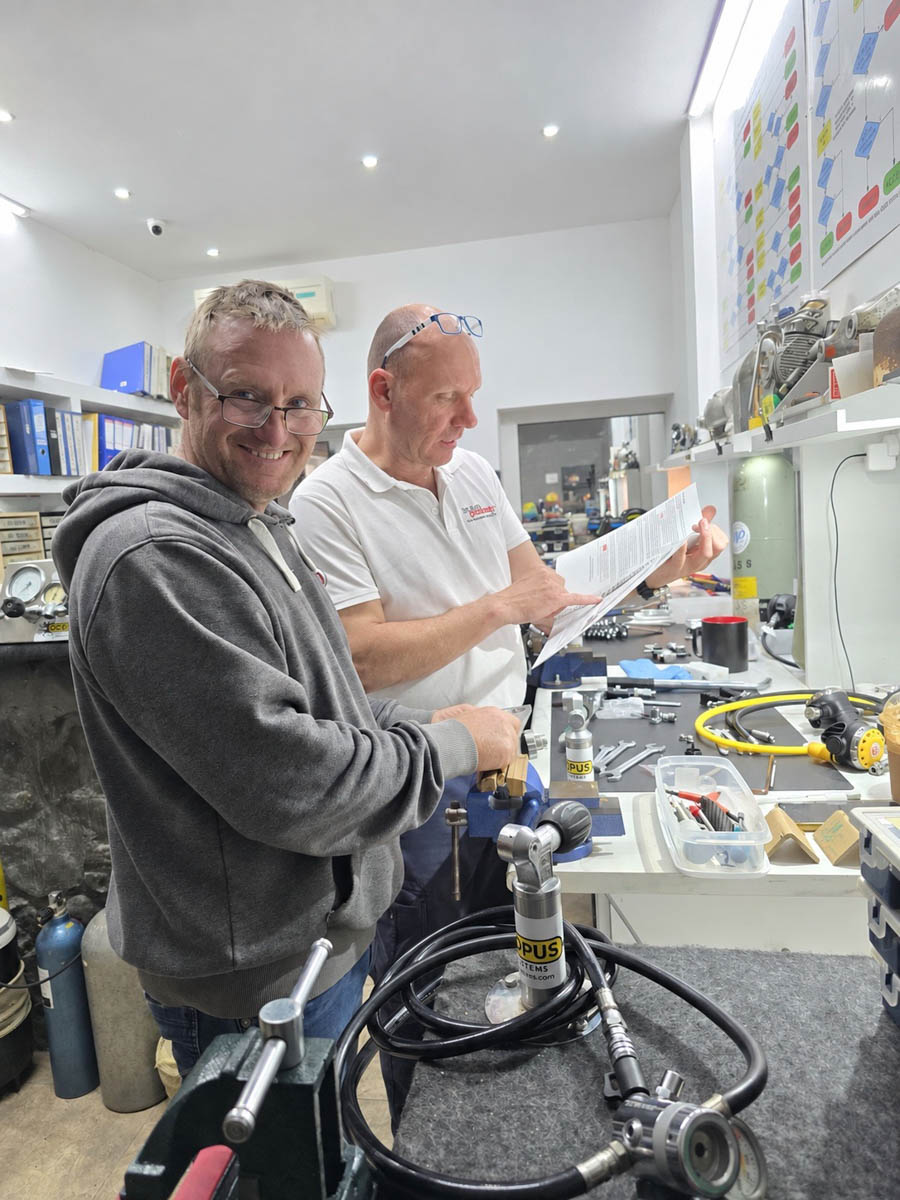
For technicians who want full ScubaGaskets service technician authorisation, a practical hands-on course is also being developed with ASSET in Cyprus.
The proposed one-day programme will take the technician away from the computer and onto the workbench.
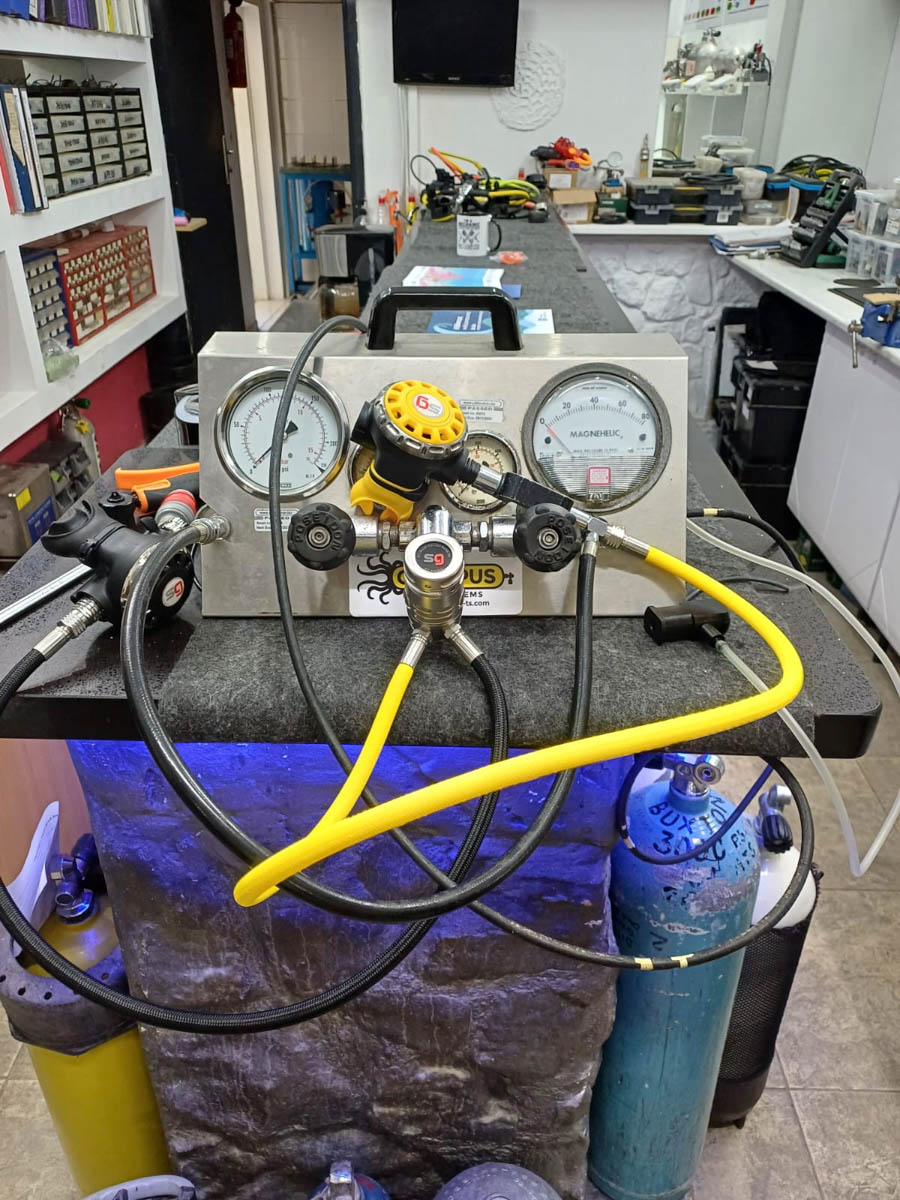
Strip it. Inspect it. Service it. Set it up correctly. Test it.
The objective is straightforward: demonstrate practical competence on the equipment itself.
Following successful completion of the manufacturer-specific theoretical and practical requirements, the technician can qualify as a:
SCUBAGASKETS
Authorised Piston & Diaphragm Regulator Service Technician
The authorisation will identify the specific ScubaGaskets regulator models for which the technician has been trained.

And Then, Maybe, Dive It
There is another idea we are working on.
If you are going to travel to Cyprus to learn how to service a ScubaGaskets regulator, why should the experience necessarily finish at the workbench?
Together with an associate ScubaGaskets dive centre, we are considering combining the practical training with the opportunity to dive the equipment afterwards.
And Cyprus gives us some rather interesting places to do that.
The Zenobia wreck, the MUSAN underwater museum in Ayia Napa, and Green Bay near the ASSET training facility are just three out of many diving possibilities.
Service the regulator in the morning.
Dive it the next day.
There are probably worse ways to complete a technician course.
A Certificate Should Not Be the End of the Relationship
Training is useful.
Technical support after training is even more useful.
ScubaGaskets has already established a private WhatsApp group bringing together technicians who have been working with our products and technical documentation.
Among its members is Robert Singler, who played an important role in the technical evaluation of our regulators and the development of their service documentation, together with a growing group of experienced scuba technicians.
Our intention is for this technical community to grow alongside the new training programme.
A technician encountering an unusual service issue should not have to work in isolation.
Ask the question.
Compare experience.
Talk to another technician.
Talk to us.
That kind of communication is valuable not only to the technician. Feedback from people actually servicing the regulators also helps ScubaGaskets identify problems, improve documentation and continue improving the products themselves.
Building the Network Before We Need It
It would be easy to sell regulators first and worry about the service network later.
We would rather do it the other way around.
As more SGS2 and SGS3 breathing systems enter service around the world, we want the number of technicians capable of supporting them to grow with them.
The objective is not simply to put another certificate on somebody’s workshop wall.
It is to create a network of people who know the equipment, have access to the correct service information and service parts, and have somewhere to turn when they need technical support.
For the dive centre considering its first ScubaGaskets regulator, that answers an important question:
Who is going to service it?
We are working on that answer already.
Because selling a regulator is only the beginning.
The science of scuba O-rings.
Keeping you underwater longer.