





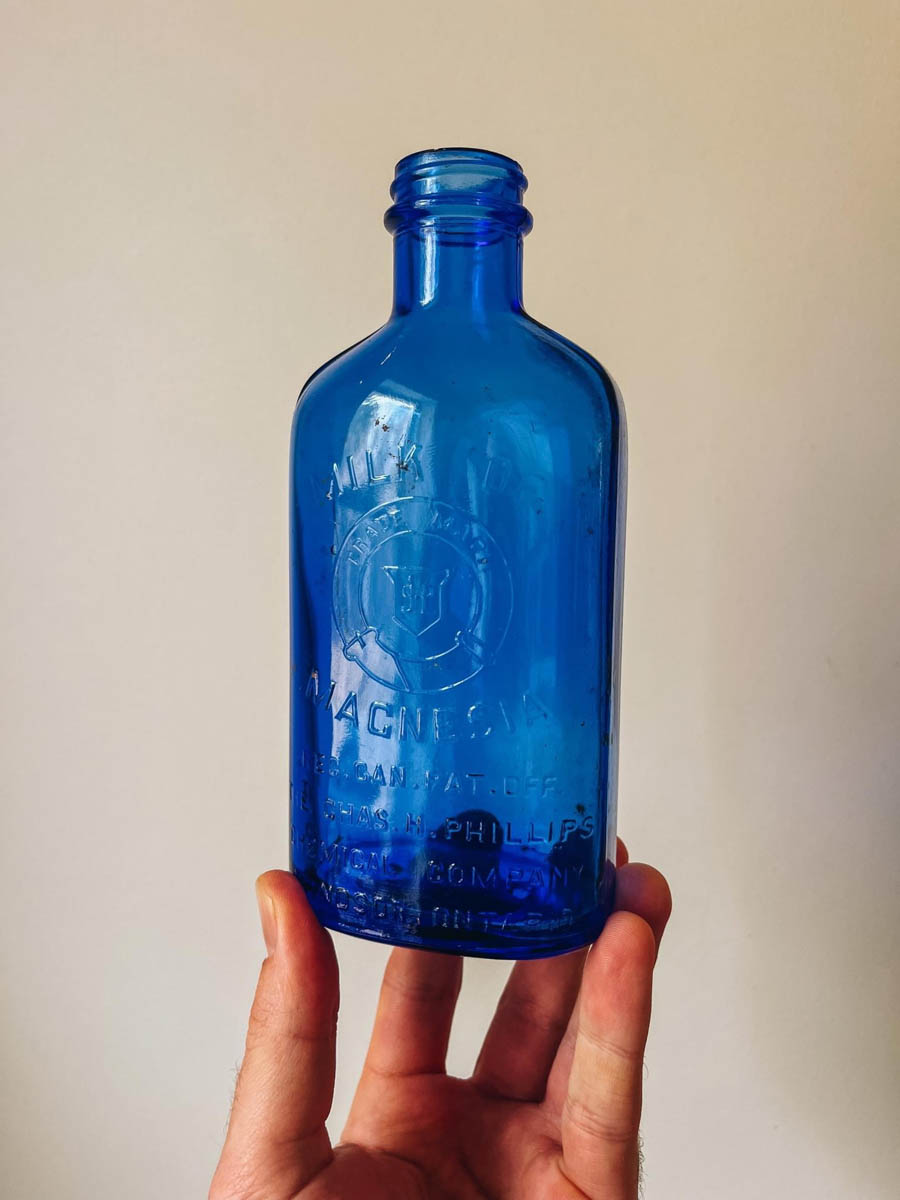
If you’re curious about why some glass is cobalt blue, here’s some information for you.

Cobalt blue glass gets its rich hue from small amounts of cobalt oxide added during the melting process, a technique known since ancient times (as early as 2000 BC in Mesopotamia and Egypt) to create intense blues that mimicked expensive lapis lazuli, a deep-blue metamorphic rock prized as a semi-precious stone.
By the 19th and early 20th centuries, cobalt blue became common for medicine bottles, apothecary jars, and some poison containers. The deep color served a practical purpose: it filtered out ultraviolet and visible light, helping protect light-sensitive medicinal contents from degrading. Pharmacists and manufacturers also used it for visual distinction, often pairing the color with warnings for hazardous substances.
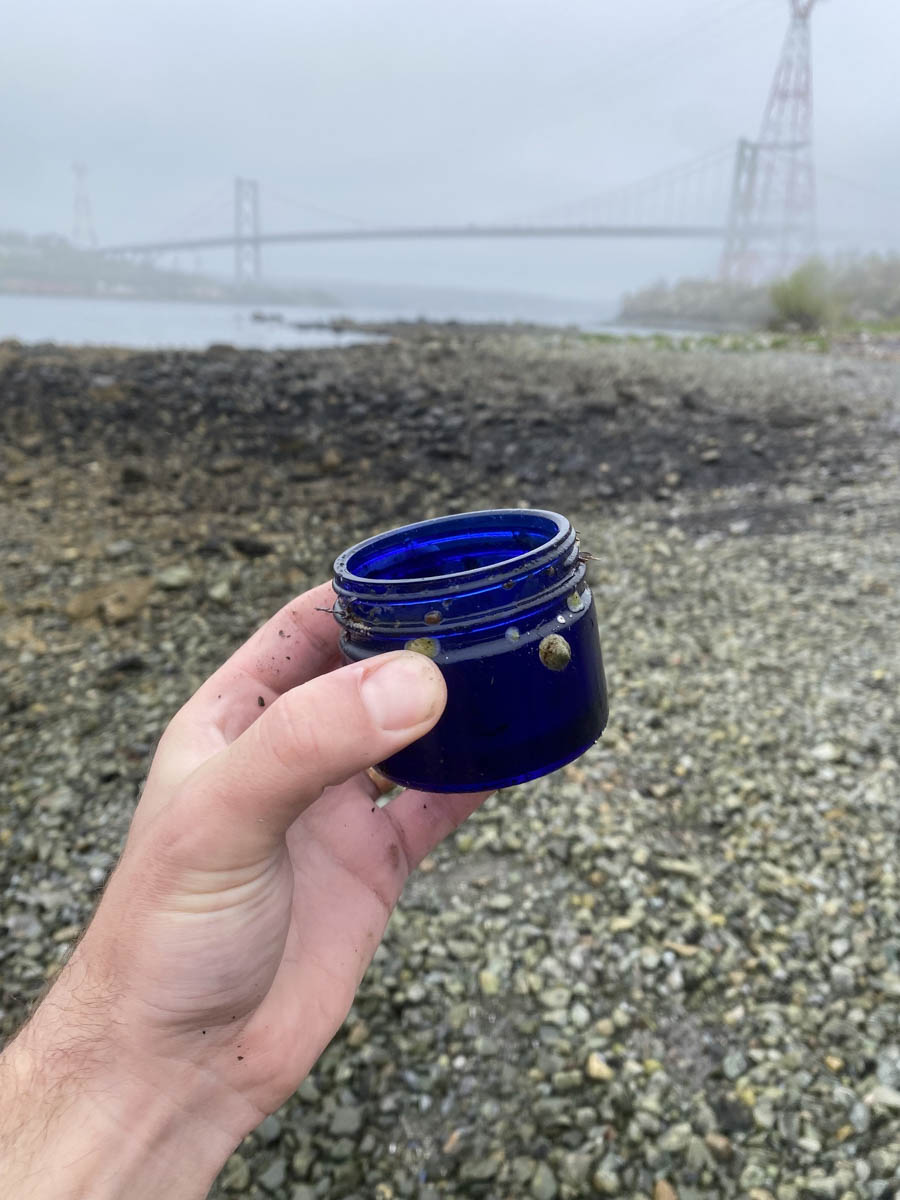
Many such bottles date from the Victorian era through the mid-20th century, including remedies like Bromo-Seltzer, Vicks VapoRub, or Noxzema, as well as prescription and over-the-counter preparations. Pieces like the ones I’ve found likely originated from discarded household or pharmacy waste that entered the ocean, lakes and rivers decades ago. Sean McMullen
Cobalt-based pigments have a storied history that spans millennia, though their application and durability have varied significantly depending on the medium.

Ancient Origins and Early Use
The first recorded instance of cobalt aluminate glass dates back to roughly 2000 BC in ancient Mesopotamia. This early sample was likely intended as a pigment source, though it remained an uncommon material for many centuries. By approximately 1500 BC, cobalt oxide “smalt” began appearing in Egyptian pottery, eventually spreading to the Aegean region shortly thereafter.

The Problem with Smalt in Painting
In the world of fine art and painting, smalt is notoriously unstable. Over long periods, the pigment tends to fade or lose its vibrancy, which is why it is rarely employed by modern painters.
Success in Ceramics
In contrast, cobalt has been exceptionally successful in the ceramic arts. When applied as an underglaze decoration, the pigment retains its deep blue hue remarkably well. This stability made it the primary choice for several iconic pottery traditions, including:
- Chinese Porcelain: Specifically the world-renowned blue and white ware of the Yuan and Ming dynasties.
- European Traditions: Notable examples include Italian Renaissance maiolica and Dutch Delftware.
Renowned for its vibrant and alluring aesthetic, cobalt glass—most notably Bristol blue—has long been a prized material for antique collectors and glass enthusiasts alike. This distinctive hue does more than just serve a decorative purpose; it has become a powerful tool for commercial branding, often utilized to convey a sense of premium quality and elegance. Modern consumers likely recognize this glass through its iconic application in the packaging of luxury goods, such as the signature deep-blue bottles used for Harvey’s Bristol Cream sherry and the award-winning, sculptural cobalt containers of Tŷ Nant mineral water.
Pricing on EBay for these vintage bottles range from $18.70 to $25.00.
Comments