


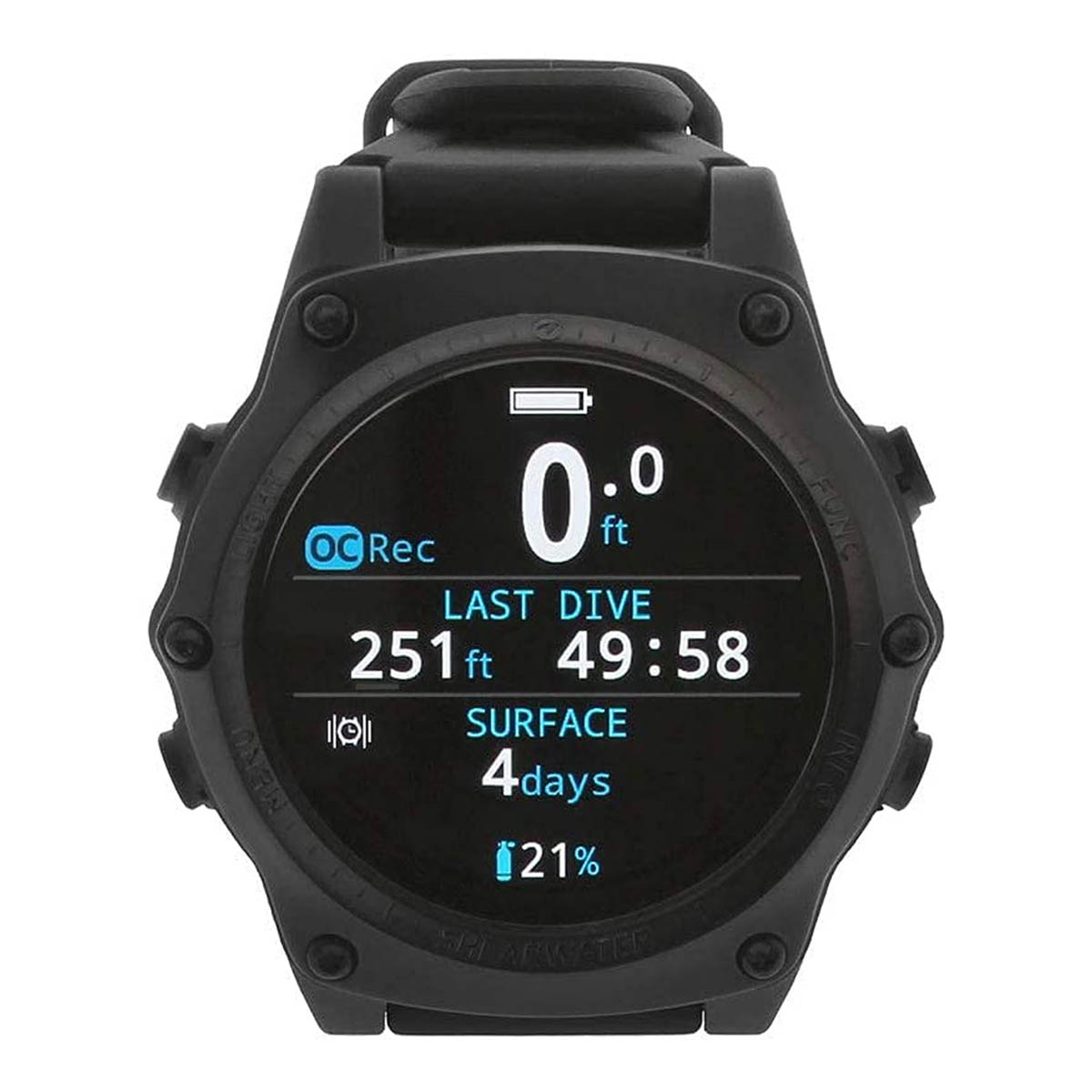
The Shearwater Teric has developed a kind of cult status among divers. On the surface, it looks like a sleek sports watch. Beneath it, you find one of the most powerful, feature-rich dive computers ever produced. But what do divers actually think of it in the water?
First Impressions
At first glance, the Teric stands out for its bright, full-colour AMOLED display. It’s sharp, easy to read even in murky water, and a long way from the monochrome screens most of us learned to trust years ago. The build feels solid too, with a sapphire crystal face, stainless steel bezel, and a strong, comfortable strap.
According to Scuba.com, the Teric’s rechargeable battery lasts around 30 hours in dive mode and up to 50 hours in watch mode. It supports air integration, Nitrox, Trimix, and multiple gas switches, making it just as comfortable on a shallow reef as it is on a deep technical descent.
Instructor Darrick, writing on the same product page, sums up the experience neatly:
“The Teric’s display is a standout feature. It’s bright, clear, and high-resolution, with excellent readability even in cold-water conditions. The interface is extremely user-friendly, and Bluetooth connectivity is another standout.”

In the Real World
Step outside the marketing, and the praise continues. Divers across forums, blogs, and review sites regularly call the Teric one of the best all-round computers available.
On DiverNet, the reviewer called the display “unbelievably bright,” adding that the menu system makes navigation straightforward underwater. Divers on ScubaBoard highlight the Teric’s floating digital compass, solid buttons, and intuitive layout, while also noting Shearwater’s excellent customer service.
User reviews on Reddit echo much of that enthusiasm. One diver wrote,
“The compass is the best I’ve tried, and Shearwater’s support is top-notch. The only downside is the buttons can get sticky if you don’t rinse it properly after saltwater dives.”
From a usability standpoint, the Bluetooth syncing with Shearwater Cloud, firmware updates, and wireless chargingmake it feel like a truly modern device. The ability to customise screens, alarms, and layouts gives each diver a personalised experience that few competitors match.

Where It Falls Short
Even among fans, there are a few recurring themes in the small-print of ownership.
Several divers report battery degradation over time, especially after two years of regular use, and vibration alerts can sometimes go unnoticed under thick suits. The buttons are robust but prone to salt build-up if not soaked after diving.
Others point out that while the Teric does almost everything else, it doesn’t include GPS. For some that’s not an issue, but divers who want location tagging or surface navigation might prefer a Garmin model such as the Descent MK2i.
Then there’s the price. At over a thousand dollars new, the Teric sits firmly in the premium bracket. That said, most reviewers agree it’s a “buy once, buy right” investment that holds its value well on the used market.

How It Compares
When placed alongside its rivals, the Teric holds its ground with confidence.
Compared with Garmin Descent, it sacrifices GPS and fitness features but offers a cleaner underwater interface and better clarity. Against Suunto’s D5, it’s more powerful and brighter, though at a higher price. And compared with Shearwater’s own Perdix, it’s more compact and stylish, while still delivering full technical functionality.
The Verdict
If you’re a diver who wants a computer that looks good on land, feels natural underwater, and will take you from shallow reefs to trimix depths, the Shearwater Teric is hard to fault. It’s beautifully built, endlessly capable, and backed by a company divers genuinely like dealing with.
Yes, the battery will age, and the lack of GPS might matter to some. But in nearly every other respect, the Teric remains one of the most admired dive computers on the market.
As one diver put it on ScubaBoard,
“The AMOLED is amazing. Build quality: outstanding. It’s the computer I didn’t know I needed until I used it.”
And that sentiment, more than the specs, explains why the Teric keeps showing up on wrists all over the world.
Next in the series: Stay tuned for our upcoming What Divers Say review of the Garmin Descent MK3i, where we’ll see how it stacks up against the Teric in real diving conditions.
