

It is honestly one of nature’s most impressive “glitch in the system” moments. Watching a fish transition from a dense aquatic environment to a high-speed glide in the air is a masterclass in evolutionary engineering.
While they don’t flap their “wings” like birds, their technique is incredibly sophisticated.
The Mechanics of the Glide
To get airborne, the flying fish doesn’t just jump; it uses a high-speed taxiing maneuver.
- The Launch: While still underwater, the fish swims at speeds up to 60 km/h toward the surface.
- The Taxi: It breaks the surface with its upper body, but keeps its long lower tail lobe submerged. It then beats its tail rapidly (up to 50 times per second) against the water to build up thrust, much like a seaplane taking off.
- The Flight: Once it gains enough lift, it spreads its oversized pectoral fins—and sometimes its pelvic fins (in “four-winged” species)—to catch the wind.
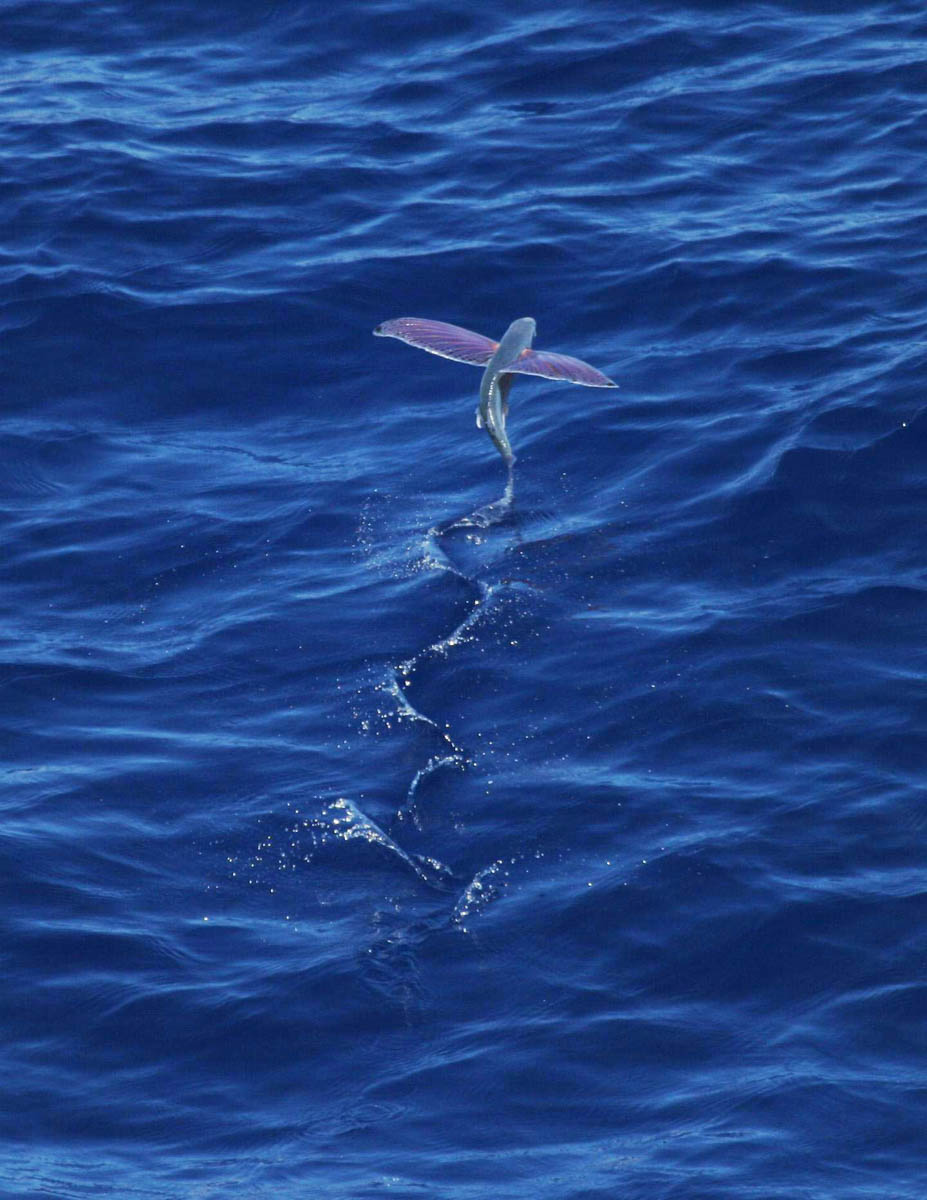
http://www.moc.noaa.gov/mt/las/photos2.htm, Public domain, via Wikimedia Commons
Aerodynamic Prowess
Flying fish aren’t just falling with style; they utilize specific aerodynamic principles to stay aloft:
- Wing Loading: Their fin-to-body ratio is optimized for gliding. The large surface area of the fins creates enough lift to support their weight at high speeds.
- The Wing-In-Ground Effect: By flying very close to the water’s surface (often just a few centimeters above), they experience a reduction in aerodynamic drag and an increase in lift. This allows them to stay airborne much longer than they could at higher altitudes.
- Extended Travel: While a typical glide might cover 50 meters, they can “re-arm” their flight. By dipping their tail back into the water and vibrating it without fully landing, they can gain fresh momentum to extend a single trip for hundreds of meters.
Risk vs. Reward
The irony of this survival tactic is the “out of the frying pan, into the fire” scenario. By escaping tuna or marlin in the water, they often become a visible target for frigatebirds and other seabirds waiting above. It’s a high-stakes game of choosing which predator you’d rather race.
Why Stay Near the Surface?
While many fish perform a diel vertical migration (descending to deep water during the day to hide and rising at night to feed), flying fish generally stay near the top. Their bodies are built for lateral speed and surface tension manipulation, not for the crushing pressures of the deep.
Interestingly, their eggs are often attached to floating debris (like seaweed or even floating plastic) using specialized filaments, keeping the next generation safely in that nutrient-rich top layer.
Since they live so close to the surface, they are often one of the first species affected by changes in ocean temperature or surface currents.
While you typically think of flying fish as tropical acrobats, they do make appearances in Canadian waters. It’s a pretty impressive commute.
It might seem odd for a “tropical” fish to head toward the Maritimes, but it’s all about the food. The mixing of the warm Gulf Stream with the cold Labrador Current creates a nutrient-rich explosion of plankton. For a flying fish, the Canadian coast in August is essentially an all-you-can-eat buffet—provided they can avoid the local gulls.
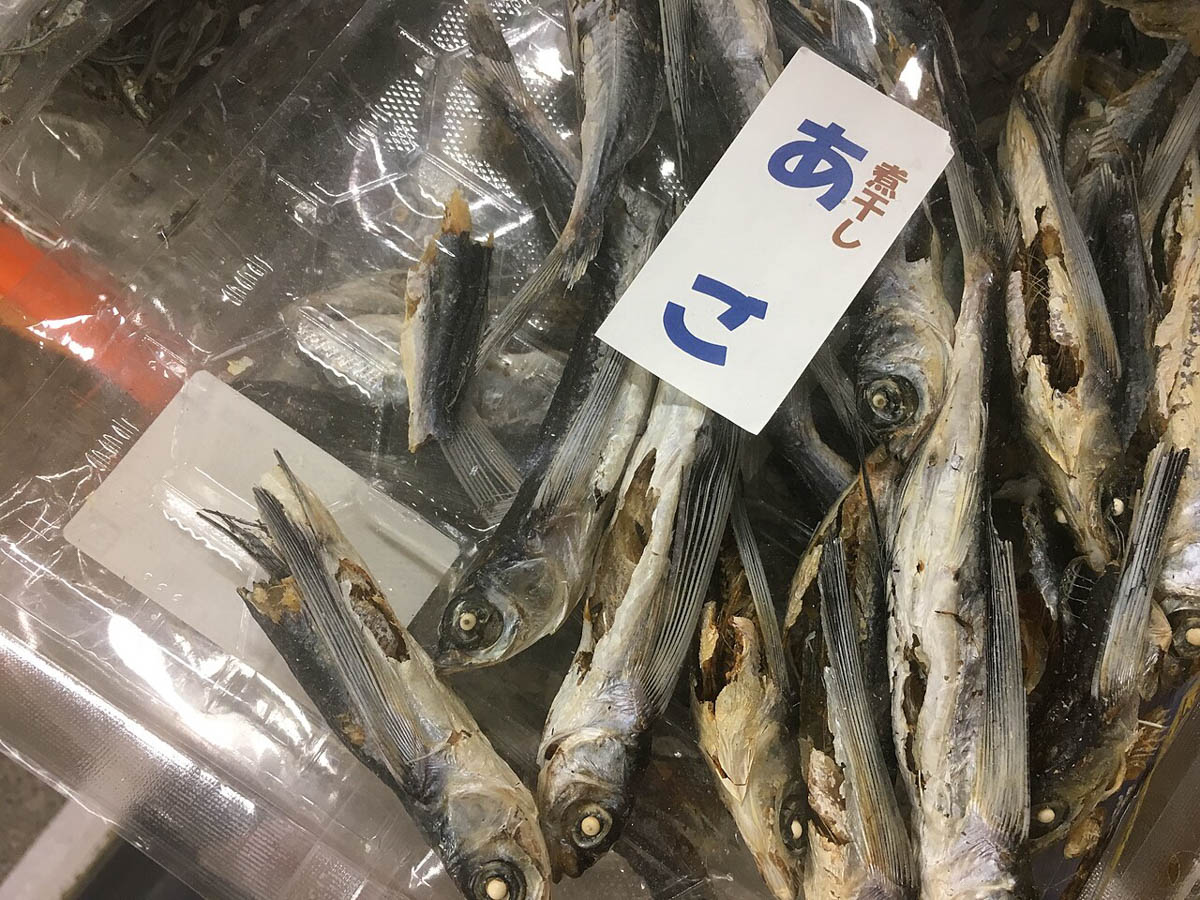


In the global seafood market, flying fish are captured through diverse regional methods, such as gillnetting in Japan, Vietnam, and China, while fishers in Indonesia and India prefer the manual precision of dipnetting. A cornerstone of Japanese gastronomy, these fish are often dried to create a rich base for dashi broth, while the crunchy, vibrant roe of the Cheilopogon agoo—famously known as tobiko—is a prized topping for sushi. Beyond East Asia, the flying fish holds deep cultural significance for the Tao people of Taiwan’s Orchid Island and stands as a national symbol in Barbados, where it is served alongside cornmeal and okra in the traditional dish cou-cou. Palate-wise, those who have tried it often compare its firm texture and savory, oily flavor profile to that of a sardine.