


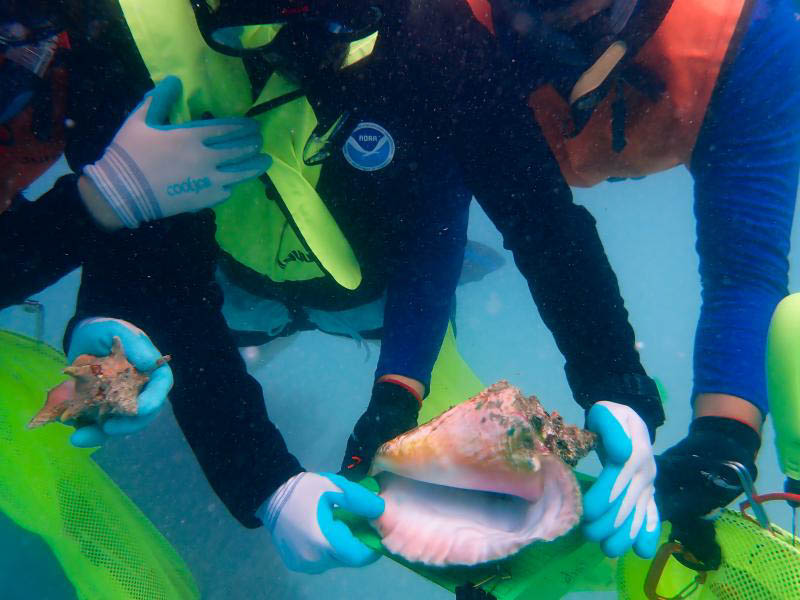
Students working alongside NOAA scientists have helped expand an underwater survey programme designed to build a clearer picture of queen conch populations across Puerto Rico.
A team of university students has swapped the classroom for the waters of Puerto Rico, joining NOAA Fisheries scientists on an extensive underwater research programme monitoring one of the Caribbean’s most recognisable marine species.
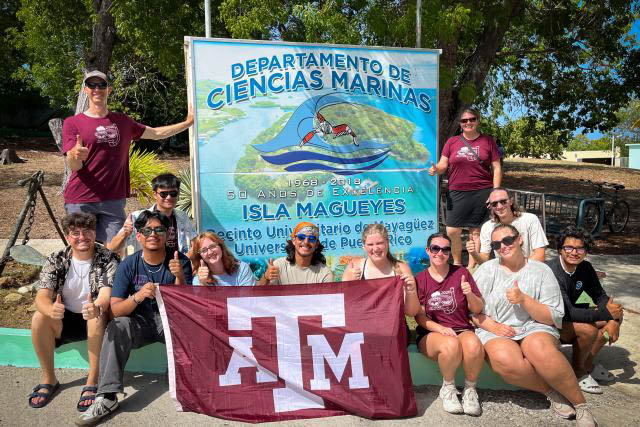
Students from Texas A&M University at Galveston worked alongside NOAA researchers during a two-week expedition studying queen conch populations around the island.
The collaboration formed part of a wider multiyear NOAA effort to understand where queen conch are found across the US Caribbean, how abundant they are and whether populations contain sufficient mature adults to sustain reproduction.
Surveying Puerto Rico Underwater
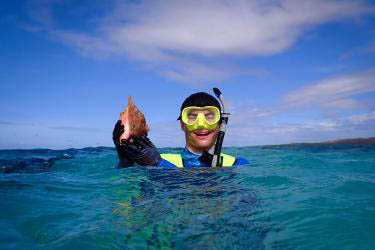
The students were already visiting Puerto Rico as part of a marine field methods course when their trip overlapped with the NOAA expedition.
With the university instructors and NOAA researchers already familiar with one another’s work, the two groups joined forces.
Before beginning the surveys, students learned about queen conch biology and the standardised methods used by NOAA researchers.
The technique involves surveying randomly selected circular areas measuring exactly 10 metres in diameter.
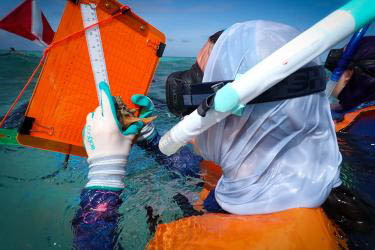
Researchers search the designated area underwater, counting every queen conch they encounter and taking measurements before returning the animals to the seabed.
Shell length is particularly useful for assessing juveniles. Once queen conch reach adulthood, their shells largely stop increasing in length and instead develop a progressively thicker lip.
By recording both shell length and lip thickness, researchers can build a picture of the population’s age structure and estimate the proportion of juvenile, adult and reproductively mature animals.
Students Add 12 Surveys to the Research
The Texas A&M team ultimately completed 12 radial surveys along Puerto Rico’s southwestern coast, contributing directly to the wider NOAA monitoring programme.
Conditions were not always favourable.
According to NOAA Fisheries, winds during the expedition sometimes reached 20 to 30mph, while waves climbed to between six and eight feet.
The resulting rough seas restricted access to some planned survey sites and stirred sediment from the seabed, reducing underwater visibility.
Researchers adapted their daily plans around the conditions while attempting to sample as wide a range of habitats and depths as possible.
Despite those challenges, the combined teams completed 105 radial surveys across Puerto Rico’s southern and eastern coasts.
The information collected will now contribute to estimates of queen conch density across different habitats and depth zones around the island.
Why Queen Conch Matter
Queen conch are closely associated with the Caribbean, where they have considerable ecological, cultural and economic importance.
Although commonly associated with sandy seabeds and seagrass habitats, the animals can occur across a broader range of environments.
Understanding where they live is only part of the challenge. Researchers also need to establish whether populations have the right balance of juveniles and mature adults to reproduce successfully.
NOAA’s wider queen conch research includes extensive sampling in Puerto Rico, Florida and the US Virgin Islands, with scientists investigating population density, spawning adults and nursery areas to help inform future conservation and management decisions.
The Puerto Rico expedition formed the final year of an island-by-island NOAA survey effort that has also covered St Thomas, St John and St Croix.
Divers as Underwater Scientists
For the participating students, the programme offered something difficult to replicate in a classroom.
Rather than simply learning how marine surveys work, they participated in an active scientific programme where weather, sea conditions, logistics and limited field time all influenced how research could be conducted.
It is also another example of the important role divers and underwater survey teams can play in marine science.
From measuring individual animals to repeatedly surveying carefully defined sections of seabed, much of what scientists know about marine populations begins with someone entering the water and recording what is actually there.
In Puerto Rico, those underwater observations are now helping researchers build a clearer picture of the future of one of the Caribbean’s most distinctive species.
