




Affiliate Disclosure: Some content on The Scuba News may include affiliate links. Find out how this supports our work.
The Simple Answer is Yes
On a Wednesday night back in October 6, 2010, a tragic drowning occurred at Gull Lake, Michigan, USA, a popular training site frequently used by area dive shops for open water certifications.

Although official details surrounding the incident were limited, preliminary media coverage pointed to a critical lack of preparation and strategy as major contributing factors. The diver apparently embarked on a solo nighttime dive without the essential equipment especially a dive knife required for such conditions.
The next morning, search and rescue personnel located the diver’s body on the lake bed, where he had become trapped in a quarter-inch nylon line—presumably part of the network of underwater navigation ropes used to link various submerged training props. This tragedy serves as a stark reminder that whether you plan to dive with a buddy or venture out on a solo excursion, thorough planning and the correct gear are absolute prerequisites before entering the water.

Despite what popular movies might suggest, a dive knife is never intended to be used as a weapon against humans, sea creatures, or delicate coral. Instead, its true purpose is to serve as an essential safety tool for freeing yourself, your gear, or trapped marine life from dangerous underwater hazards like dense kelp, stray ropes, and abandoned fishing nets. In addition to its role in emergencies, this adaptable tool is highly practical both underwater and on the surface for everyday tasks, such as cutting through a tangled surface marker buoy line or knocking the blade against your oxygen tank to create an audible signal for your diving partner.
Diving Knife Types and Blades
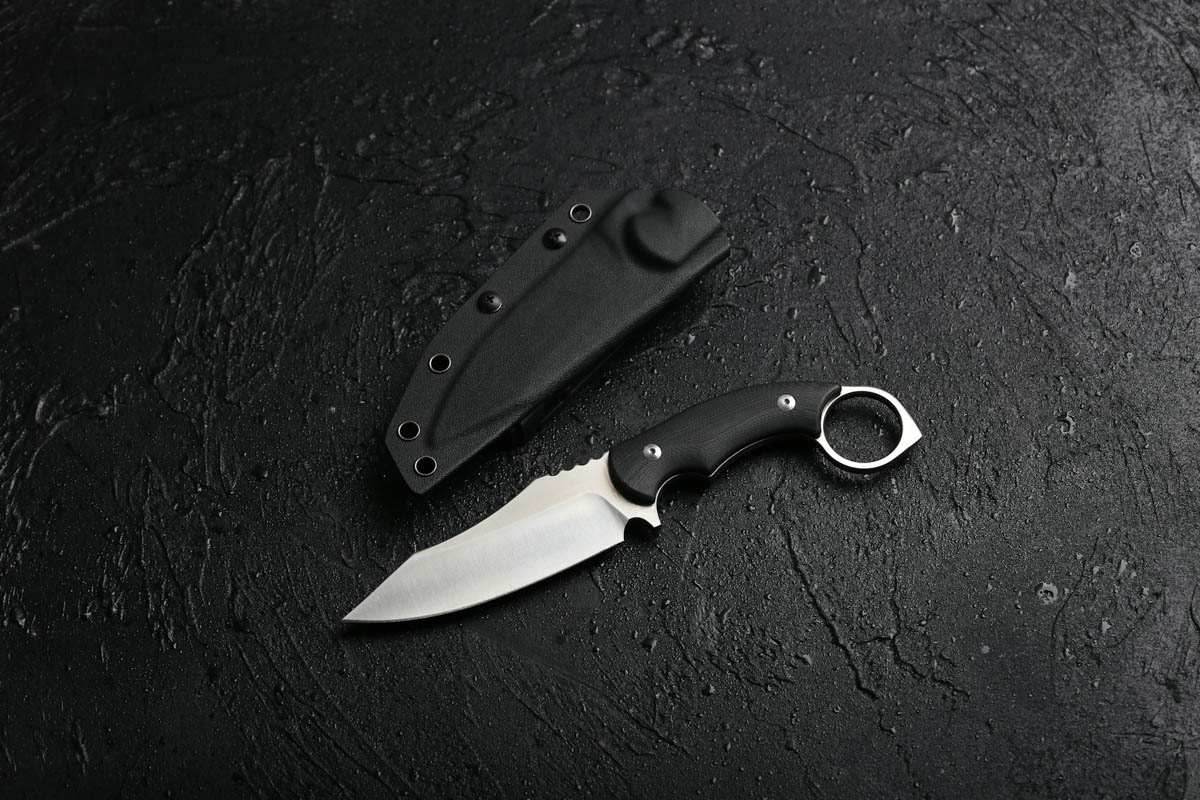
Traditional dive knives typically feature a double-edged blade available in either a fixed or folding configuration. The straight edge of the blade is well-suited for slicing through synthetic materials like plastic or nylon, whereas the serrated side is more effective at cutting through dense natural fibers and thick kelp.
Choosing between the two styles involves balancing accessibility and convenience. Fixed-blade knives offer superior durability and can be deployed instantly during an emergency, though they do require a secure sheath for safe transport. On the other hand, folding models can be tucked away compactly inside a pocket, but they can be difficult to open quickly, particularly when wearing thick diving gloves or using only one hand.
Additionally, many specialized dive knives incorporate a dedicated line-cutting notch built directly into the blade. Larger models may also feature heavy, T-shaped handles designed to serve a dual purpose as a tank banger for signaling underwater.
Why Do Dive Knives Have Blunt Tips?
While certain dive knife models feature a sharp, pointed end, a blunt-tip or chisel-tip knife functions less like a stabbing weapon and more like a versatile, multi-purpose tool. For recreational divers, the primary benefit of a blunt tip is enhanced safety, as it significantly minimizes the risk of accidentally puncturing your skin, damaging your equipment, or injuring your diving partner during a frantic situation.
Why Do Diving Knives Have Holes?
The openings integrated into a dive knife’s handle are generally designed to secure lanyards, carabiners, or mounting straps for easy access. Further down the tool, a long, narrow cutout along the blade itself functions as a shackle key, which allows divers to easily loosen or tighten mechanical rigging hardware. Additionally, folding models frequently incorporate a dedicated finger hole within the design to provide better leverage, making the blade much simpler to open and close when underwater or wearing gloves.
Do Dive Knives Rust?
While marine-grade stainless steel dive knives offer solid corrosion resistance compared to standard blades, and titanium versions are entirely immune to rust, saltwater remains incredibly destructive to all metals. Consequently, even the most premium dive knife will eventually degrade and corrode if it is not properly cleaned and maintained after every excursion.
To protect your dive knife from degradation, always rinse it thoroughly with fresh water after every excursion and ensure it is completely dry before putting it away. Coating the blade with a light layer of silicone grease provides an effective barrier against rust; however, it is crucial to avoid petroleum-based lubricants, as these chemicals can rapidly deteriorate the rubber and plastic components of your other diving equipment.
How To Wear a Diving Knife
When choosing where to wear a dive knife, make sure:
- It’s secure.
- It won’t create a snag hazard.
- You can easily reach, release, and re-stow it – ideally with one hand.
Where you carry your dive knife largely comes down to personal preference and the size of the blade. While larger knives are traditionally strapped to the lower leg and compact or folding models can be stowed in a suit or BCD pocket, both locations can prove awkward or difficult to reach quickly in a pinch. To keep a smaller knife within easy sight and reach, many divers prefer mounting the sheath higher up, such as along a BCD inflator hose, on a wrist strap, or anchored directly to dedicated attachment points on their chest harness. Regardless of where you choose to mount it, avoid attaching your knife to a weight belt, as the added bulk can interfere with your ability to ditch weights immediately during an emergency.
Can I Take a Diving Knife on a Plane?
When traveling with a dive knife, TSA and airline security rules require you to pack it securely inside your checked baggage rather than carrying it onboard in your hand luggage. To prevent the blade from puncturing your bags or injuring airport handlers, always secure the knife in its protective sheath or lock it in its folded position before packing. For added peace of mind and extra cushioning, wrap the sheath in a thick beach towel or stow it inside a hard-shell gear case to keep both the knife and the rest of your dive equipment completely safe throughout your trip.
Are Dive Knives Legal Everywhere?
Because a dive knife is legally classified as a weapon in many jurisdictions, carrying one can lead to legal trouble if local laws prohibit it. Furthermore, several marine reserves and protected underwater parks strictly ban knives to prevent damage to marine life. Prior to traveling or setting out on a dive, take time to research the specific knife-related laws for your destination—both on land and in the water. If you are ever unsure about regional dive restrictions or blade regulations, reaching out to a local dive center is a great way to get up-to-date, reliable advice.
How To Choose a Dive Knife
In addition, your ideal knife should be comfortable to wear and hold, as well as easy to release and put away. If you use dive gloves, remember to test the knife while wearing them.
Selecting the ideal dive knife comes down to your individual diving style and logistics. Consider the specific underwater environments you frequent; for instance, a compact line cutter excels at slicing through monofilament nets on wreck sites, whereas a robust, serrated blade is far better suited for sawing through thick kelp forests. Your intended mounting spot will also narrow down the best size, sheath design, and mounting accessories for your setup. Finally, if you travel frequently for dives, opting for a compact fixed blade or a lightweight folding style will make packing and adhering to baggage limits much easier.
Looking to add a dive knife or cutting tool to your dive kit? Compare the latest options at Scuba.com and Amazon.com to find the right size, blade style and mounting option for your diving.
When you find yourself torn between a classic dive knife and a set of shears, carrying both is often the smartest move. Pairing a standard blade with a dedicated line cutter or trauma shears gives you the versatility to tackle everything from tough webbing to thin, tangled fishing line. Stashing one tool on your chest and another on your waist or leg also ensures you can easily reach a blade with either hand, providing a crucial redundant safety net if one arm becomes restricted underwater.
Few tools are more vital to a diver than a dependable knife. A sharp or serrated blade—crafted from durable materials like stainless steel or titanium—provides critical safety when dealing with underwater lines and nets.
Reminder from The Canadian Air Transport Security Authority (CATSA)
Under the Criminal Code of Canada, any knife featuring a blade that deploys automatically—whether triggered by gravity, centrifugal motion, or a spring or button mechanism built into the handle—is classified as a prohibited weapon. Carrying items such as switchblades or butterfly knives is strictly illegal. If security personnel discover a prohibited blade during airport pre-board screening, standard procedure mandates immediate law enforcement intervention, which can result in criminal charges and legal prosecution for the passenger.
Comments