




When most people think of Greece, images of whitewashed villages, sun-drenched beaches, and the ruins of ancient civilizations spring to mind. But beneath the turquoise waters that lap against its 13,000 kilometers of coastline lies another Greece – one of shipwrecks steeped in history, colorful reefs, and dramatic underwater landscapes that make it one of Europe’s most enticing dive destinations.
Why Dive in Greece?
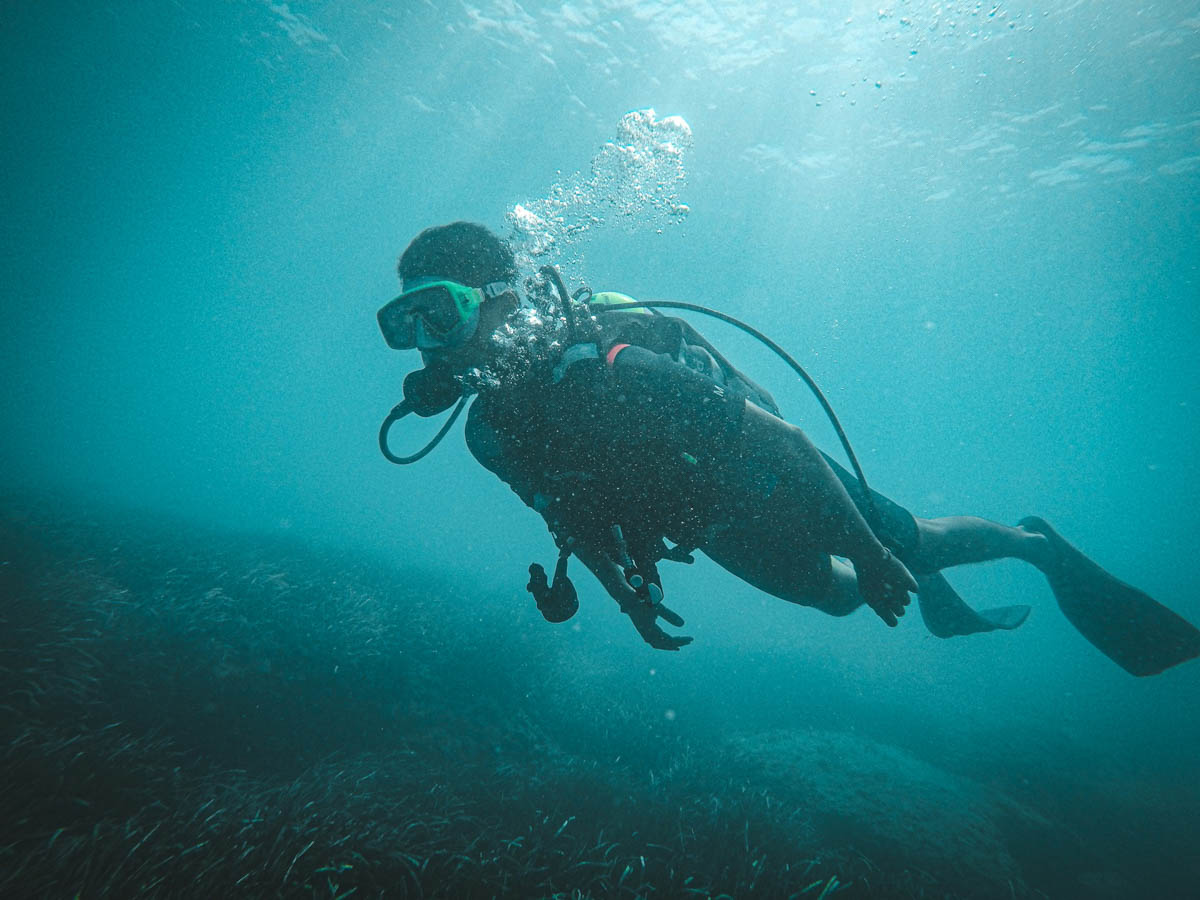
Greece offers something few countries can match: a perfect fusion of ancient history, natural beauty, and diving adventure. Once strictly regulated, diving in Greece has opened up dramatically since 2006, allowing access to previously restricted areas rich in archaeological treasures and marine biodiversity. Today, divers can explore submerged ruins, WWII wrecks, caverns, volcanic formations, and thriving ecosystems – all against the backdrop of Greece’s legendary hospitality and cuisine.
With warm waters, excellent visibility (often 20–30 meters), and a dive season stretching from April to November, Greece is as welcoming below the surface as it is above.
Must-Experience Dive Sites
- The Wreck of the Britannic, Kea Island
Sister ship to the Titanic, the HMHS Britannic sank in 1916 and now lies in pristine condition at 120 meters. While only technical divers can access it, its presence adds to the allure of Kea’s diving scene. Recreational divers can still enjoy nearby reefs and smaller wrecks. - The Peristera Shipwreck, Alonissos
Known as the “Parthenon of Shipwrecks,” this 5th-century BC merchant vessel carried thousands of amphorae. Now part of Greece’s first underwater museum, it’s a breathtaking dive where history and marine life meet. - Santorini’s Volcanic Reefs
Diving the caldera reveals towering lava formations, dramatic walls, and caves alive with sponges, groupers, and octopus. The contrast of black volcanic rock against the Aegean’s blue is unforgettable. - Caves of Zakynthos
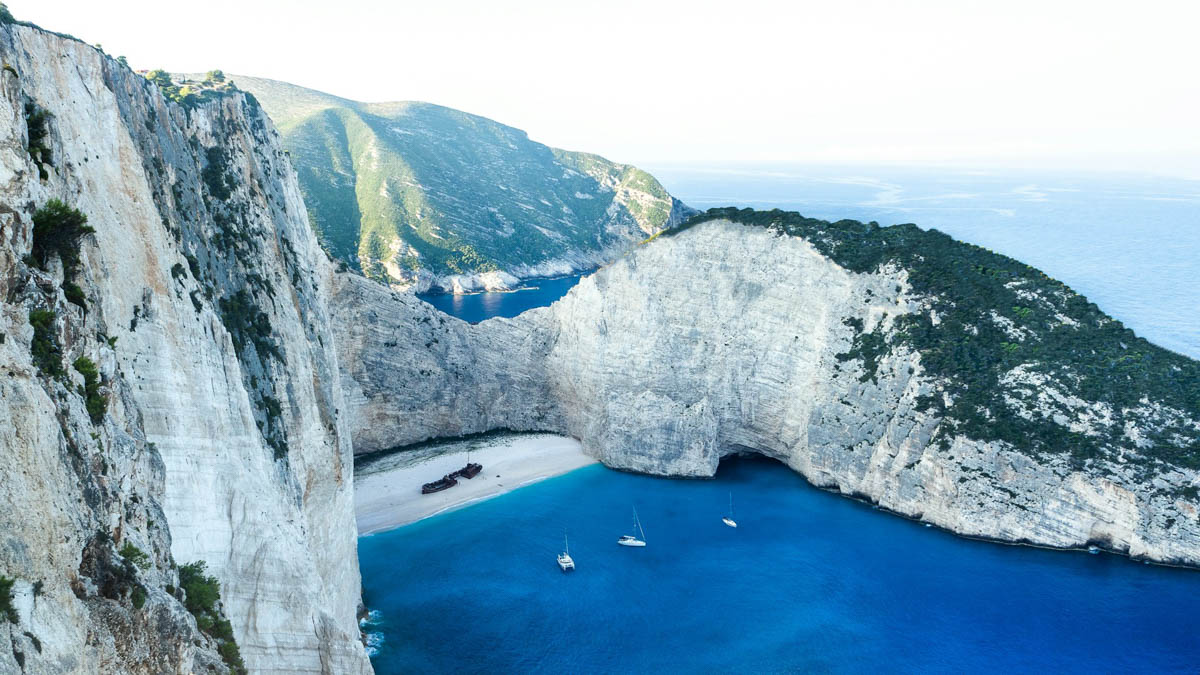
Famous for its Blue Caves, Zakynthos offers cavern diving at its most magical. Sunlight pierces the openings, creating dazzling displays of turquoise light. Loggerhead turtles are also a common encounter here. - Chios and the Mastic Caves
A lesser-known gem, Chios offers caverns adorned with stalactites and stalagmites. Add in WWII wrecks and vibrant marine life, and you’ve got a hidden paradise for adventurous divers. - Crete’s Rich Coastline
Greece’s largest island boasts wall dives, WWII wrecks, caverns, and even elephant bones in the Sitia Caves. Crete combines Mediterranean warmth with a diversity of sites that could fill an entire dive holiday.
Getting There & Around
Athens serves as the main gateway, with direct flights from major international hubs. From there, ferries and domestic flights connect divers to the islands. Many liveaboards are not yet widespread in Greece, so most divers base themselves on islands like Santorini, Zakynthos, Crete, or Alonissos and join daily boat trips with local dive operators. Car rentals are inexpensive and useful for exploring islands between dives.
What to Expect Underwater
- Visibility: Excellent – 20 to 30 meters is common.
- Water Temperature: Ranges from 16°C in early spring to 26°C in midsummer. A 5mm wetsuit is recommended in shoulder seasons, while a 3mm suffices in peak summer.
- Marine Life: Expect octopus, moray eels, groupers, barracuda, nudibranchs, and loggerhead turtles. While large pelagics are rare, Greece offers a dazzling mix of macro life and historical artifacts.
- Experience Level: Greece caters to all divers. Beginners will find sheltered reefs and calm waters, while advanced divers can explore wrecks and deep walls.
Beyond the Bubbles
One of the joys of diving in Greece is how effortlessly it blends into a wider holiday. Between dives, enjoy local tavernas, explore ancient ruins like the Acropolis, or hike rugged coastlines. Evenings often end with fresh seafood, ouzo, and sunsets over the Aegean – reminders that diving here is about more than just what you see underwater.
Why Choose Greece for Your Next Dive Trip?
Greece is a destination where history and adventure meet. Few places allow you to dive a 5th-century BC shipwreck in the morning, explore volcanic caverns in the afternoon, and dine overlooking ruins that have stood for millennia. Add world-class hospitality, a long dive season, and affordable travel, and Greece firmly establishes itself as one of Europe’s rising stars in scuba tourism.
For divers seeking a blend of culture, cuisine, and underwater exploration, Greece offers an unforgettable adventure.
Comments