

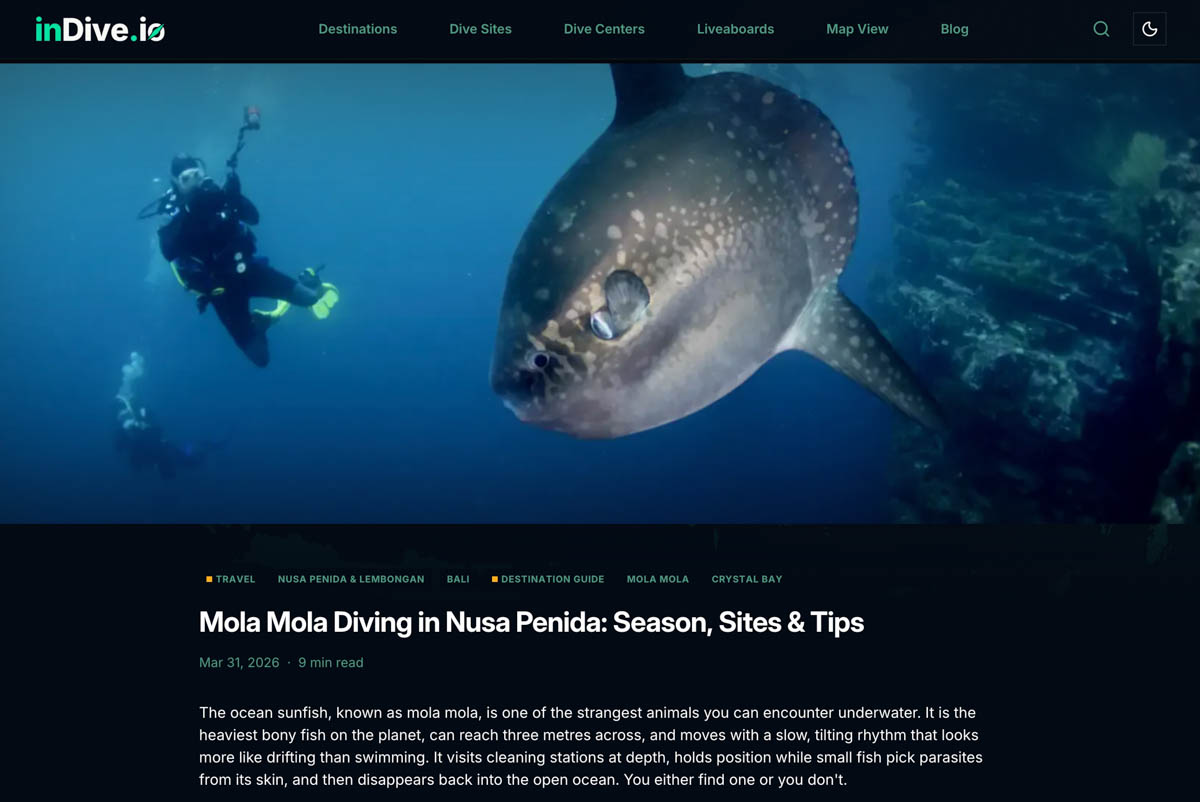
Indonesia’s vast and often overwhelming dive landscape has taken a significant step toward accessibility with the launch of InDive.io, a new platform aiming to bring the country’s scattered dive information into one streamlined, searchable resource.
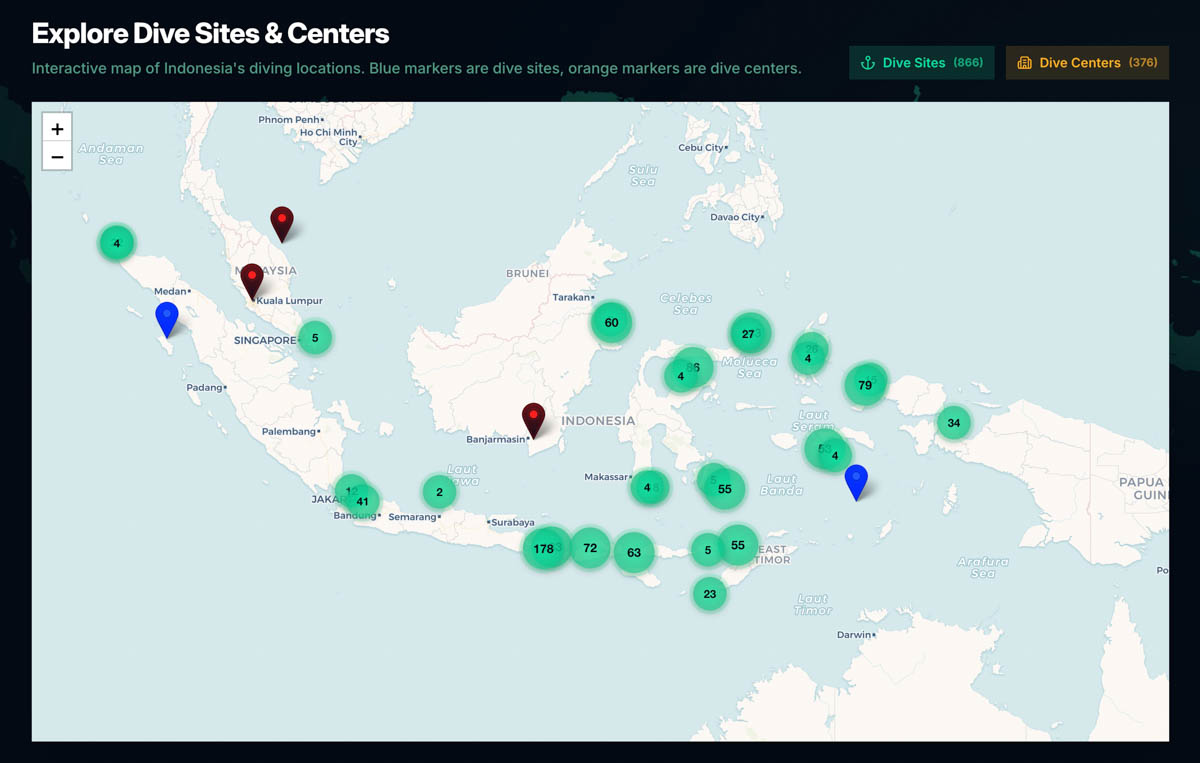
Developed by Ocean Earth Travels, the platform has entered public beta with an ambitious scope. At launch, it already includes more than 850 verified dive sites, 350 dive centres, over 120 liveaboards, and a growing catalogue of marine species, all mapped across 12 provinces in Indonesia.
The platform, accessible via InDive.io, has been positioned as a solution to one of the biggest long-standing issues in Indonesian dive travel, fragmented and inconsistent information spread across multiple sources.
A Central Hub for a Fragmented Dive Destination
Indonesia is widely regarded as one of the most biodiverse marine environments on the planet, but planning a trip has historically required piecing together information from multiple websites, forums, and operator pages, many of which are outdated or incomplete.
InDive.io aims to change that.
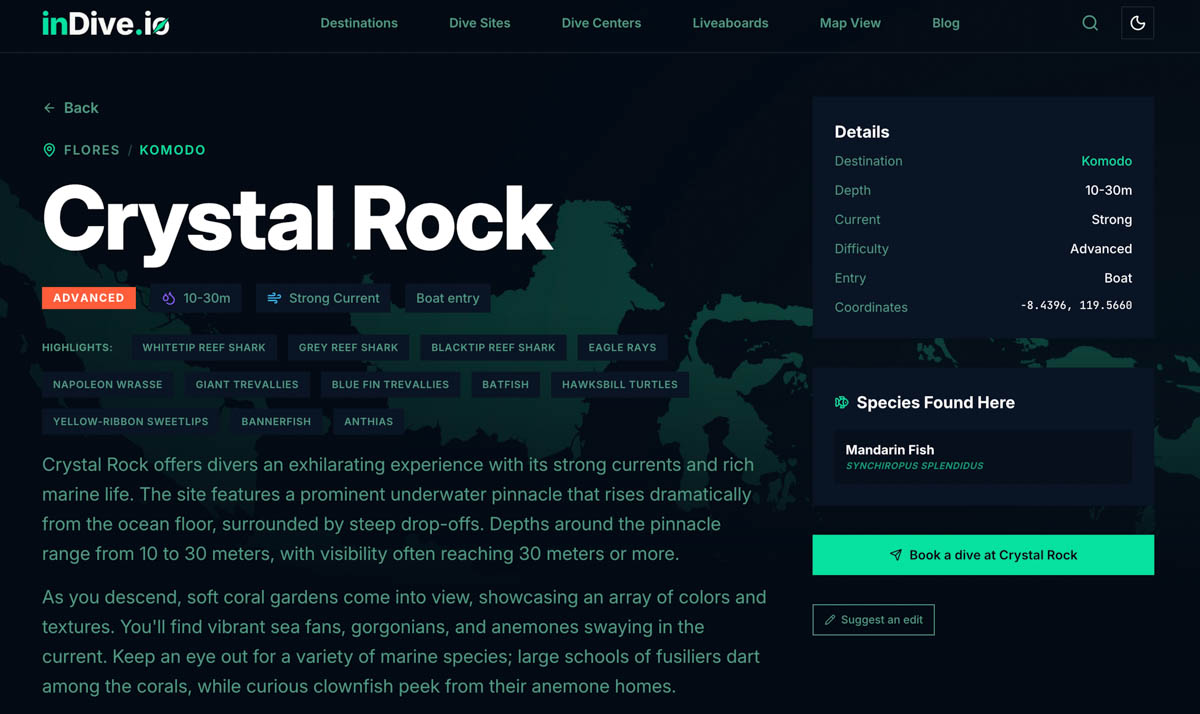
Each dive site listing includes detailed data such as GPS coordinates, depth ranges, current strength, difficulty level, and seasonal recommendations. Divers can also see which marine species are commonly found at each location, helping them plan trips based on specific sightings.
Dive centres are listed with contact details, certifications, and nearby dive sites, while liveaboard entries include specifications like capacity, cabin configuration, pricing, certification requirements, and operating regions.
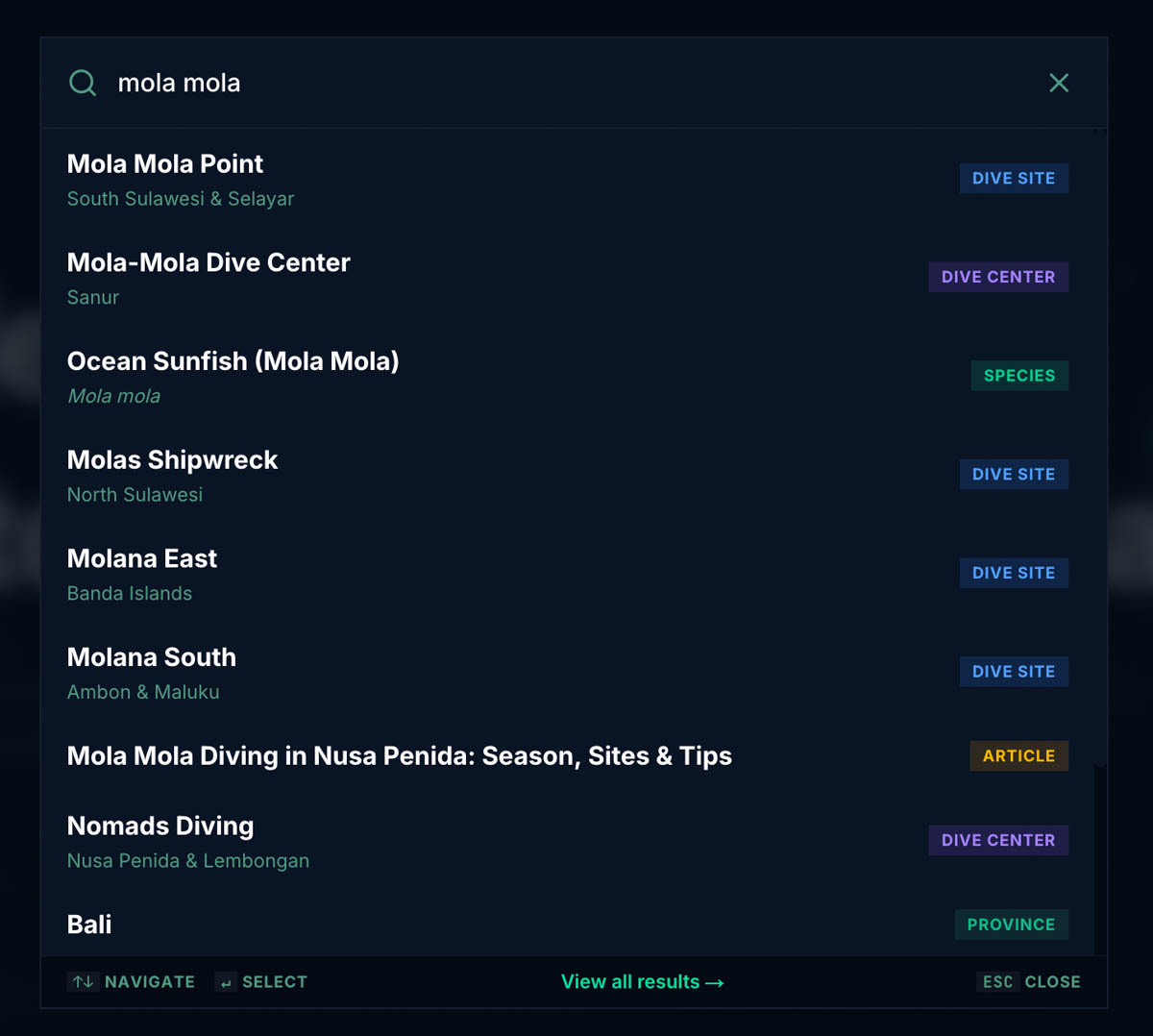
A unified search function allows users to find dive sites, operators, liveaboards, and even specific species from a single search bar, addressing one of the most common frustrations for divers researching Indonesia.
Built for Divers, Not Just Data
According to the InDive team, the platform was created to solve a problem they experienced firsthand.
“Divers planning a trip to Indonesia shouldn’t have to piece together information from five different sources. We built what we wished existed,” the team said in the announcement.
That philosophy extends beyond divers to operators as well.
Free Listings, With More to Come
Every dive centre in Indonesia already has a basic listing on the platform, created from publicly available data. Operators can claim their profile through a simple verification process, giving them control over their content, imagery, and contact details.
For now, everything remains free to use. However, premium features are expected in future updates, including enhanced visibility in specific regions and direct lead generation tools for operators.
Liveaboard partnerships and bookings are currently handled through Ocean Earth Travels, suggesting a future commercial layer that could integrate trip planning and booking into the platform.
Community-Driven Growth
InDive is also leaning into community participation to expand and refine its database.
Dive centres and individual contributors can submit new dive sites or operators through a dedicated system, with all entries reviewed before publication. Participating dive centres that contribute verified local knowledge may receive premium features at no cost.
The platform already includes a species encyclopedia with over 120 marine life entries, complete with behavioural notes and conservation status, as well as cross-linked data showing where species are most frequently sighted.
What Comes Next
While the current release is labelled as a public beta, the roadmap suggests rapid development ahead.
Upcoming features are expected to include enhanced operator dashboards, diver reviews, and integrated trip-planning tools, positioning InDive.io as more than just a directory, but potentially a central hub for discovering and booking dive experiences across Indonesia.
The Bigger Picture
For a country with more than 3,000 known dive sites spread across the world’s largest archipelago, the lack of a unified, reliable database has long been a gap in the market.
If InDive.io can maintain data accuracy while scaling its coverage, it may quickly become an essential tool not just for visiting divers, but for the operators who rely on visibility in an increasingly competitive market.