

The documentary Shipwrecked: Nightmare at Sea, directed by Chiara Messineo, chronicles the 2012 Costa Concordia cruise ship disaster, which resulted in 32 fatalities and the eventual 16-year imprisonment of its captain. The film captures the terror of the event by combining first-hand survivor interviews, raw mobile phone video captured during the capsizing, and translated black box audio that reveals the captain’s critical and hazardous choices. Throughout the ordeal, the overwhelming gravity of the situation led many passengers and crew members on board to openly compare their experience to the sinking of the Titanic.
While the Netflix film highlights personal stories from those on board, it bypassed several key facts surrounding the devastating impact.
The Costa Concordia was a prominent Italian cruise ship operated by Costa Crociere and the flagship of her class, which included sister vessels like the Costa Serena, Costa Pacifica, Costa Favolosa, Costa Fascinosa, and Carnival Cruise Line’s Carnival Splendor. Weighing 114,137 tons, these vessels ranked among the largest passenger ships ever constructed in Italy at the time of their debut, later surpassed only by the 130,000-gross-ton Dream-class liners.
The ship became the center of a major maritime disaster on the evening of January 13, 2012. While sailing in the Tyrrhenian Sea, the vessel struck a reef right off the eastern coast of Isola del Giglio. The collision ripped a 53-meter (174-foot) tear into the port side of the hull, quickly flooding the engine room and disabling the ship’s propulsion and electrical systems. Helplessly drifting back toward the island as she took on water, the vessel eventually grounded near the coastline and capsized onto her starboard side, settling precariously on a submerged rock shelf.
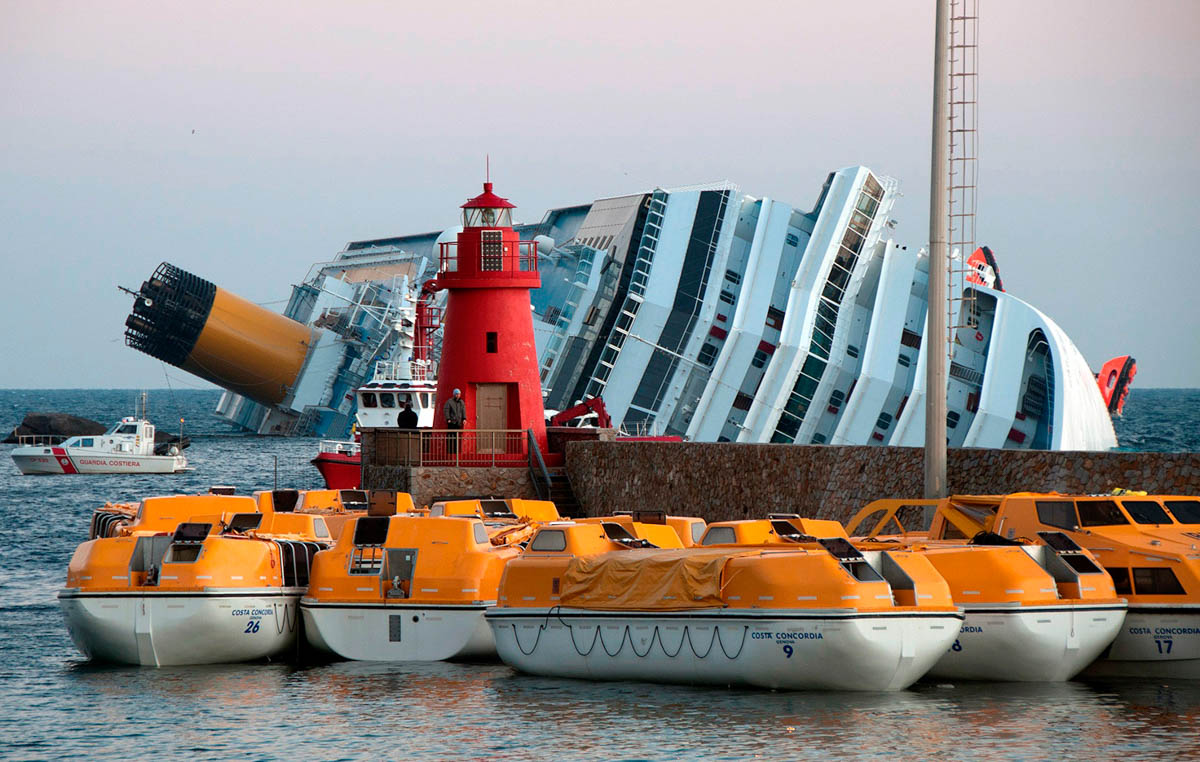
Rvongher, CC BY-SA 3.0, via Wikimedia Commons

A chaotic evacuation followed, lasting more than six hours. Out of the 4,252 people on board—consisting of 3,229 passengers and 1,023 crew members—32 people lost their lives. The ship’s master, Captain Francesco Schettino, faced criminal prosecution for his actions during the crisis. Found guilty of manslaughter, causing a shipwreck, and deserting his vessel before everyone was evacuated, Schettino received a 16-year prison sentence in 2015. Following a massive salvage operation three years after the grounding, the wreckage was refloated, towed to the port of Genoa, and systematically dismantled.