



A giant underwater wave of water connected to this year’s El Niño weather pattern is moving up the west coast of the Americas, raising alarm bells among scientists about how climate change is magnifying the impacts of the naturally occurring phenomenon.
A Kelvin wave is a massive surge of warm water that flows deep below the ocean’s surface, moving slowly across vast distances rather than crashing like a typical surface wave. These unique wave dynamics are named in honor of Lord Kelvin, the prominent scientist who first identified them in 1879.
How Kelvin Waves Work
Oceanic Kelvin waves typically originate in the western equatorial Pacific when prevailing trade winds slacken or invert their normal direction, a shift frequently associated with the onset of El Niño. This atmospheric change allows a vast, shallow reservoir of warm water—spanning thousands of miles—to migrate eastward along the equator at a steady pace of roughly 125 to 255 miles per day. Upon reaching the South American continent, the physical barrier forces the submerged surge to divide. Deflected both northward and southward along the western margins of the Americas, the wave remains tightly hugging the coastline due to the steering force of Earth’s rotation, known as the Coriolis effect. (Because Earth rotates on its axis, objects traveling long distances—such as air currents, ocean water, or high-velocity projectiles—appear to veer off course rather than moving in a straight trajectory. This deflection is driven by the Coriolis effect, an apparent force stemming entirely from the planet’s rotation beneath the moving object.)
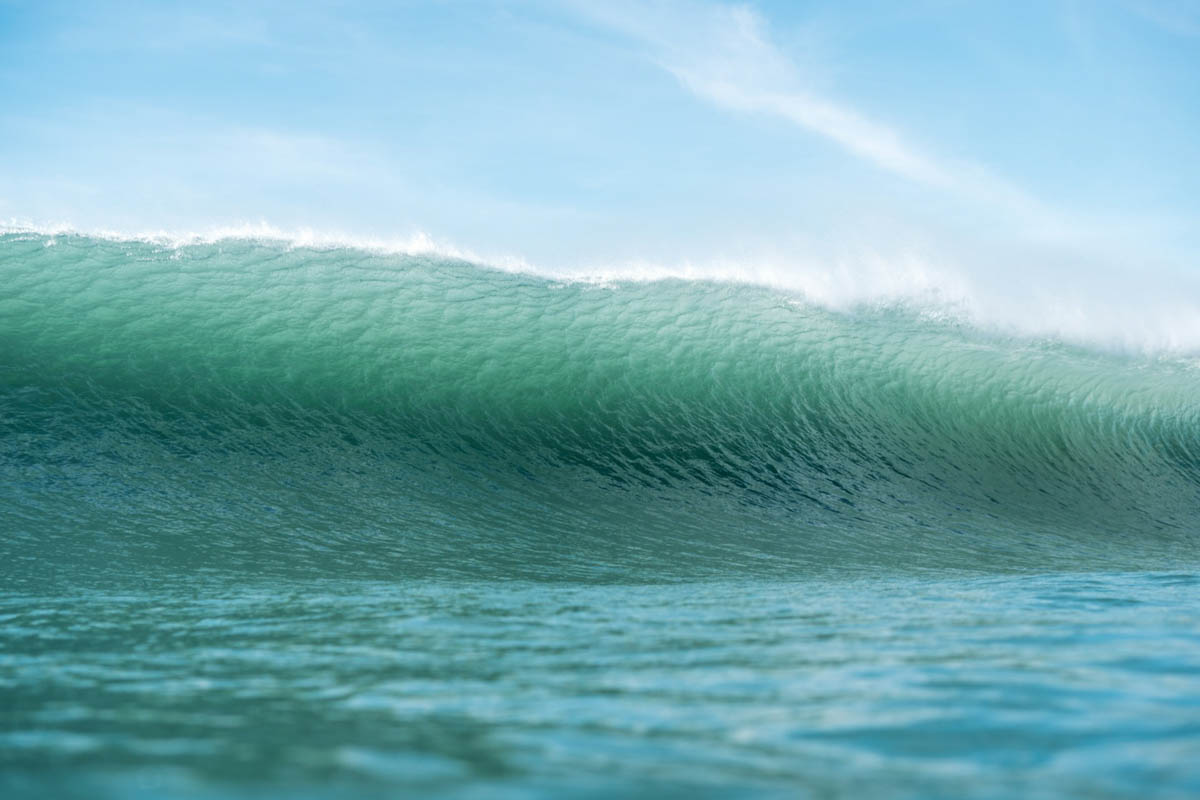
Photo by Austin Schmid on Unsplash
Impacts and Risks
These Kelvin waves elevate coastal baseline sea levels by anywhere from a few inches to roughly a foot as they pass. While this temporary rise does not cause damage on its own, it significantly heightens the risk of tidal flooding when aligned with astronomical king tides, strong onshore winds, or severe storm surges. Beyond coastal impacts, the influx of warm surface water disrupts marine ecosystems by capping the region with a layer of heat, which suppresses the upwelling of cold, nutrient-dense deep ocean water that local marine food webs rely on.
For most individuals, the arrival of a Kelvin wave will go largely unnoticed in day-to-day life, as it represents a routine oceanographic phenomenon that recurs periodically. However, for coastal residents and visitors, remaining mindful of local sea levels and meteorology is prudent, particularly when coastal storms threaten to overlap with higher water lines. In response to potential tidal inundation, British Columbia emergency officials encourage residents in low-lying zones to maintain a household emergency response strategy and continuously track localized hazard alerts.
Current weather advisories and localized coastal hazard warnings remain available to the public via Environment and Climate Change Canada.