

From deep offshore reefs to unexpected manta encounters, Mozambique’s Inhambane coast offers far more than its most famous dive site.
For decades, one name has dominated conversations about diving in Inhambane, Mozambique: Manta Reef.
It was the site that appeared in brochures, dive logs and bucket lists. Divers travelled from around the world hoping to descend onto a colourful offshore reef and watch manta rays circle through its famous cleaning stations.
Manta Reef has earned that reputation. But the wider Tofo and Barra region offers an extraordinary collection of reefs, and local dive professionals are encouraging visitors to look beyond the name that first put Inhambane on the international diving map.
At SEE Activity Center, based at Barra Beach, the approach is to select dive sites according to conditions, diver experience and recent marine activity rather than build every itinerary around one famous location.
The result is a different way of exploring Inhambane. One day, Manta Reef may be the obvious choice. On another, Giant’s Castle, The Office or Amazon may offer the most compelling opportunity.
A changing picture of manta encounters
Manta Reef remains one of the region’s most impressive dive sites. Its broad reef flat, slopes and pinnacles sit at approximately 19 to 26 metres, with colourful reef life and cleaning stations that have long attracted large marine animals.
What has changed, according to SEE’s local diving experience, is the predictability of manta encounters. The operator says sightings at Manta Reef are less frequent than during the site’s best-known years, although a manta was recorded there as recently as July 2026.
That does not mean the animals have disappeared from Inhambane or permanently relocated to other reefs. Manta behaviour is complex, and sightings at individual sites can vary with environmental conditions, food availability and cleaning-station activity.
Recent research provides useful context. A 2026 study published in Marine Environmental Research used remote underwater cameras to monitor two cleaning stations at Giant’s Castle between July 2021 and October 2024. Researchers recorded 174 manta sightings during 610 hours of video, including both reef and oceanic manta rays. The study also found that visitation varied throughout the day and that manta presence was less likely in close temporal proximity to diver activity. These findings underline how much can be missed when observations depend only on the timing of recreational dives.
SEE’s recent records offer a more immediate picture of activity across the region. The team reported manta sightings at The Office on August 7, Giant’s Castle on August 9, Colosseum on August 23, Amazon on September 4 and Giant’s Castle again on September 6.
These are operator-reported observations, not a comprehensive scientific survey or a guarantee of future encounters. They do, however, illustrate why a flexible itinerary can be more rewarding than concentrating exclusively on Manta Reef.
Giant’s Castle: A reef built for big encounters
Giant’s Castle is one of the most compelling alternatives for experienced divers. The substantial offshore reef runs roughly north to south, with a broad reef flat and a deeper wall. Depths generally range from approximately 26 to 34 metres.
Its scale is part of the attraction. The wall drops into blue water, cleaning stations attract visiting marine life, and the surrounding ocean creates the sense that something large could appear at any moment.
The reef is also an important research location. The 2026 manta cleaning-station study documented regular use of Giant’s Castle by both reef and oceanic manta rays, providing scientific support for its importance beyond anecdotal dive reports.
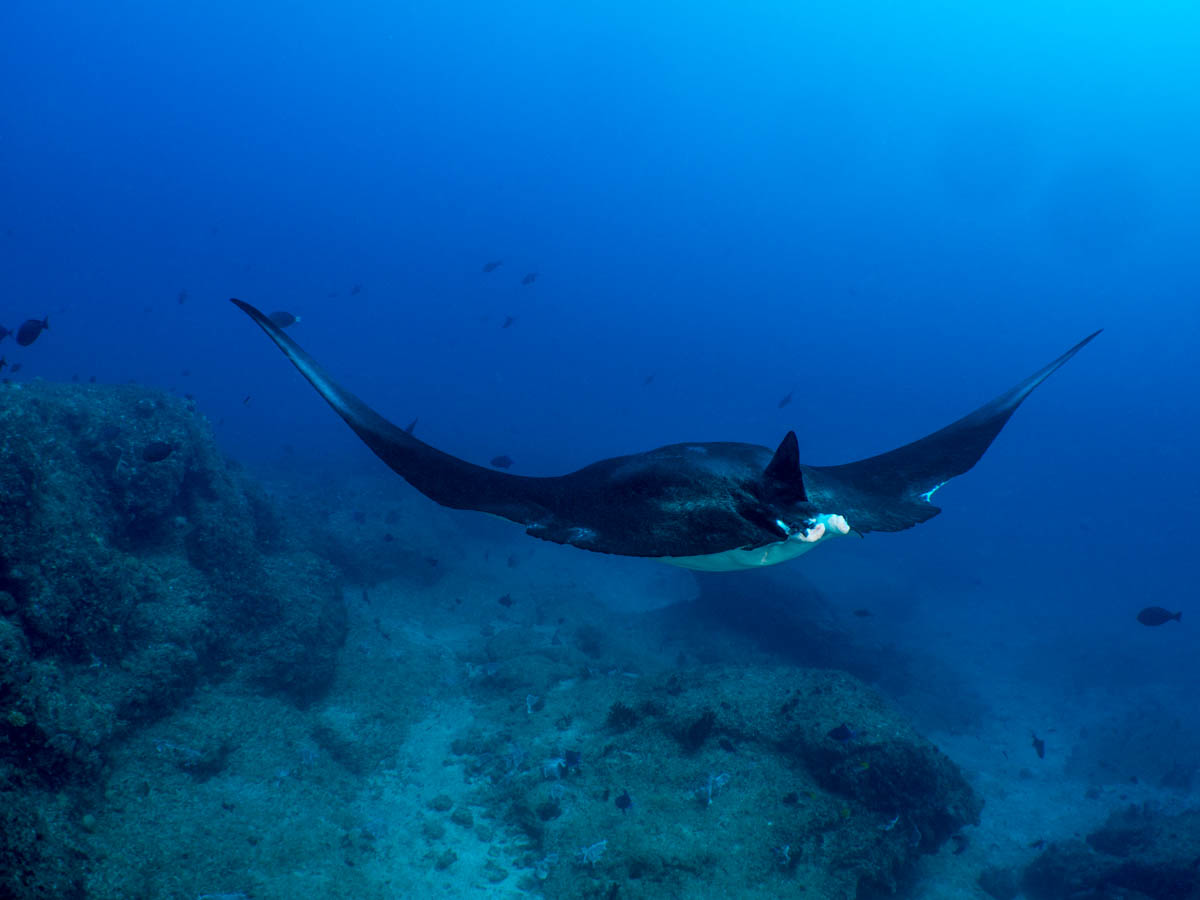
SEE recorded manta encounters here on August 9 and September 6, and supplied a photograph of a manta taken at the site.
Giant’s Castle is not a dive to choose simply because of the possibility of megafauna. Its depth and offshore conditions make appropriate experience, training and a careful assessment of the day’s conditions essential.
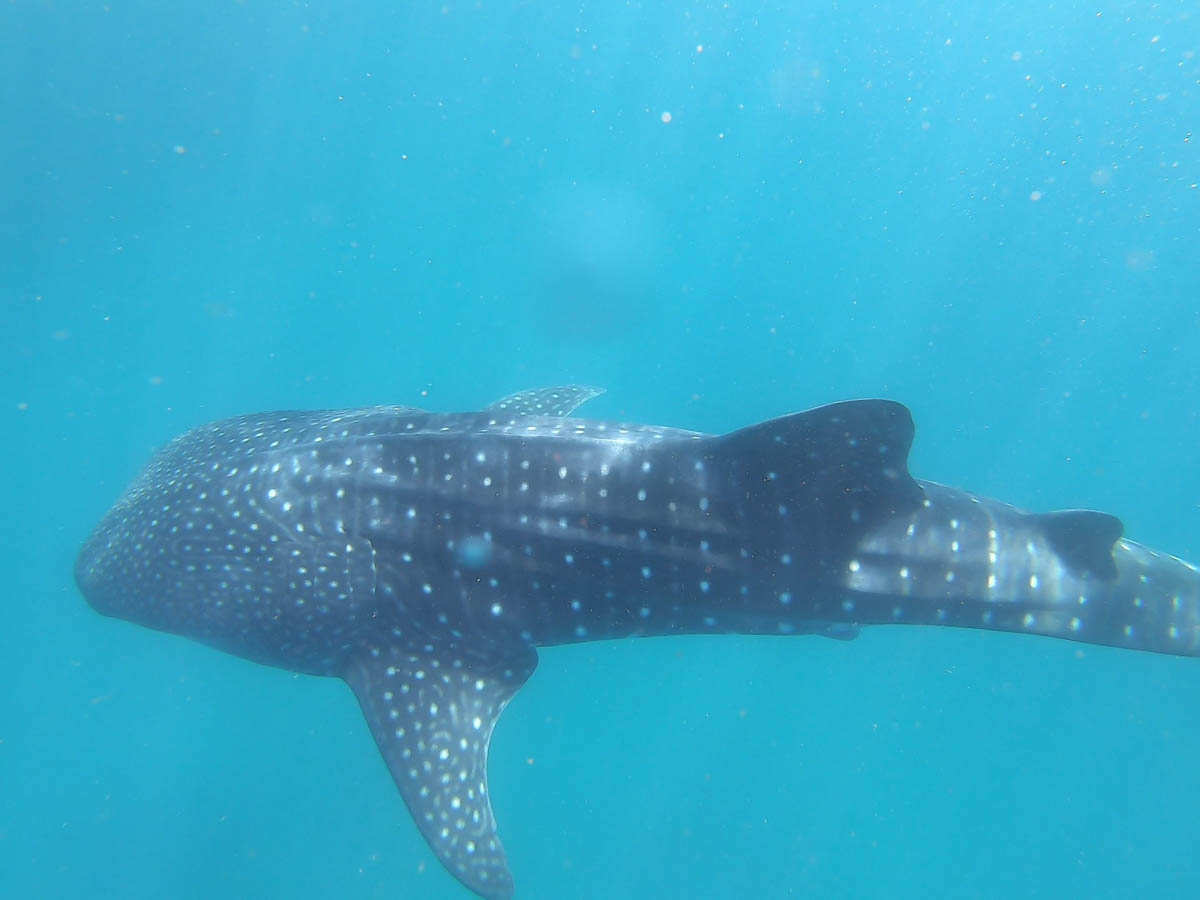
Image credit: SEE Activity Center
Marble Arch: More than a beautiful swim-through
Marble Arch offers a different character from the deeper offshore reefs. Generally ranging from approximately 13 to 18 metres, it features a broad reef flat, large potholes and the rock arch that gives the site its name.
The topography makes it particularly appealing to underwater photographers, but the attraction extends beyond the arch itself. Schools of fish, reef life and occasional pelagic visitors can turn a dive into something quite different from the one anticipated at the surface.
The site also lies close to the area commonly known as Whale Shark Alley. A passing whale shark is possible, although sightings should never be treated as an expectation or a reason to overlook the reef’s smaller inhabitants.
For divers building confidence in the region, Marble Arch can provide a useful contrast to the deeper sites, subject to conditions and the dive team’s assessment.
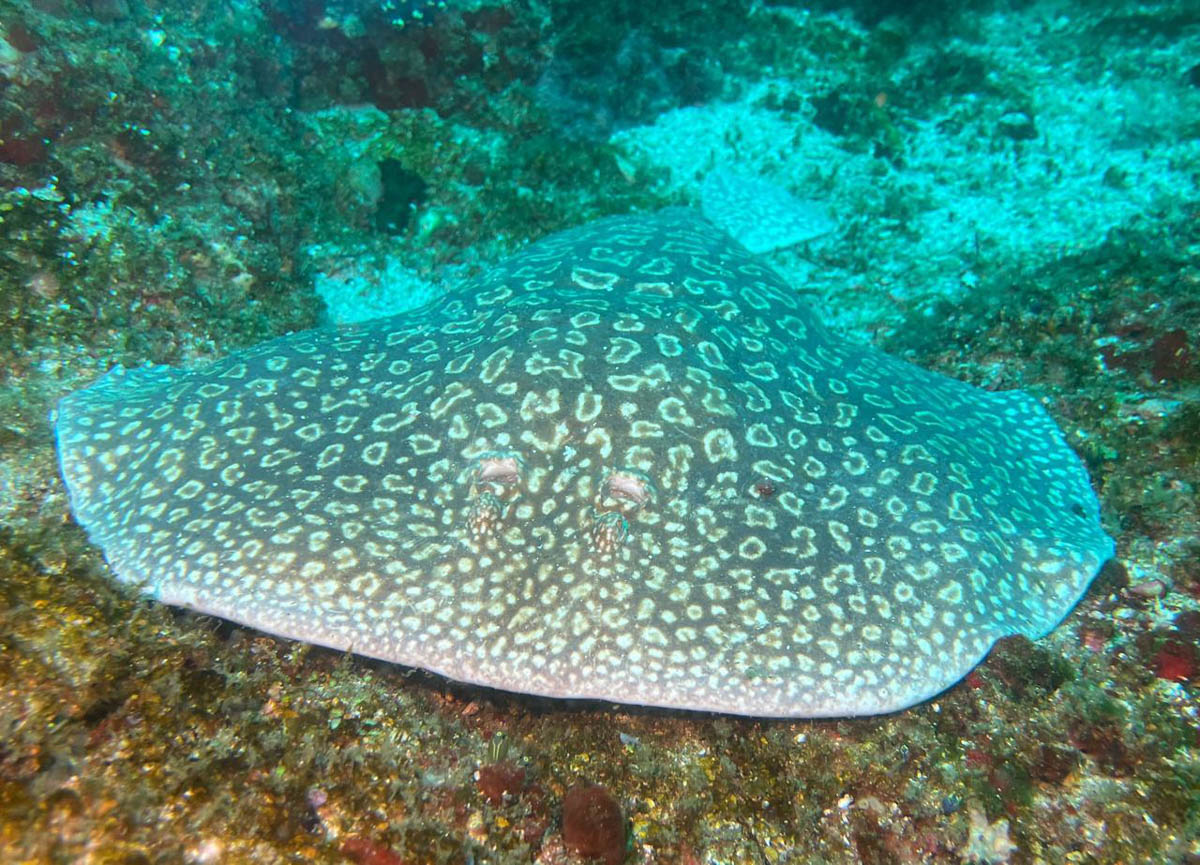
Image credit: SEE Activity Center
The Office: Ledges, valleys and life in the blue
The Office may have a familiar name, but there is little routine about the diving.
This offshore reef is characterised by ledges, valleys, overhangs and soft corals, with depths generally between approximately 23 and 26 metres. Its complex structure creates shelter for reef life and provides plenty to explore beneath the larger-scale drama of the surrounding ocean.
SEE describes the site as a location where manta encounters can occur alongside turtles, moray eels, potato groupers, reef sharks and other pelagic visitors. The team also reports a resident leopard shark.
A manta sighting on August 7 adds to the recent evidence that the wider reef system remains worth exploring. As with the other sites, it is an observation rather than a prediction of what the next dive will deliver.
Currents can be unpredictable, so The Office is better suited to divers comfortable with the depth and open-ocean conditions.
Reggie’s: An underwater mountain
Reggie’s rises dramatically from the surrounding seafloor, giving it a character quite different from the flatter reef systems nearby.
Its crest is dominated by large colonies of green tree corals, while the reef’s vertical structure creates an impressive sense of scale. Depths generally range from approximately 24 to 30 metres.
SEE identifies two cleaning stations at the site, adding the possibility of larger visitors to an already rewarding reef dive. The operator has also supplied a photograph of a leopard shark taken at Reggie’s, offering a useful reminder that Inhambane’s appeal extends well beyond mantas.
For divers who enjoy both reef exploration and the possibility of unexpected marine encounters, Reggie’s deserves a place on the itinerary.
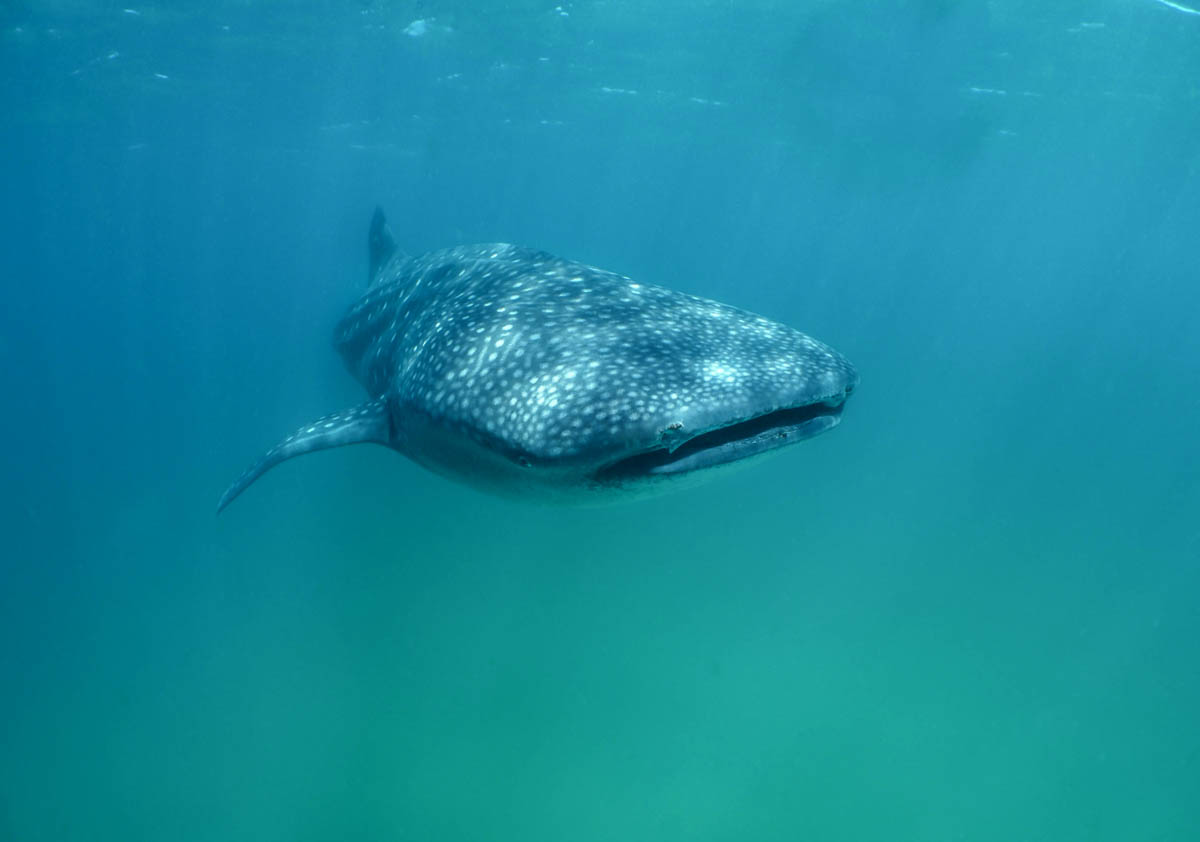
Image credit: SEE Activity Center
Amazon: The remote offshore experience
Amazon is among the more adventurous sites in SEE’s local diving area. The horseshoe-shaped offshore reef lies in deeper water, generally between approximately 23 and 32 metres, and is known for its soft corals and remote character.
It is not a site that can be added casually to a diving schedule. Weather, sea conditions, currents and the experience of the group all influence whether a visit is appropriate.
That relative remoteness is part of its appeal. When conditions allow, Amazon offers the opportunity to explore a reef that receives less regular diving traffic than the region’s better-known locations.
SEE reports encounters with a variety of larger marine animals at the site, including rays and sharks. The team’s September 4 manta sighting is another example of why recent local observations can be valuable when planning a dive itinerary.
The attraction is not that Amazon guarantees a particular encounter. It is the possibility of experiencing a different part of Inhambane’s offshore environment.
Colosseum: One reef, two names
Divers researching Inhambane may encounter references to both Hospital and Colosseum. SEE has clarified that these are the same dive site, with Colosseum now the more widely used name.
The offshore reef slopes southward and features occasional short pinnacles, with depths generally ranging from approximately 23 to 29 metres. Its rocky structure attracts a variety of marine life, including potato groupers, leopard sharks and eagle rays.
SEE recorded a manta sighting at Colosseum on August 23, adding another location to the operator’s recent observations.
The name clarification is useful for divers comparing older reef surveys with current dive listings. It also illustrates why local knowledge matters. A site may be familiar to the people who dive it regularly while remaining comparatively unknown to visitors planning a trip from overseas.
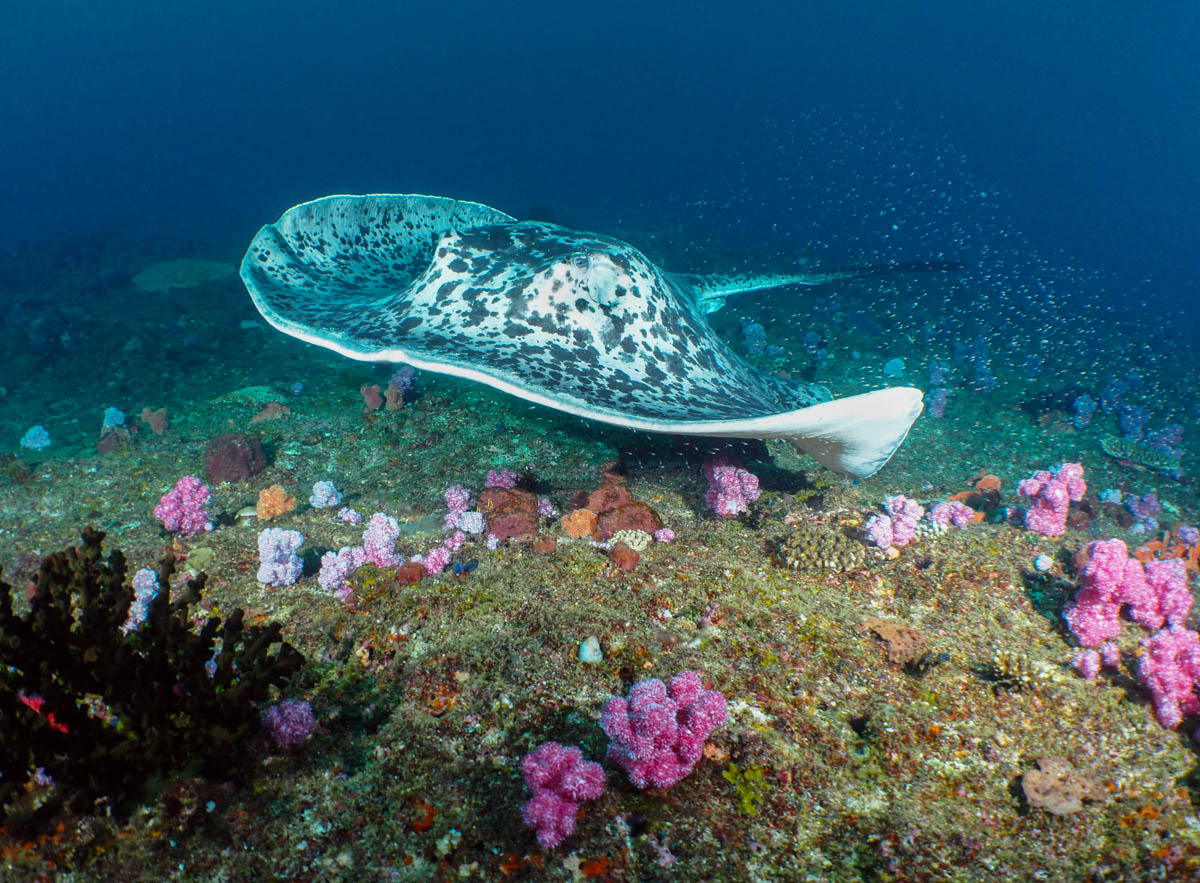
Image credit: SEE Activity Center
More than mantas
Mantas may be the headline attraction, but they are only one part of Inhambane’s marine life.
SEE’s supplied photography includes leopard sharks, a blotched ray, a torpedo ray, a yellowmouth moray and a whitetip reef shark. The collection also includes whale sharks encountered during surface safaris.
That distinction matters. Whale shark encounters on ocean safaris should not be presented as though they occurred during scuba dives, and photographs should not be assigned to a particular reef unless their location is confirmed.
The region also offers seasonal humpback whale encounters. SEE highlights June to September as its principal whale-watching season, when visitors may be able to combine diving with dedicated whale-watching excursions. Underwater whale song can also be part of the experience during the season, although encounters remain dependent on the animals and conditions.
For travellers, the appeal is the opportunity to build a broader ocean itinerary rather than make the success of a holiday depend on a single species.
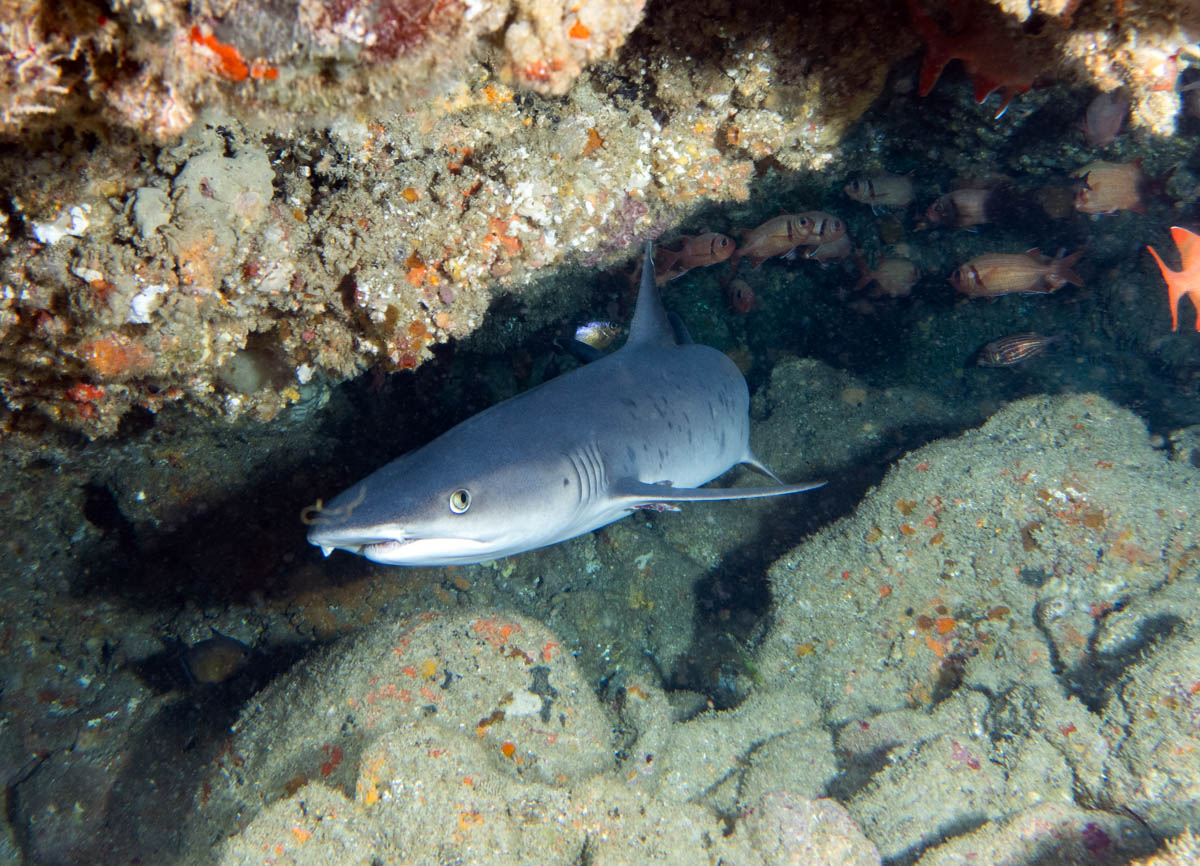
Image credit: SEE Activity Center
Planning a dive trip around the ocean
The most useful question before a dive may not be, “When are we going to Manta Reef?”
It may be, “Where is the ocean at its best today?”
That does not mean abandoning the famous sites. Manta Reef remains an important part of Inhambane’s diving heritage and an excellent dive in its own right. It means allowing room for the local team to respond to conditions, recent sightings and the experience of the divers on board.
A flexible itinerary can include the deeper offshore reefs, more accessible sites, photography-focused dives and surface wildlife excursions. It also gives divers a better opportunity to appreciate the region as a whole rather than judge it by whether one particular animal appears.
SEE Activity Center offers diving and ocean activities from Barra Beach and can arrange tailored stay-and-dive experiences. Visitors can also combine their diving with accommodation at Sentidos Beach Retreat, which offers a range of villa and accommodation options for couples, families and groups.
For more information about diving and tailored stay-and-dive experiences in Inhambane, visit SEE Activity Center or explore the accommodation and diving packages at Sentidos Beach Retreat.
Manta Reef may have made Inhambane famous. But Giant’s Castle, Marble Arch, The Office, Reggie’s, Amazon and Colosseum show why the region deserves to be explored far beyond its most familiar name.
