



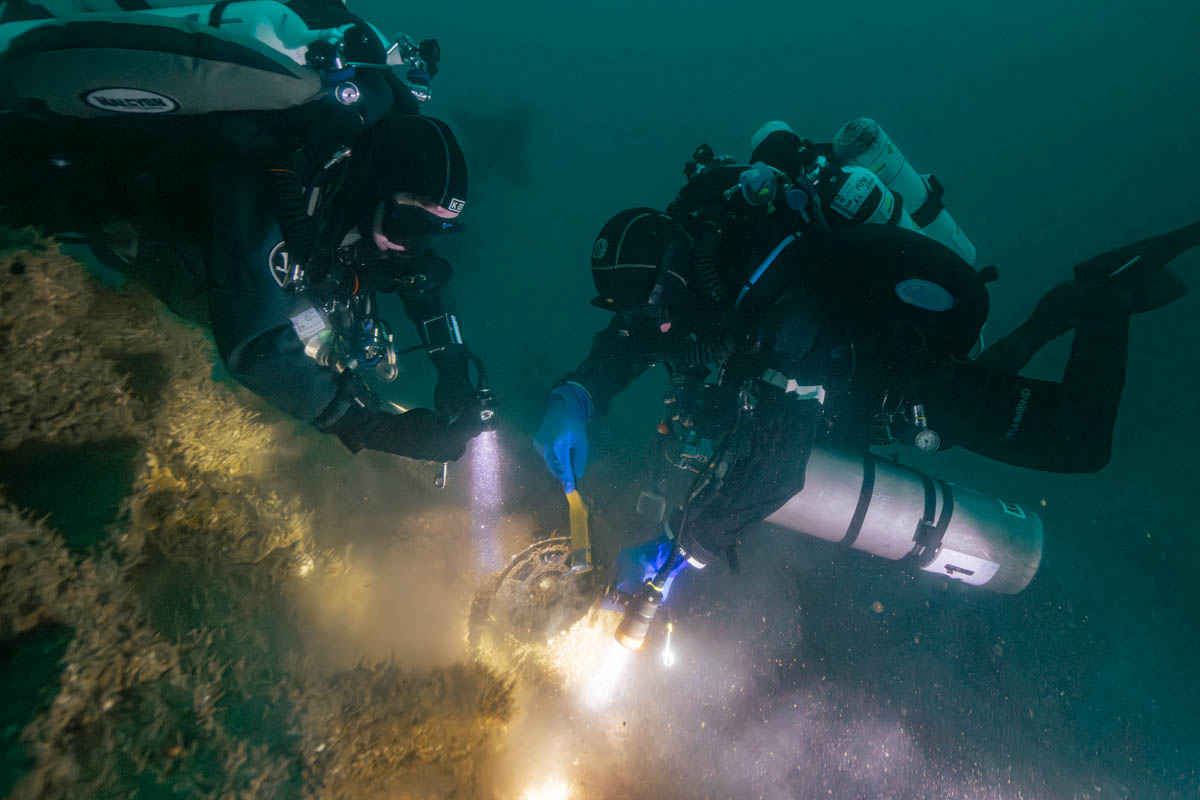
Technical divers, wreck explorers, cave divers, scientists and equipment developers will gather in Plymouth this November as the Guz.Tech technical diving conference returns for its third edition.
Guz.Tech 2026 will take place on Saturday, November 28, at the Roland Levinsky Building at the University of Plymouth, bringing together speakers covering everything from deep wreck exploration and diving physiology to cave expeditions, reef research and rebreather technology.
Taking its name from the old naval nickname for Plymouth, the single-day conference has developed around the exploration and technical diving community, with the 2026 programme spanning historical shipwreck discoveries, changes to wreck protection legislation, underwater science and some of the latest developments in technical diving equipment.
Fran Hockley, one of the Guz.Tech organisers, said: “This is our third year of Guz.Tech, and each conference we try to put together a programme that has something for everyone. This year it’s really come together – wreck exploration, cave expeditions, cutting-edge technology, and the science behind it all. We’re very excited, and I think it’s going to be the best one yet.”
HMS Tiger Discovery Comes To The Stage
Among the headline presentations will be the story behind one of the most significant British wreck discoveries of 2026.
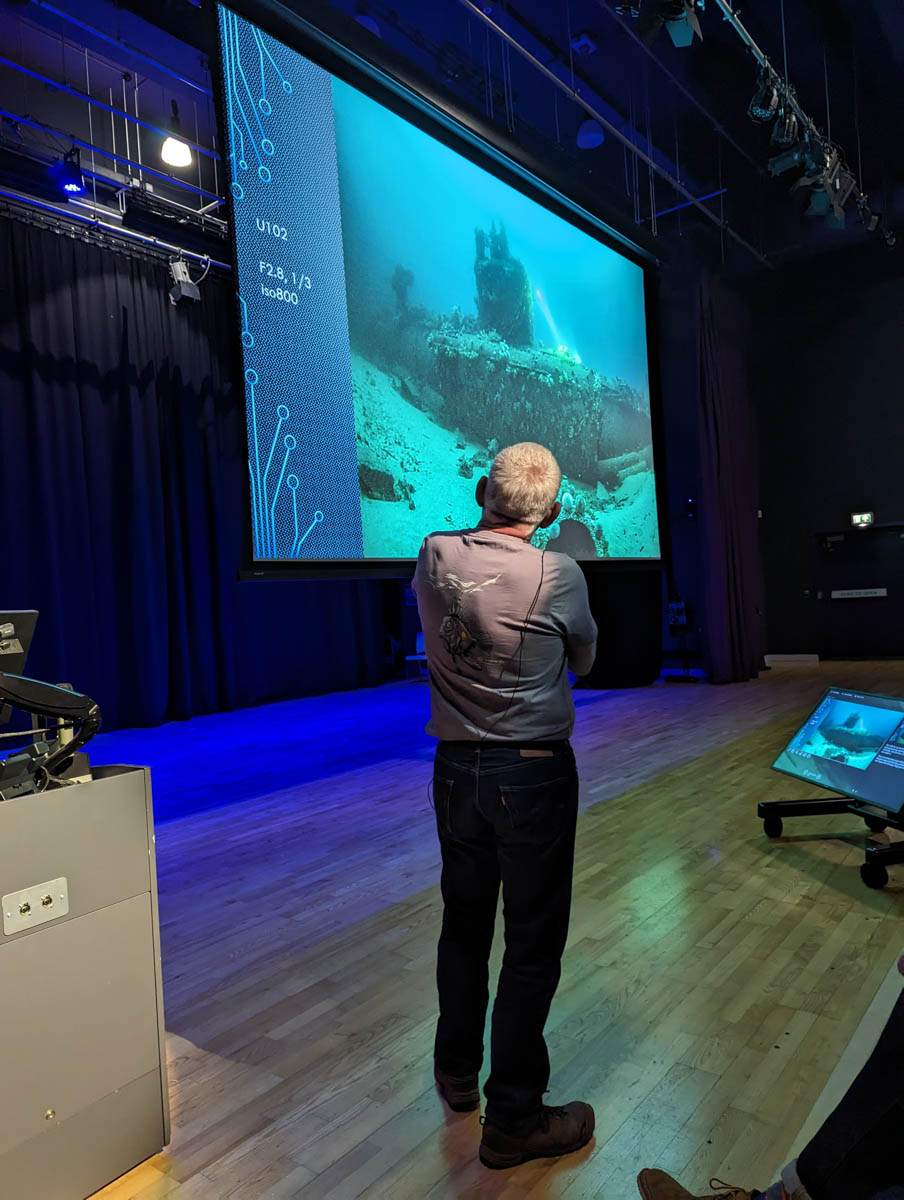
Leo Fielding and Dan McMullen will present the discovery of HMS Tiger, the Royal Navy torpedo boat destroyer lost off the Isle of Wight in 1908 after being cut in two during a collision with the armoured cruiser HMS Berwick.
The ProjectXplore team discovered and documented both sections of HMS Tiger, ending the search for what it describes as the last missing British 30-knot torpedo boat destroyer in the English Channel.
The wreck lies in approximately 62 metres of water south of the Isle of Wight, with its two main sections around 140 metres apart. The discovery followed years of archival research, sonar work and diving, culminating in the identification and documentation of the wreck during 2026.
Fielding and McMullen will take the Guz.Tech audience through the search, survey and eventual identification of the vessel.
Deep Wreck Exploration
Wreck diving features heavily elsewhere in the programme.
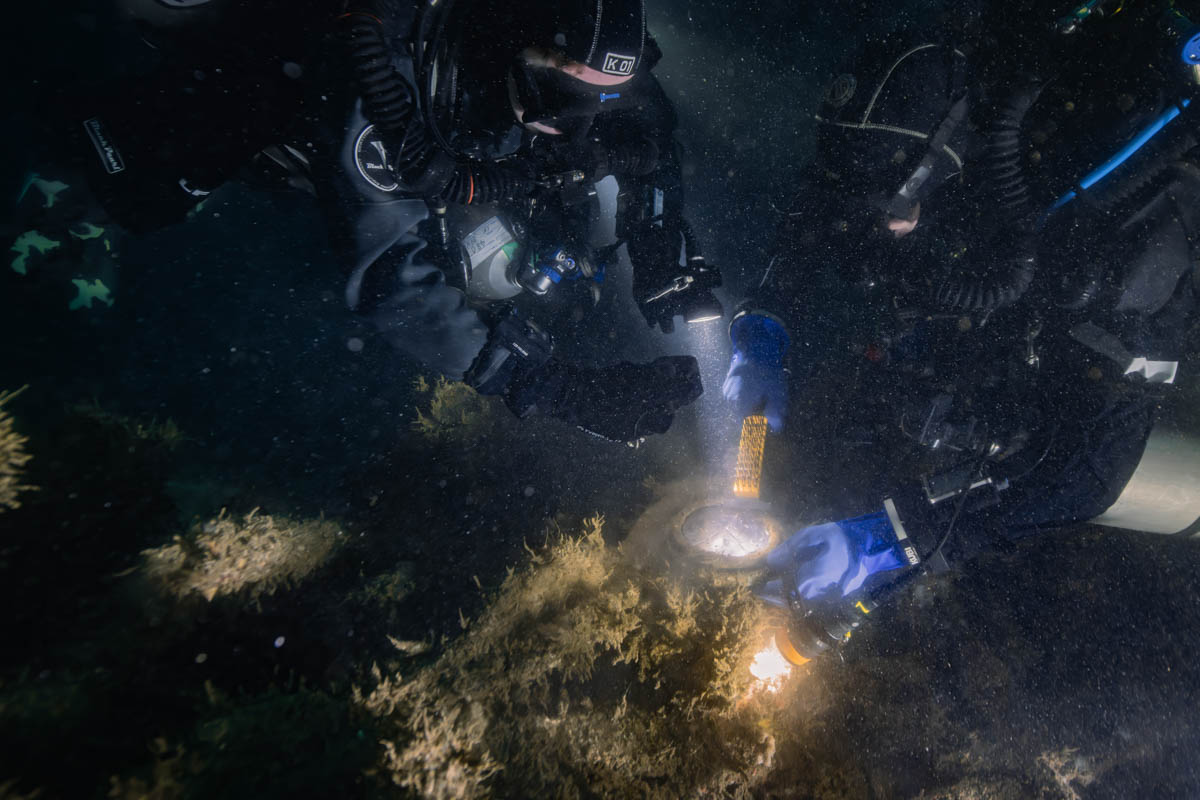
Mark Dixon will discuss diving the great ocean liners, drawing on decades of exploration with the Darkstar team on demanding liner and warship wrecks.
Deep wreck explorer Leigh Bishop will also appear at the conference, presenting a selection of notable discoveries and exploration projects from his diving career.
The legal environment surrounding wreck diving will receive attention too.
Jen Smith will examine the Protection of Military Remains Act and proposed changes affecting military wrecks.
The UK Government is currently seeking to strengthen protections through the Armed Forces Bill, including provisions extending automatic protection to vessels lost while in military service.
The proposals are particularly relevant to the wreck diving community. Parliamentary debate on the legislation has stated that diving on protected places would remain possible on a “look but don’t touch” basis, while controlled sites would continue to require a licence.
Smith’s presentation will examine what the proposed changes could mean in practice for technical divers visiting military wreck sites.
Diving Physiology And The PFO Question
Dr Mark Turner, a consultant cardiologist specialising in patent foramen ovale, will focus on diving physiology and the PFO question.
The presentation will examine his research and its implications for divers, bringing the medical and physiological side of technical diving into a programme otherwise heavily weighted towards exploration.
From Southern African Caves To Hebridean Reefs
Cave exploration will be represented by Oliver Scholl, whose presentation covers expeditions in Southern Africa.
Scholl will discuss exploration at Dragon’s Breath and the mapping and exploration of the Chinhoyi caves.
Dragon’s Breath in Namibia is known for its enormous underground lake, while the Chinhoyi cave system in Zimbabwe has attracted generations of divers and explorers.
Closer to home, Tim Clements will discuss deep reef exploration in the Hebrides.
His presentation will look at diver-led survey work examining some of the lesser-documented reef habitat in UK waters, demonstrating how technically capable dive teams can contribute to underwater research as well as exploration.
Halcyon Symbios Under The Spotlight
Equipment development also forms part of this year’s conference.
Dimitris Fifis will give attendees a closer look at the Halcyon Symbios chest-mounted rebreather, a compact electronic closed-circuit rebreather that has attracted considerable attention within the technical diving community.
Halcyon describes the Symbios as a modular, travel-friendly chest-mounted system incorporating redundant wireless communications, hybrid oxygen sensing and a BOV/ADV system.
Fifis is part of the Symbios development team and will discuss the system as part of the Guz.Tech programme.
Guz.Tech Returns For Its Third Edition
Guz.Tech was first held in 2023 and returns in 2026 for its third conference.
The event takes place on Saturday, November 28, 2026, at the Roland Levinsky Building, University of Plymouth, Drake Circus, Plymouth PL4 8AA.
Tickets and further programme information are available directly from the Guz.Tech website.
Comments