




The Good Life
At the ripe age of 35, my open water scuba instructor in the Andamans taught me how to take my first breath underwater. Since then, the ocean has been my home, and I its newly minted resident.
I was going through multiple personal and professional crises at that point in my life and needed a break, so I decided to take the plunge and reconnect with my inner child.
And, unhinged me being me, I figured: why not make some new underwater friends 18 feet below the surface of the Andaman Sea and see if that would help?
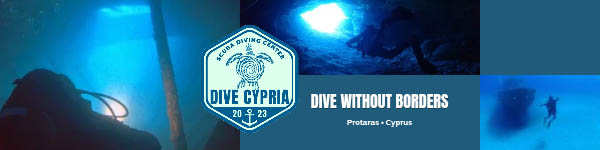
It was actually a wise decision because, on my very first descent, I was greeted by a palm-sized “Staryu” lookalike. Pokémon fans will understand the reference.
I love sea stars because of how magnificent they are. They are both queer and ordinary.
These animals are extraordinary in ways that are difficult to appreciate just by looking at one resting quietly on a reef. Sea stars do not have a centralised brain and, instead of a circulatory system like ours, use a remarkable water vascular system that also helps power their tube feet. Many can push their cardiac stomach out through their mouth to digest prey externally.
Then there is regeneration.
Sea stars are famous for being able to regrow lost arms. In some species, the ability goes considerably further, with an entire animal capable of regenerating from a detached arm under the right circumstances. The precise ability varies between species, and in some cases part of the central disc must remain attached to the arm.
They are, quite literally, superstars of the sea.
And yet, you will find these extraordinary critters leading seemingly ordinary lives in their quotidian little homes.
Why so?
I kept thinking about this after I came back to the surface, and it led me to question the very foundations of our neatly organised “landed” socioeconomic world order, one in which neoliberal subjects like myself are pushed into the all-too-familiar rat race for jobs, degrees, power and artificial status to achieve “success”.
But I was at a point in my life where chasing this idea of success wasn’t making sense to me.
On most days, I was disoriented, burnt out and quite fed up with the rat race.
The mornings were the hardest because I would wake up each day with the same set of questions occupying my anxious mind.
“Why am I still living in my parents’ house at 35?”
“Why can’t I be successful like everyone else?”
All the while, I was wading through pangs of mild depression throughout the day. By then, I had been diagnosed with both dysthymia and anxiety.
At night, I would struggle to sleep, hoping against hope that my anxious brain could find the answers to those questions by the next morning and give me some peace.
Unfortunately, the answers never came.
They still haven’t.
What made all of this worse was that my carefully typed-out 15-page résumé told a very different story.
My résumé screamed “high-impact social-sector career”, marked by scholarships, strong academic credentials, tonnes of publications and leadership roles.
And yet, I felt hollow inside.
I started to wonder: what does “success” even mean for me?
Or for any of us, actually?
What is the end goal of this rat race? And who decided the template of what constitutes a “successful” life anyway?
When I look back at that sea star resting on the rock, I see a version of myself that I so desperately want to become but don’t know if I ever will: someone who can exist and simply be as is.
And that is why, I think, the ocean keeps calling me back.
Down there, the rules are different.
You can literally be a superstar while the world drifts by, one bubble at a time, all the while minding your own goddamned business.
If that isn’t the good life, I don’t know what is.
Comments