


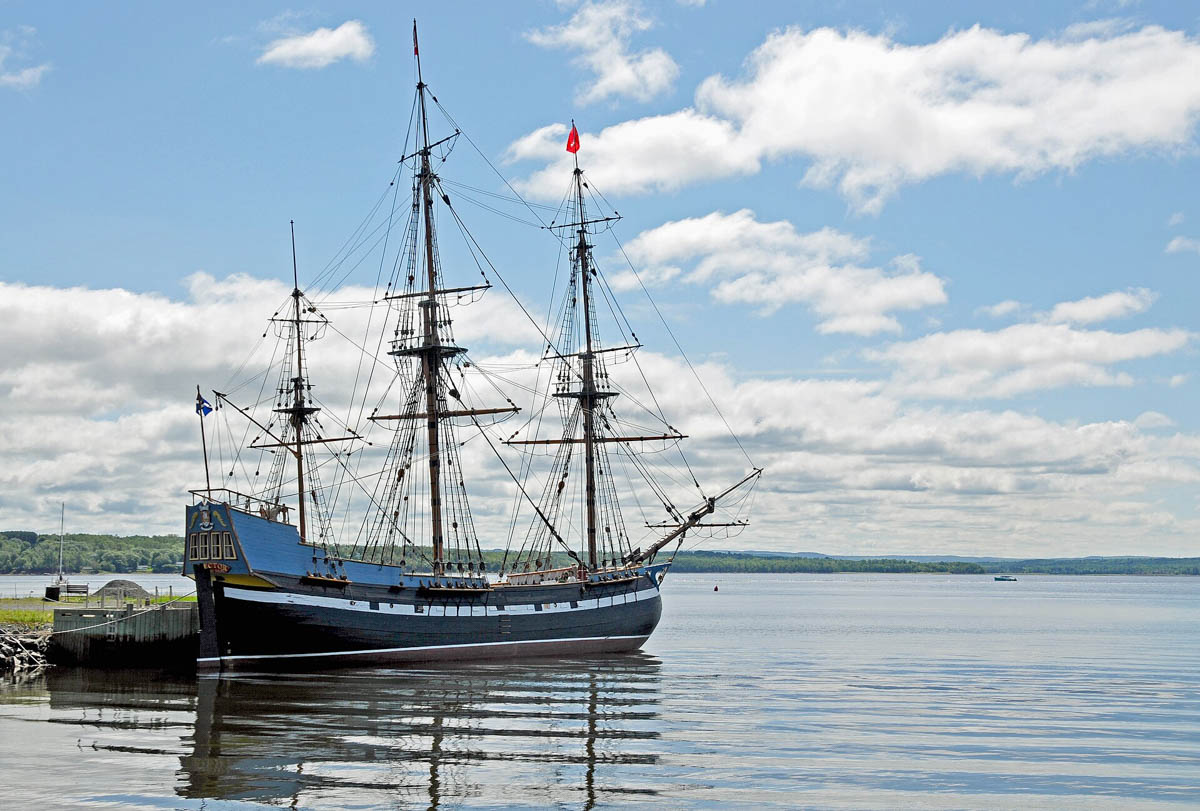

The Hector holds a legendary place in Canadian history as the 18th-century immigrant ship that forever reshaped the cultural fabric of Nova Scotia. Frequently dubbed “Canada’s Mayflower,” this vessel carried the first major wave of Scottish Highlanders to the shores of Atlantic Canada.
Driven from their ancestral homes by the Highland Clearances, the passengers aboard the Hector braved a perilous Atlantic crossing to build a new life. Their arrival in 1773 marked the true beginning of large-scale Scottish migration to the region, laying the foundation for Nova Scotia’s deep Gaelic heritage and earning the town of Pictou its title as the “Birthplace of New Scotland.”
Before making its historic journey to Nova Scotia, the Hector was an aging Dutch-built merchant ship known as a fluyt. Constructed sometime before 1750, the vessel spent its early years navigating the coastal waters of the British Isles before entering the transatlantic passenger trade around 1770, which included a voyage transporting Scottish emigrants to Boston.
During this same era, dramatic socioeconomic changes were sweeping through Scotland. The onset of the Highland Clearances in 1762 forced numerous Gaelic-speaking families from their ancestral homes as landlords converted the land for sheep farming. This displacement triggered a steady exodus across the Atlantic. The initial waves of Hebridean colonists began arriving on St. John’s Island (modern-day Prince Edward Island) in 1770, with subsequent groups landing in 1772 and 1774.
Long before securing its legendary status in Canadian history, the Hector operated as a Dutch-constructed merchant vessel known as a fluyt. Built prior to 1750, the ship spent its initial decades operating along the coastlines of the British Isles before pivoting to transatlantic voyages around 1770, a shift marked by an early trip delivering Scottish passengers to Boston.
This maritime transition coincided with a turbulent period of upheaval across the Scottish Highlands. Beginning in 1762, the Highland Clearances upended traditional rural life, as wealthy landowners systematically evicted Gaelic-speaking communities to repurpose the countryside for profitable sheep ranching. Left with few options, displaced families looked toward North America, initiating a steady stream of migration. Early groups from the Hebrides began establishing roots on St. John’s Island (later renamed Prince Edward Island) in 1770, followed by additional waves of settlers in 1772 and 1774.
The Hector joined this historic exodus in 1773, completing a pivotal voyage to Pictou, Nova Scotia, with 189 passengers who had departed from Loch Broom. The trajectory of Scottish settlement in Atlantic Canada surged even faster after 1784, when British authorities overturned a restrictive policy that had blocked newcomers from purchasing property on Cape Breton Island. With legal obstacles cleared, eastern Nova Scotia and Prince Edward Island rapidly evolved into bustling communities where the Gaelic language and culture flourished. This foundational era set the stage for an even greater migration surge between 1815 and 1870, when roughly 50,000 Gaelic immigrants arrived in Nova Scotia and Cape Breton, permanently embedding their heritage into the region’s identity.
Decades after the famous 1773 voyage, a completely different vessel also named Hector was launched in 1789. During the 1820s and 1830s, this newer ship played a role in American immigration by carrying Scottish passengers across the Atlantic from Liverpool to New York City.
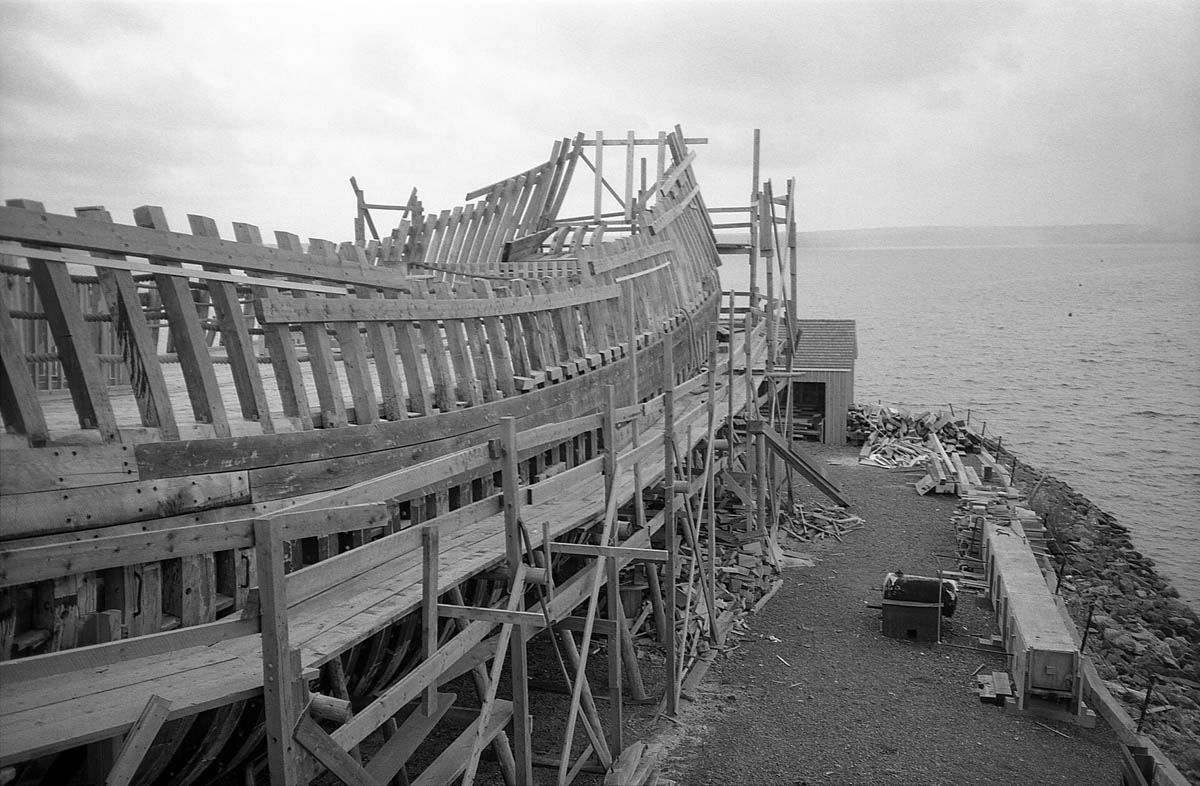
In the late 1980s and early 1990s, Nova Scotia heritage officials began looking for ways to honor the profound impact the Hector had on the province’s Scottish legacy. This ambition materialized in 1992 with the creation of the Ship Hector Foundation, a dedicated group of volunteers from Pictou County and beyond who united to raise capital for building, preserving, and operating a full-scale replica. Over the years that followed, this initiative led to the development of the Hector Heritage Quay and the accompanying Ship Hector Company Store right on the Pictou waterfront. To ensure historical authenticity, the marine architecture firm J.B. McGuire Marine Associates Ltd. was hired to meticulously study the original vessel’s specifications and draft accurate construction blueprints.
The building process itself was designed to double as a cultural experience. The shipbuilders Scotia Trawlers, based out of Lunenburg, Nova Scotia, were brought on to execute the initial two phases of construction directly at the Hector Heritage Quay. This setup turned the project into a major regional tourism draw, giving waterfront visitors a front-row seat to watch the ship take shape over several years. The culmination of this massive community effort came on September 17, 2000, when the completed replica was officially launched to widespread public celebration and extensive media coverage, following a brief 24-hour delay caused by poor weather.