


For many travelers, the ocean creates two very different feelings at once: fascination and hesitation. They want to see what is below the surface, but the leap from looking down through a mask to breathing underwater can feel enormous.
Snorkeling is wonderfully accessible, yet it keeps most of the experience at the surface. Scuba diving opens a much larger world, but it also comes with equipment, training and certification expectations that may not suit a family on holiday or a cruise visitor with only one day in port. Between those two experiences is a space that deserves more attention. That is where SNUBA fits.
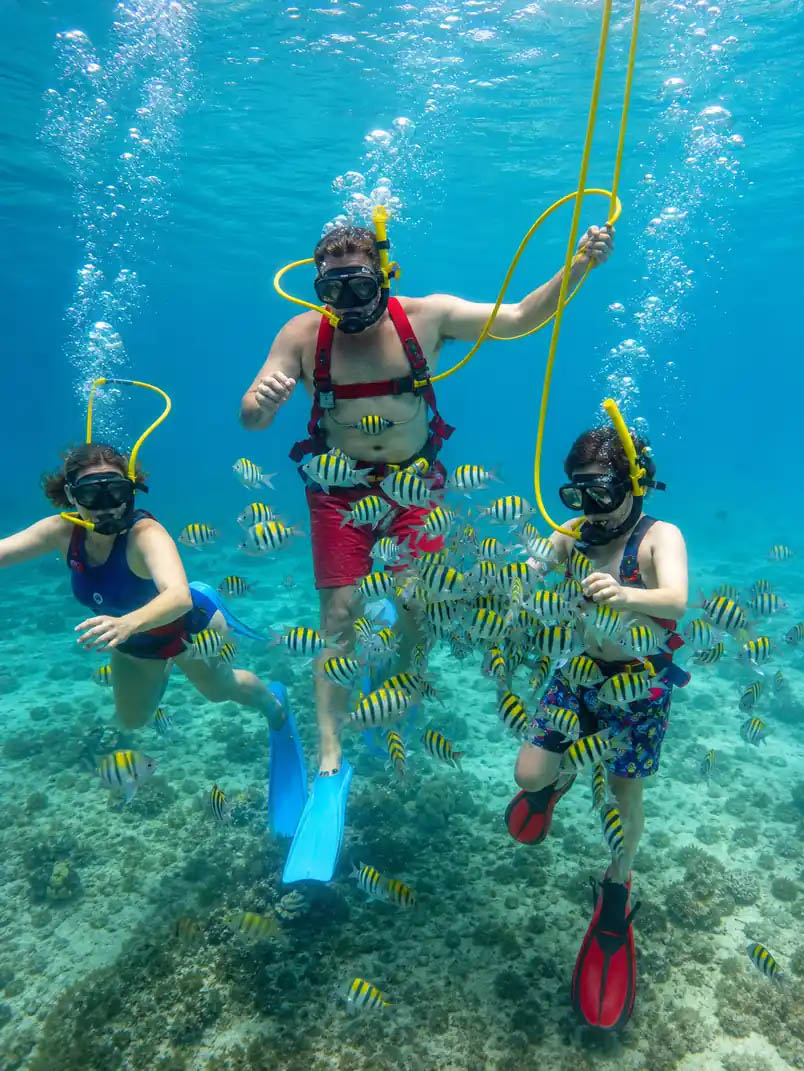
Image Copyright SNUBA SXM
A simple idea with a powerful effect
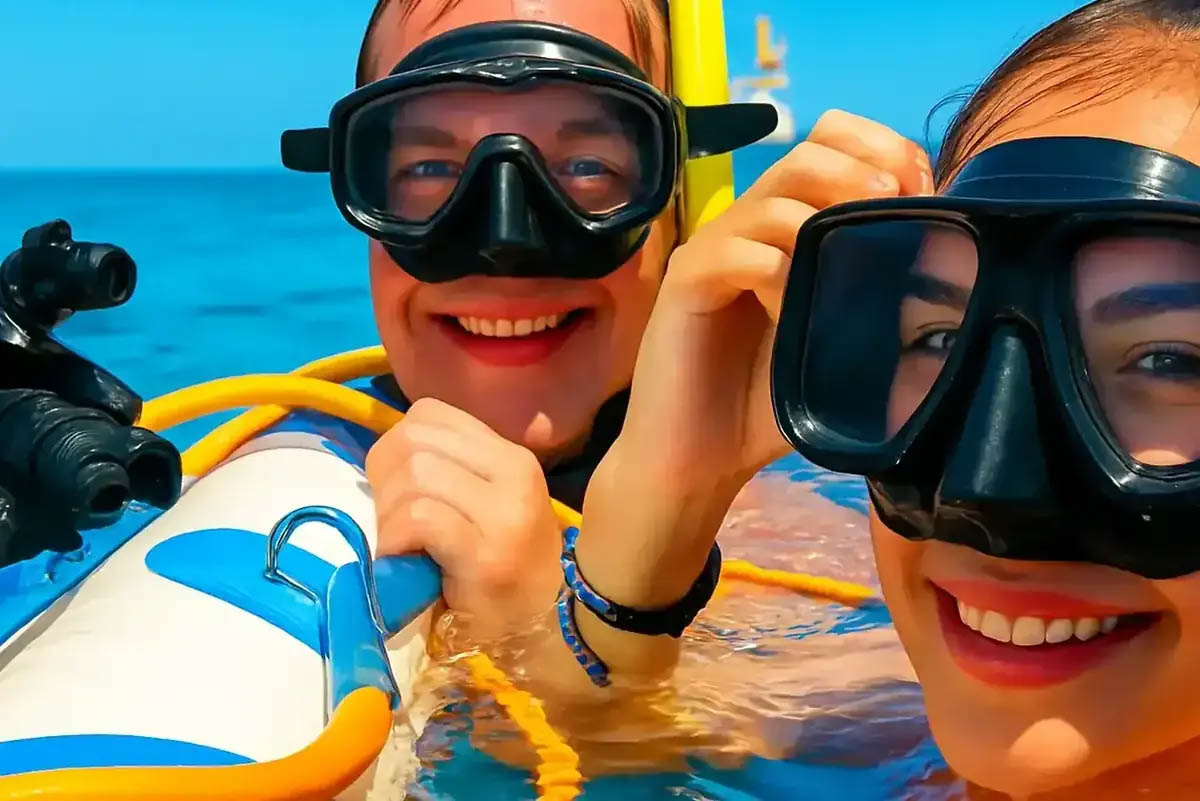
SNUBA uses a surface-supported air supply. Instead of carrying a tank, the participant breathes through a regulator connected by a lightweight hose to a raft at the surface. The guest wears a mask, fins, a small harness and weight belt, while a certified guide remains close throughout the experience.
The technical description is straightforward. The emotional result is more interesting. A person who was uncertain about putting a face in the water can discover, one calm step at a time, that breathing below the surface feels natural. The equipment becomes less important than the confidence it creates.
At SNUBA SXM, the experience begins with a clear briefing and shallow-water practice. There is no pressure to perform. Guests learn how the regulator feels, how to clear a mask, how to communicate and how to move comfortably. The underwater tour only begins when the participant and guide are ready.
Confidence comes before depth
New divers often imagine that success is measured by how deep they go. For a first underwater experience, depth is the wrong goal. Comfort, control and curiosity matter far more.
Our guided routes are typically in the 10-to-20-foot range – about three to six metres – with the surface always close. This allows beginners to focus on breathing, buoyancy, movement and the marine environment instead of feeling that they have committed to something beyond their comfort level.
That approach is especially valuable for families and mixed groups. One person may be adventurous, another cautious, and another perfectly happy snorkeling at the surface. A well-run shallow-water program gives each guest room to participate without turning the outing into a test of bravery.
The guide’s real job
A guide is not simply leading a route. The guide is reading people: the nervous smile at check-in, the first quick breaths through the regulator, the moment a participant realizes they can slow down, and the point at which hesitation becomes genuine enjoyment.
I began diving in 2000 and later taught programs ranging from first-time experiences to instructor-level and technical diving. The most rewarding moment remains remarkably consistent at every level. It is the moment a person stops fighting uncertainty and starts paying attention to the underwater world around them.
That transformation cannot be rushed. Good instruction is not about pushing a guest through a schedule. It is about giving clear information, maintaining control and letting confidence arrive at its own pace.
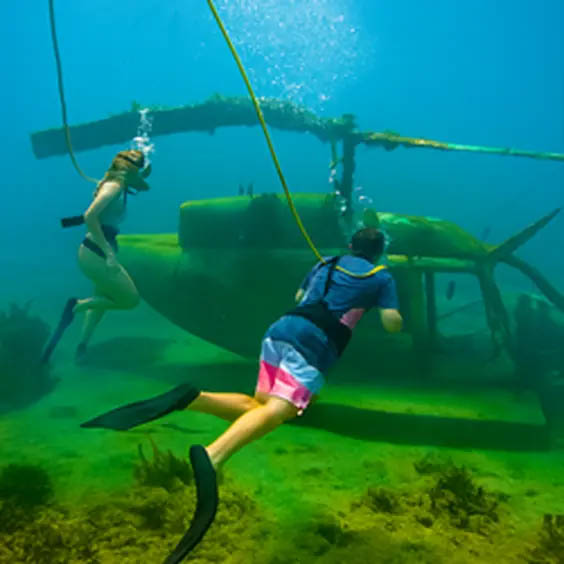
Image copyright: SNUBA SXM
A responsible bridge, not a shortcut
SNUBA should not be described as scuba without training. It is its own guided, shallow-water activity with defined equipment, procedures and participation requirements. Eligible beginners age eight and older can participate without scuba certification, subject to current medical, swimming and guide requirements.
The distinction matters because accessibility must never mean carelessness. Participants complete the required records and medical questions, receive a briefing, practice in shallow water and remain with their guide. Conditions also matter; every responsible operator must be willing to adjust or stop an activity when the environment is not suitable.
SNUBA has an exceptional safety record, with no pattern of serious accidents identified across millions of guided participant experiences.
Why Sint Maarten works so well
Sint Maarten is an ideal setting for a first underwater experience. Warm Caribbean water, convenient access near Philipsburg and a steady mix of cruise visitors and island guests create opportunities for people who may never have considered an underwater activity before arriving.
The setting also removes some of the psychological barriers. This is not a classroom exercise performed for a certificate. It is a guided holiday experience shared with family or friends. Guests can practice, descend gradually and discover whatever the sea presents that day.
For some, that single experience is enough: a vivid memory of breathing underwater in the Caribbean. For others, it becomes the beginning of something larger. A comfortable SNUBA participant may leave with the confidence to try scuba training later. That is why the word bridge is useful. The program does not compete with good scuba education; it can help create the curiosity and self-belief that lead people toward it.
The first breath is the story
After years of teaching divers, I still watch for the same small change. At first, a guest’s attention is turned inward: Am I breathing correctly? Is my mask all right? Can I really do this? Then the eyes lift. The breathing settles. A fish passes, the guide points toward something in the reef, and the participant is no longer thinking about equipment.
That is the moment the activity becomes an experience. It is also why a carefully guided introduction matters. The ocean becomes less intimidating when someone is given the time, support and structure to meet it comfortably.
Snorkeling lets people look into the underwater world. Scuba allows trained divers to explore it with independence. SNUBA occupies the meaningful space between them: close to the surface, close to the guide, and close enough to possibility that a nervous beginner can take the first breath and think, perhaps for the first time, I belong here too.
Comments