




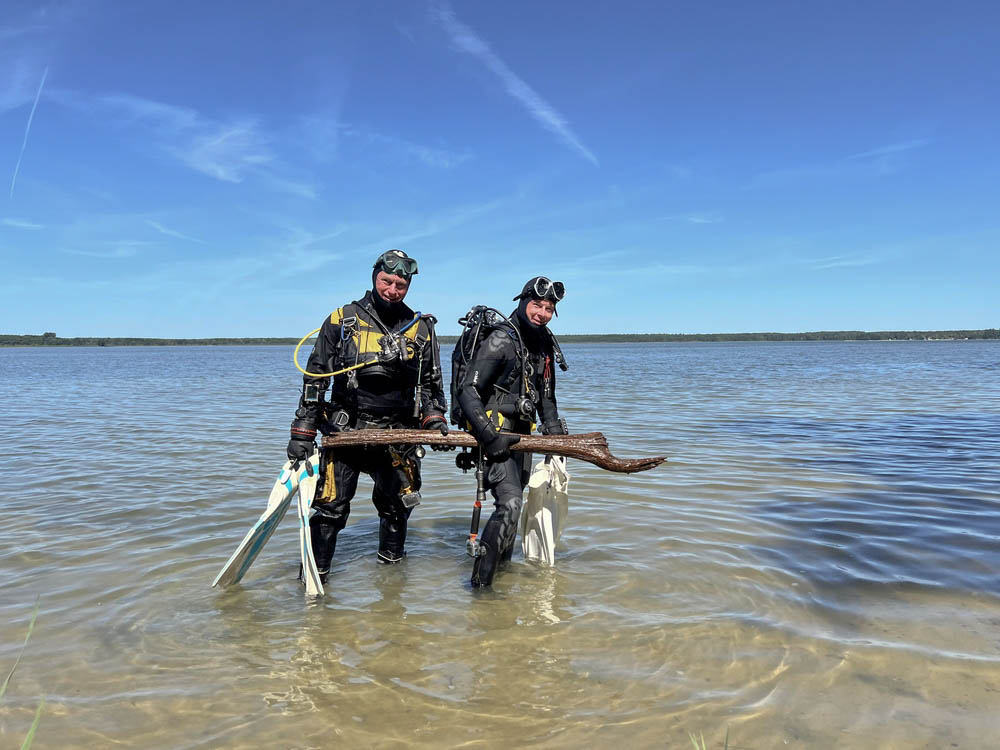

Underwater archaeologists exploring a lake in northern Germany have discovered remarkably preserved pieces of worked wood dating back as far as 10,500 years, potentially offering rare evidence of how Mesolithic hunter-gatherers constructed and modified their living environments.
The discoveries were made beneath the waters of Lake Arendsee in Saxony-Anhalt, where archaeological divers have been investigating submerged landscapes for several years.
Researchers from the State Office for Heritage Management and Archaeology Saxony-Anhalt say the newly discovered timbers were deliberately worked by people during the Middle Stone Age.

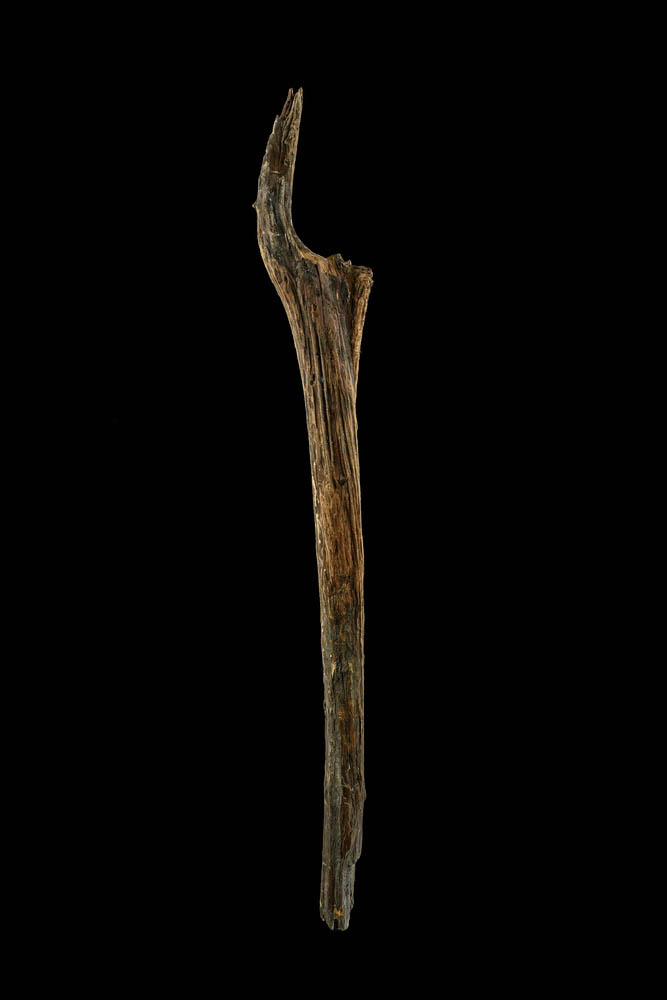
Among the finds is a wooden post approximately 1.6 metres high showing signs of felling and working. Archaeologists have also recovered split wooden boards measuring up to 1.3 metres long.
Exactly what the timbers formed remains unknown.
Researchers are investigating whether they represent the remains of huts or other structures, or potentially a form of wooden construction not previously recognised from the period.
A Mesolithic Landscape Preserved Underwater
The finds date to approximately 10,500 years ago, when communities in the region lived primarily through hunting, gathering and fishing rather than agriculture.
Evidence of Mesolithic occupation has previously been found around Arendsee, but the survival of substantial wooden objects provides archaeologists with a very different type of evidence.
Organic materials such as timber rarely survive for thousands of years, making the preservation conditions beneath the lake particularly important.
Arendsee sits above an underground salt structure. Geological processes have caused the lake bed to gradually subside, rather than following the silting process typical of many inland lakes.
Former shoreline landscapes were consequently submerged and covered by sediment.
Today, the Mesolithic archaeological remains lie beneath a relatively thin layer of sediment at a depth of around 20 metres.
Those conditions have helped protect materials that would ordinarily have decomposed thousands of years ago.
State archaeologist Harald Meller said the surviving wood could provide evidence unavailable from the stone tools and animal bones more commonly recovered from Mesolithic sites.
Until now, evidence for buildings from this period in central Germany has largely been identified through traces left in the soil.
What Did Hunter-Gatherers Build Here?
That question could make the Arendsee discovery particularly significant.
The people responsible for the timbers lived approximately 3,000 years before the arrival of the first agricultural communities and their longhouses in central Germany.
Project leader Marcel Weiß cautioned that determining whether the finds belonged to huts or another form of wooden structure will require continued investigation.
If researchers ultimately demonstrate that hunter-gatherers were creating substantial structures or intensively modifying their living environments at Arendsee, however, the findings could influence interpretations of how Mesolithic communities interacted with their landscapes.
The discovery should therefore not yet be interpreted as proof of permanent Mesolithic buildings.
Instead, archaeologists now have unusually well-preserved physical evidence that could help establish what people were constructing beside the lake more than ten millennia ago.
Divers And ROVs Investigate The Ancient Shoreline
Following the discovery of the site in spring 2026, archaeologists recovered additional samples and individual finds to investigate its age and extent.
A subsequent survey brought together underwater archaeology and modern subsea technology.
Working with Fraunhofer IOSB-AST, researchers deployed a remotely operated vehicle to conduct high-resolution sonar surveys of the submerged landscape.
The scans are being used to document the topography of the former shoreline and accurately map individual archaeological finds.
By reconstructing where objects lie within the ancient landscape, researchers hope to identify areas for future archaeological diving and better understand how Mesolithic communities used the lakeshore.
The discovery adds another period of human history to an already remarkable underwater archaeological record at Arendsee.
Previous investigations have uncovered Neolithic fish weirs, a medieval flat-bottomed cargo vessel and a late-medieval dugout canoe beneath the lake.
Now the sediments of Arendsee are providing researchers with a window into human activity thousands of years earlier.
Further investigation may ultimately reveal whether the newly discovered timbers belonged to dwellings, another type of structure, or something archaeologists have not encountered before.
Comments