



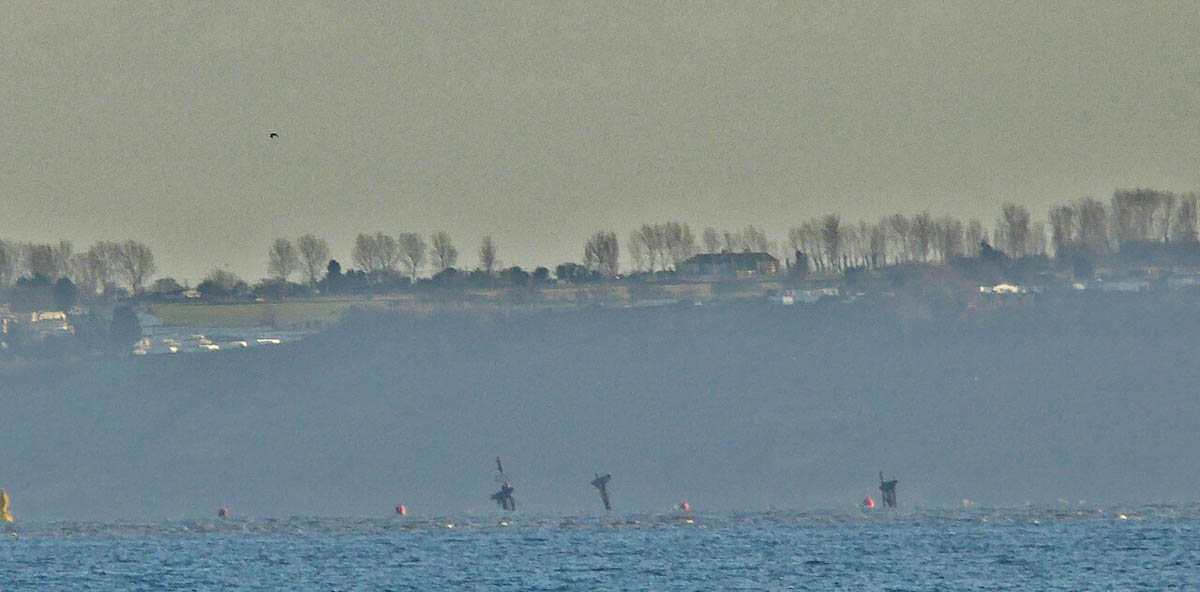
Specialist commercial divers and marine engineers have begun removing the three remaining masts from the SS Richard Montgomery, the Second World War wreck that has lain in the Thames Estuary for more than 80 years with approximately 1,400 tonnes of wartime explosives still aboard.
Marine salvage contractor Resolve Marine confirmed on September 29 that work is underway on the long-planned operation off Sheerness, Kent.
The project puts divers and marine engineers at the centre of one of Britain’s most unusual wreck-management operations, with the team working under tightly controlled conditions around a vessel whose cargo has made it one of the country’s most closely monitored shipwrecks.
According to Resolve Marine, engineers and divers will carefully cut and lift the wreck’s three steel masts. The company says the operation follows extensive technical assessments and independent expert review intended to protect the wreck’s stability while safeguarding personnel, nearby communities and maritime traffic.
A Wreck Carrying 1,400 Tonnes of Explosives
The American Liberty ship SS Richard Montgomery ran aground on the Nore sandbank in the Thames Estuary in August 1944 while carrying munitions intended for the Allied war effort.
An operation was launched to unload the vessel, but the ship’s hull subsequently cracked and its forward section began flooding. Salvage continued until September 25, 1944, by which point roughly half the cargo had been removed.
The operation was eventually abandoned after the vessel flooded completely.
More than eight decades later, the UK Government estimates that approximately 1,400 tonnes of explosives remain within the forward holds.
The wreck has consequently been monitored for decades and is designated as a dangerous wreck under the Protection of Wrecks Act 1973.
A no-entry exclusion zone surrounds the site, meaning this historic wreck is emphatically not available to recreational divers. Entering the prohibited area without written permission from the Secretary of State is an offence.
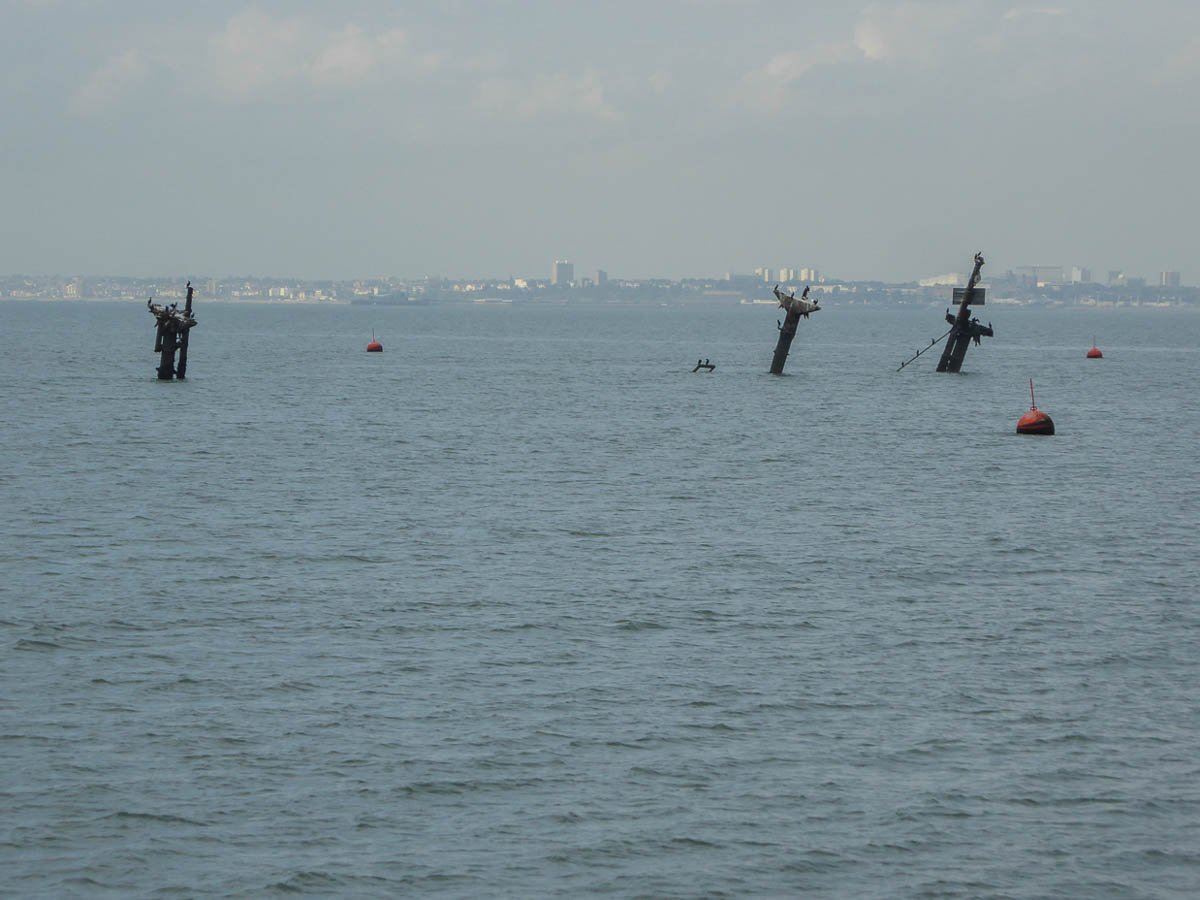
Why Are The Masts Being Removed?
Although the masts have become a familiar feature of the Thames Estuary skyline, their deteriorating condition has created a potential hazard of its own.
The Maritime and Coastguard Agency says mast removal was recommended to reduce the strain their weight places on the wreck’s deck plating. Removing them also reduces the risk associated with a mast collapsing onto the wreck below.
The project has been years in development.
Preparatory work undertaken in 2022 included detailed surveys of the wreck and surrounding seabed. Those investigations identified additional complications, requiring the proposed removal methodology to be reconsidered and further engineering work undertaken.
Following additional surveys, technical studies and risk assessments, Resolve Marine was appointed to carry out the operation.
The UK Government announced in July that £9.5 million had been allocated to the project.
Divers Working On An Extraordinary Site
The start of the operation provides a rare view of work taking place directly on one of Britain’s most sensitive wreck sites.
Resolve Marine has assembled a specialist team of engineers, commercial divers and marine personnel for the project. Its latest update confirms that divers are directly involved as the three masts are prepared for cutting and lifting from the wreck.
The operation is being carried out under strict safety procedures and government oversight.
Marine notices covering the operation have also been issued for the surrounding waters as the work progresses.
The wreck’s exclusion zone remains firmly in place throughout the operation and will continue after the masts have been removed.
For recreational divers, the distinction is important. Despite its extraordinary history and location, the SS Richard Montgomery is a protected dangerous wreck rather than a dive site.
What Happens To The Masts?
Their removal will not be the end of the story.
The Department for Transport says the recovered structures will be taken to The Historic Dockyard Chatham, where specialist conservation work is planned.
The intention is ultimately to display the masts locally, preserving a physical part of a wreck that has been a highly visible feature of the Thames and Medway estuaries for generations.
For the SS Richard Montgomery itself, however, mast removal does not mean that the underlying hazard has disappeared.
The wreck and its remaining munitions will continue to be monitored, while the protected exclusion zone surrounding the vessel will remain.
For the diving community, the current operation provides a rare glimpse into a very different side of wreck diving: highly controlled commercial diving and marine engineering taking place on a vessel where every intervention has to be carefully assessed against the risks posed by its extraordinary wartime cargo.
Comments