




Two species of sea spider new to science have been described from Canada’s Salish Sea, after researchers collected specimens during scuba dives reaching depths of no more than 18 metres.
The University of British Columbia-led research identified the animals as Callipallene pilosuspedes and Tanystylum kiixin. They are the first new sea spider species described from the Salish Sea in almost a century.
The findings underline how much remains unknown about marine biodiversity even within depths routinely accessible to scuba divers.
Researchers collected sea spiders between September 2023 and August 2024 from a range of marine habitats around Quadra Island, Vancouver, Bamfield and Victoria in British Columbia. The team then combined detailed morphological work, scanning electron microscopy and molecular analysis to examine seven coastal species.
The resulting study, published in Organisms Diversity & Evolution, represents the first comprehensive scientific study of pycnogonids in the Salish Sea using detailed imaging and DNA analysis.
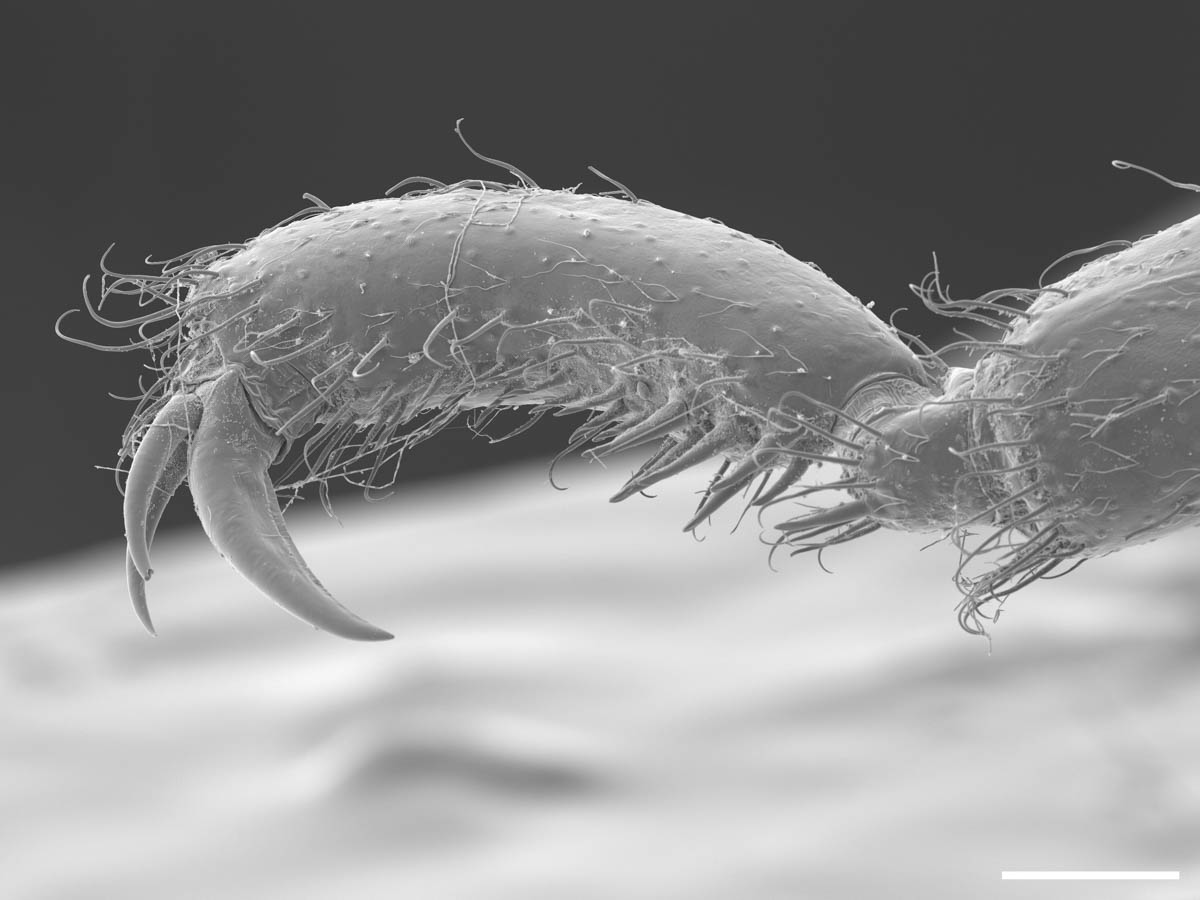
A Red-Eyed Species With ‘Hairy Feet’
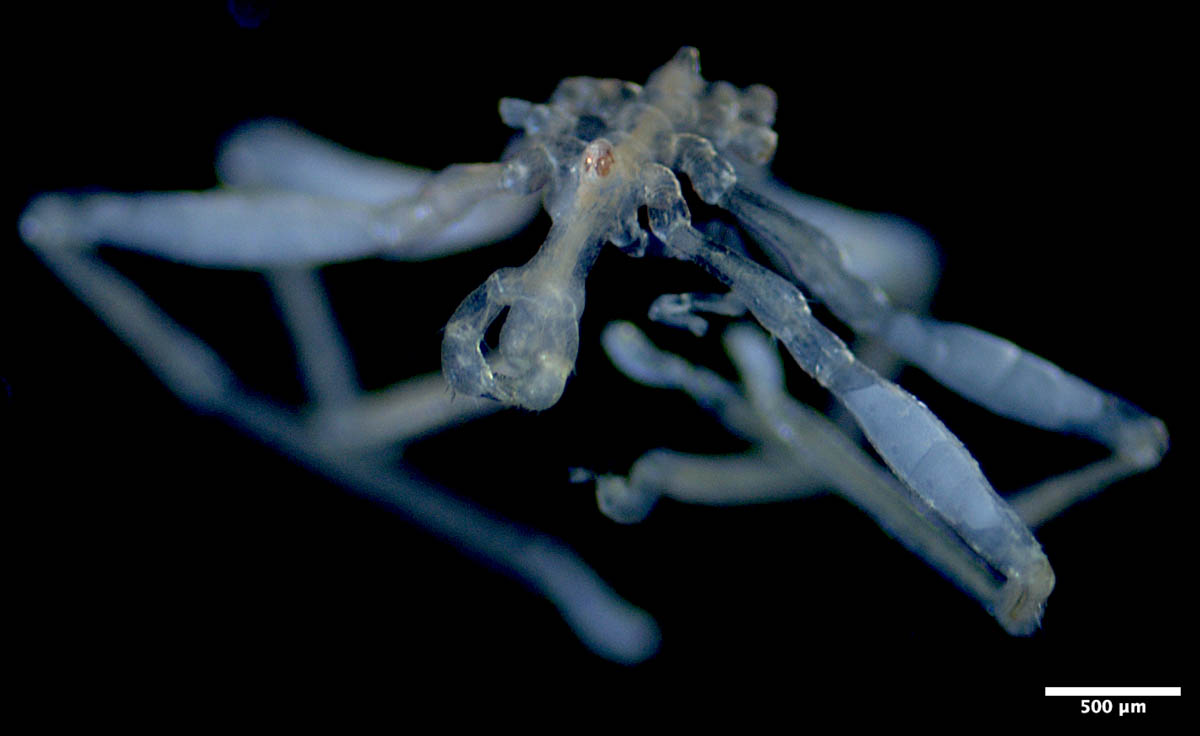
One of the newly described animals, Callipallene pilosuspedes, takes its name from the long, curved spines covering its lower legs. The name combines Latin terms referring to “hairy feet”.
The tiny marine arthropod has red eyes, a short proboscis, claws used to grasp food and a triangular, three-lipped mouth covered with sensory structures.
Researchers also observed that its highly dexterous ovigers, specialised appendages located near the head, could be used for grooming. Under a microscope, the animal was seen wrapping the appendages around its legs and using comb-like spines to clean itself.
Only one specimen of Callipallene pilosuspedes was found during the study, meaning researchers still have little information about its wider distribution.
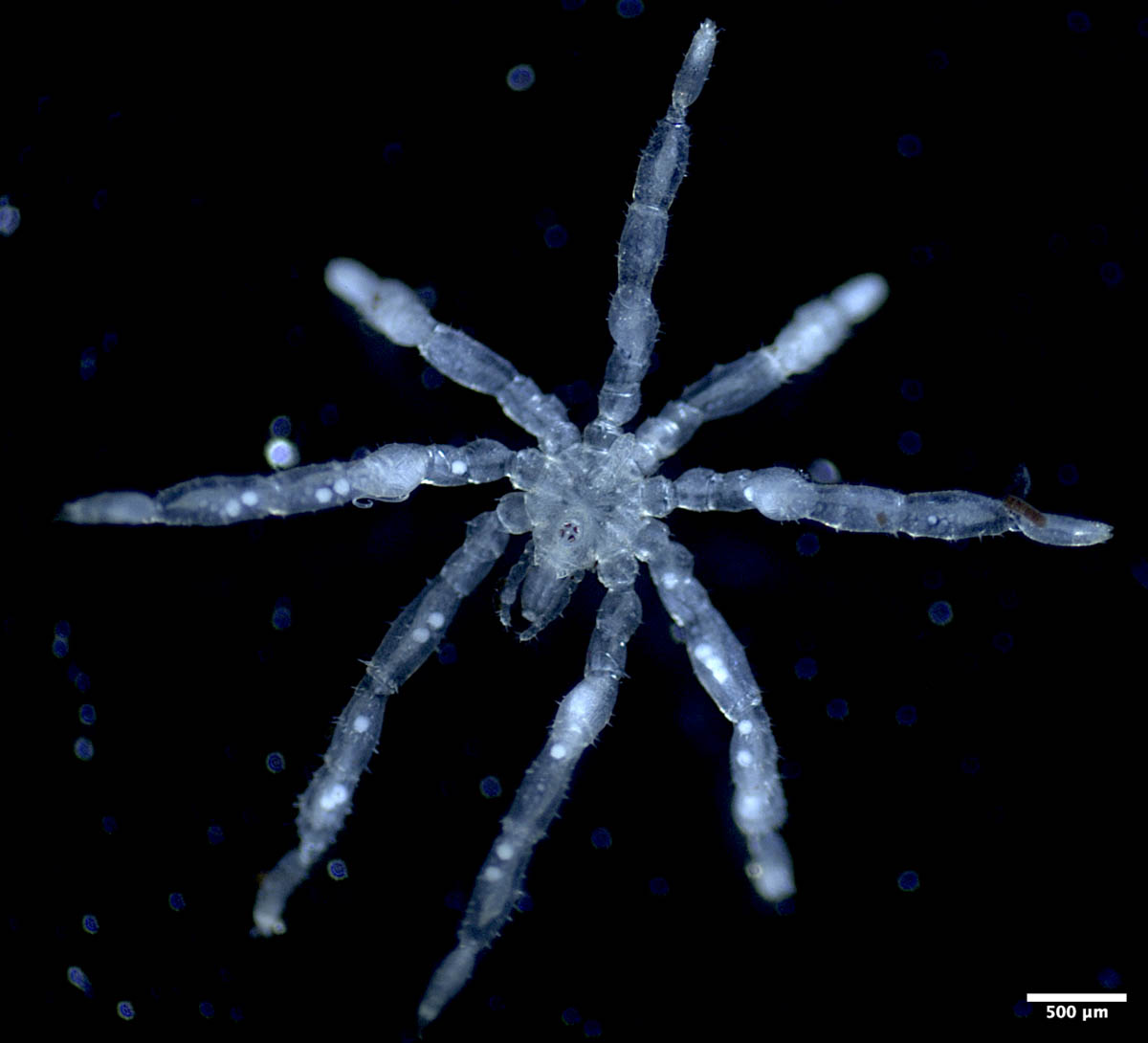
An ‘Ecosystem Within an Ecosystem’
The second new species, Tanystylum kiixin, was named after the ancient Indigenous village site near where specimens were first collected. The name is pronounced “kee-hin” and derives from the sound of waves crashing at the base of the site.
Unlike its newly described relative, Tanystylum kiixin has smaller and less dexterous egg-carrying appendages and appears less capable of grooming itself.
Researchers frequently found specimens carrying dirt, debris and tiny parasites. Lead author Cormac Toler-Scott described the result as an “ecosystem within an ecosystem within an ecosystem”.
The species is also closely associated with the hydroid Plumularia setacea.
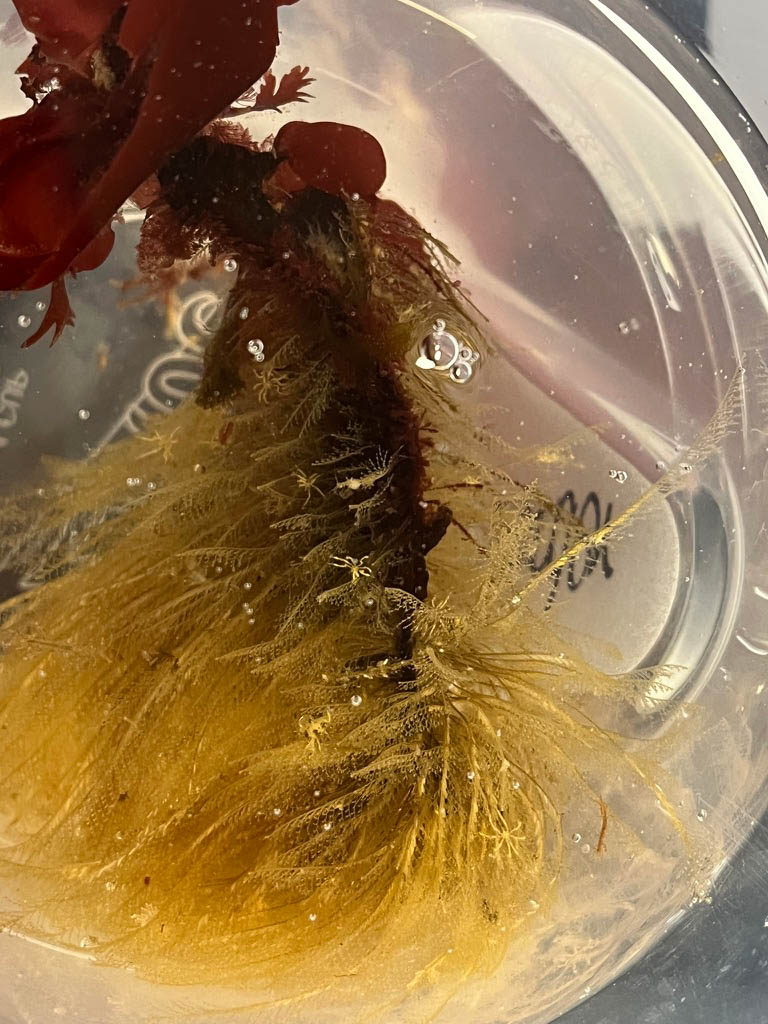
Strange Animals Hiding in Familiar Waters
Sea spiders, or pycnogonids, are marine arthropods related to spiders, scorpions and horseshoe crabs. Their evolutionary lineage stretches back hundreds of millions of years, but many species remain poorly documented.
Rather than breathing through specialised lungs or gills, sea spiders exchange gases across their body surface. Males also play the principal role in caring for developing eggs, carrying clusters of them on specialised limbs after mating.
The lack of basic information about Salish Sea species initially became apparent when Toler-Scott began looking at how sea spiders might respond to climate change and human disturbance.
Without knowing which species occur in an ecosystem and being able to identify them reliably, researchers have difficulty determining how those animals are changing over time.
More Species Could Be Waiting
Beyond describing the two new species, the research redescribed five previously known sea spiders and generated genetic information for several species that had not previously been sequenced.
The team also produced an identification key for pycnogonids living in the Salish Sea and along the west coast of Vancouver Island, giving future researchers another tool for documenting the region’s marine biodiversity.
The two new species have now been registered in a global database.
And the work may only represent the beginning. Toler-Scott said the research covered just one field season and that there is likely additional sea spider diversity in the region that has yet to be documented.
For divers, the findings are another reminder that significant scientific discoveries do not always require extreme depth or remote expeditions. In this case, species unknown to science were collected within ordinary scuba-diving depths along one of North America’s best-known coastal environments.
Comments