





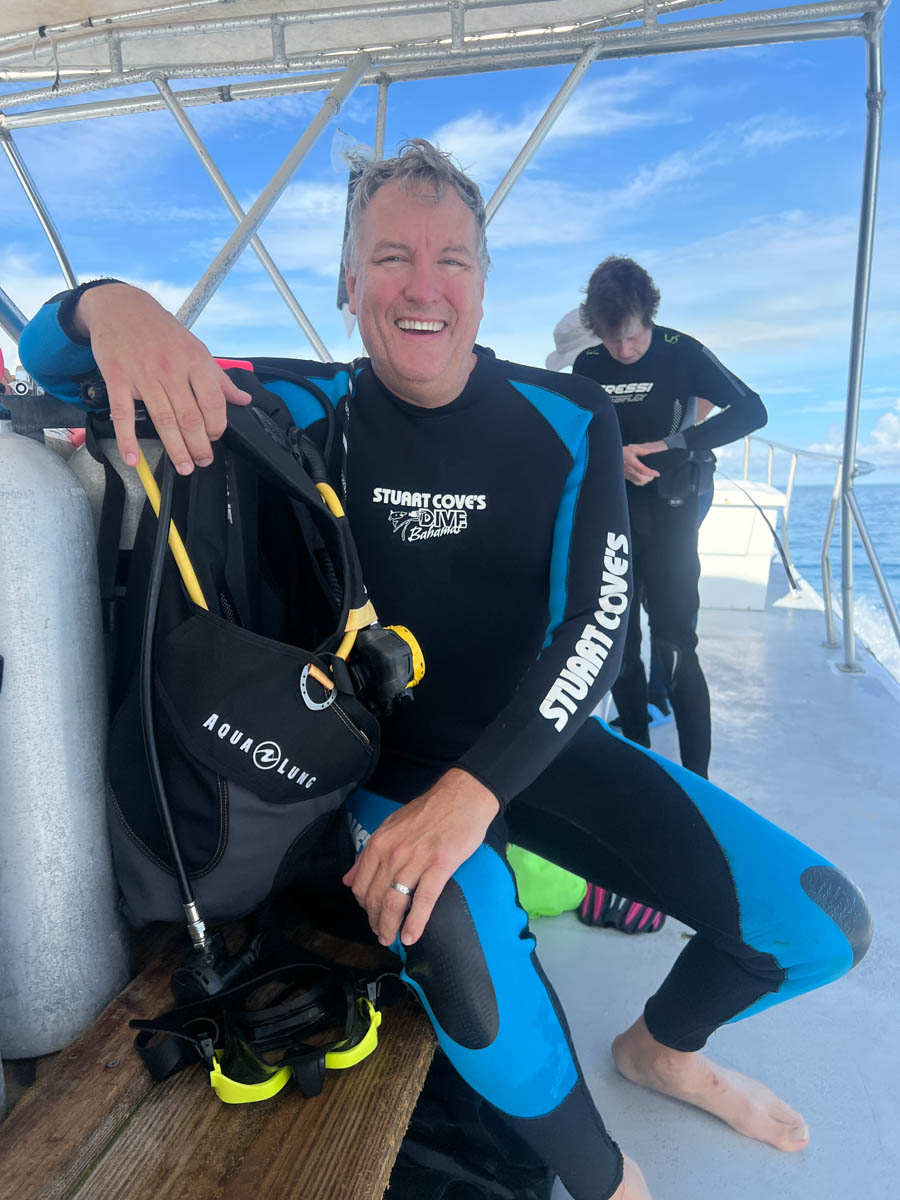
For Craig Kuhl, it was supposed to be an ordinary recreational dive during a trip to the Bahamas.
He was an experienced diver with more than 150 dives behind him. His wife, Brooke Palmer Kuhl, is an advanced NAUI diver. Diving was not unfamiliar territory for either of them.
The dive itself appeared unremarkable. Craig reportedly remained shallower than 60 feet, spent less than 30 minutes underwater and completed the normal safety stops during his ascent.
Then, after he was back on shore, everything changed.
Craig became unsteady while inside a dive shop. What followed was a medical emergency that would take him from the Bahamas to intensive care in Miami, then through weeks of rehabilitation in Tampa and into a recovery that is still continuing more than a year later.
Doctors determined that Craig had suffered an arterial gas embolism, or AGE.
For Brooke, the seriousness of what had happened quickly became apparent.
“It was VERY serious,” she told The Scuba News while helping us reconstruct Craig’s story.
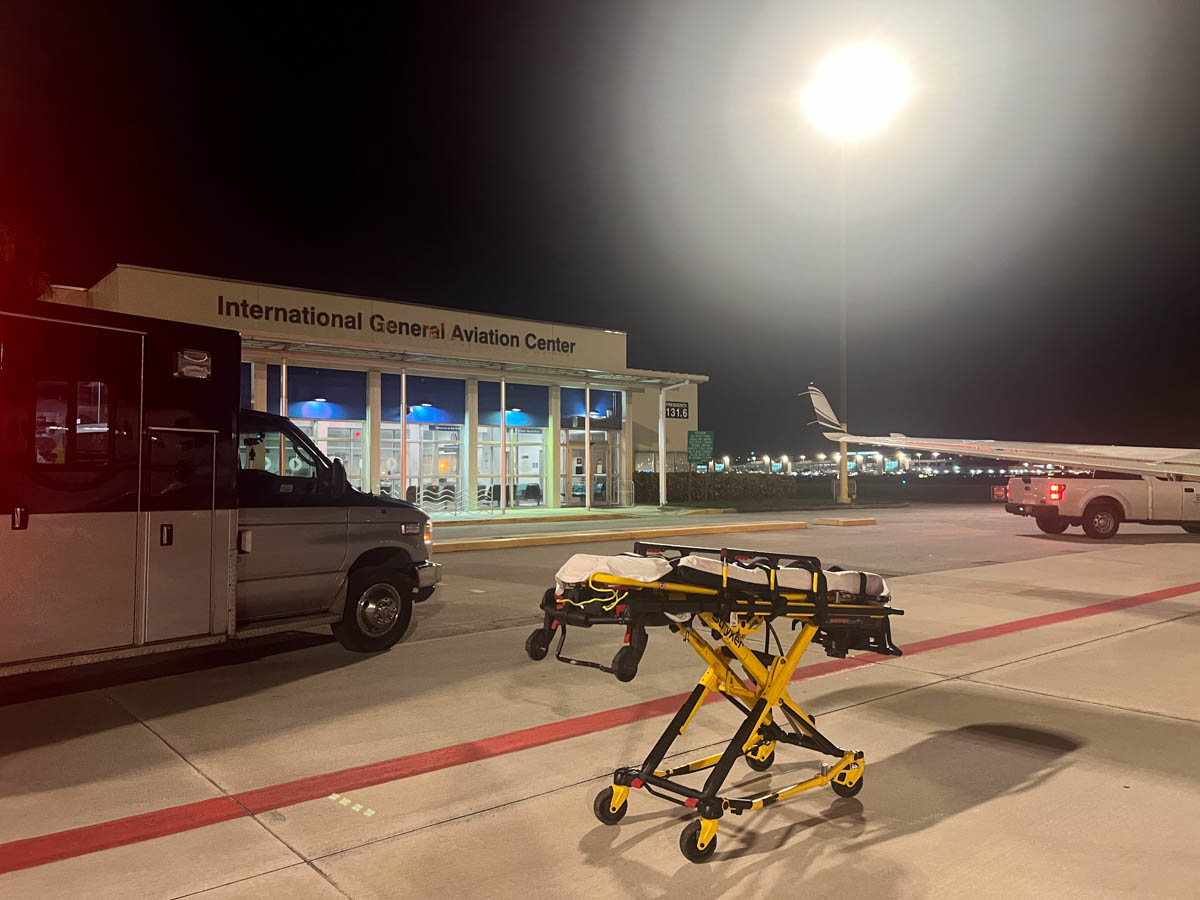
From A Dive To A Medical Emergency
An arterial gas embolism is one of the most serious injuries associated with scuba diving.
According to Divers Alert Network, AGE occurs when gas enters the arterial circulation and bubbles obstruct blood flow. Because the brain receives such a large proportion of the body’s blood supply, neurological injury can develop extremely quickly.
The resulting symptoms can resemble those of a stroke.
Craig was airlifted to Miami, beginning an acute-care phase that Brooke believes was fundamental to his survival and subsequent recovery.
She particularly credits the hyperbaric team at Mercy and Dr. Syed Ahmad with playing a critical role in his treatment.
“Without that knowledge and their expertise, this could have been VERY different,” Brooke told The Scuba News.
Craig ultimately spent 25 days in intensive care. During his hospitalization, he lost around 40 pounds.
The man who had travelled to the Bahamas as an experienced diver emerged from the acute phase of his illness facing the task of rebuilding some of the most fundamental parts of everyday life.
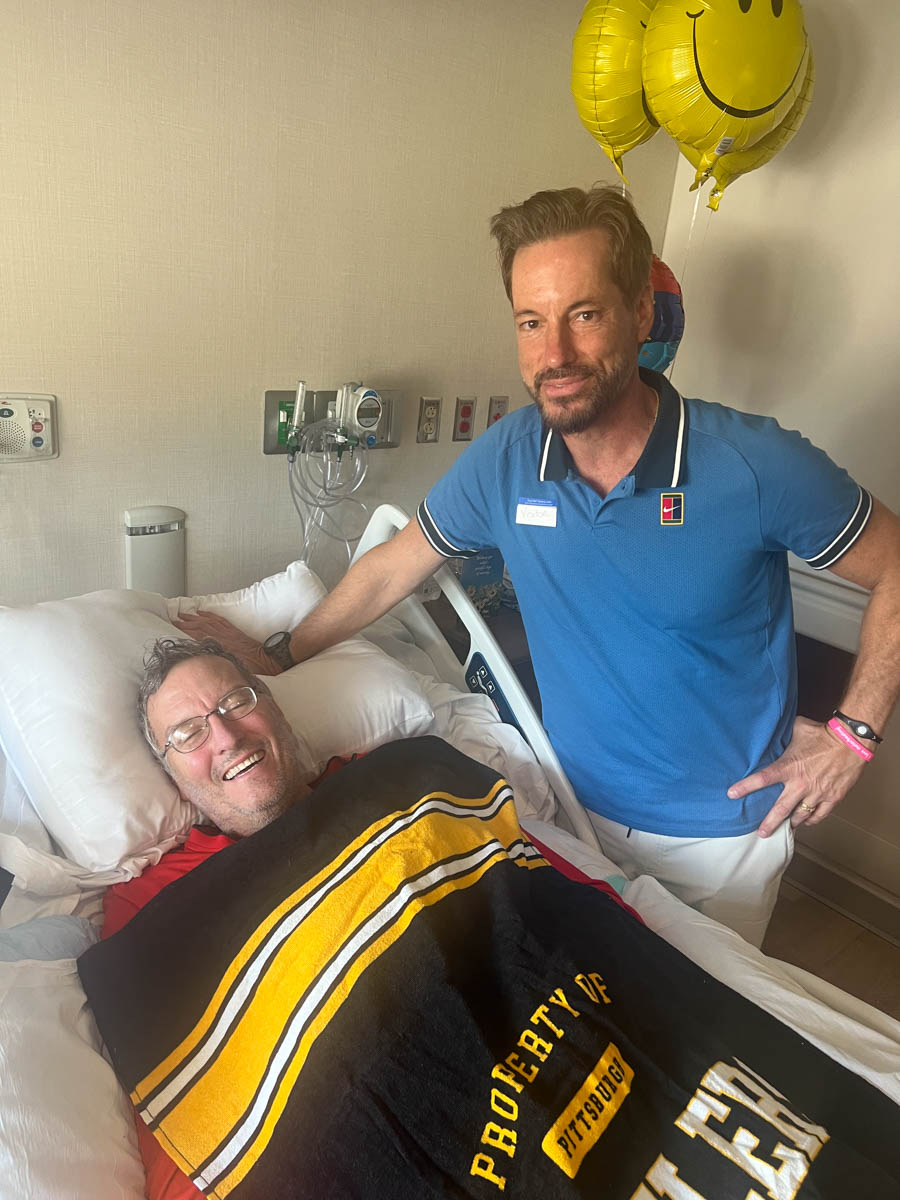
Starting Again From Zero
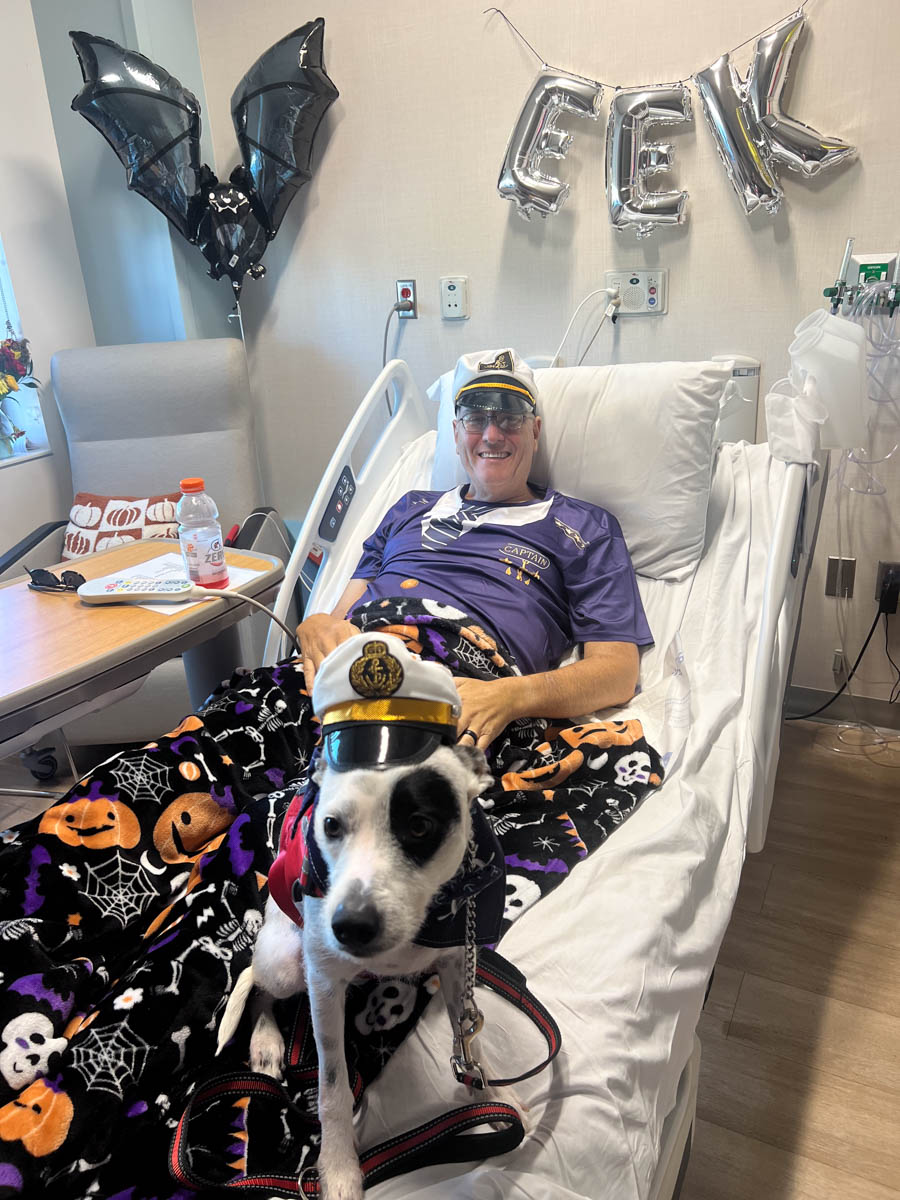
When Craig arrived at TGH Rehabilitation Hospital in Tampa, he could not independently get out of bed.
He required a lift simply to be moved.
His rehabilitation involved intensive physical and occupational therapy and the painstaking process of relearning activities most people perform without thinking about them.
Walking.
Climbing stairs.
Feeding himself.
Getting through ordinary daily routines independently.
Craig later described the scale of that challenge simply: “I had to come up from zero.”
There was no single dramatic moment when everything returned. Recovery was measured through smaller victories.
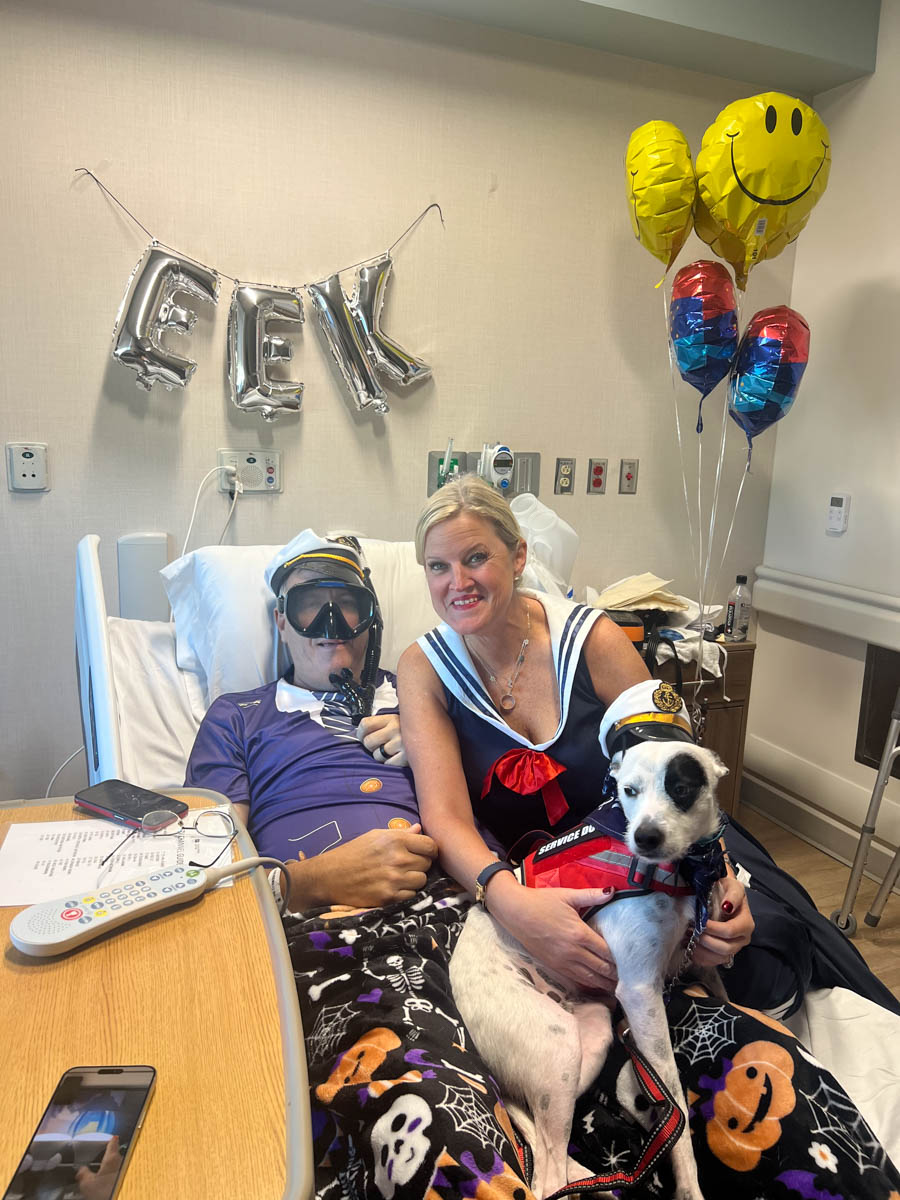
Brooke recalled one of them during Craig’s rehabilitation: being able to take a shower.
“It was almost like that first session of that shower, his whole demeanor changed,” she told FOX 13. “Maybe it was because he knew that the team cared enough to even notice.”
Craig spent approximately three weeks receiving inpatient rehabilitation in Tampa.
When he left, he was using a walker.
It was a long way from his life before the accident, but also an extraordinary distance from the man who had arrived unable to get himself out of bed.
The Question That Remains
Perhaps the most unsettling element of Craig’s story for divers is what remains unknown.
There has been no publicly established explanation for why he suffered the arterial gas embolism.
That distinction matters.
Nothing currently available establishes that Craig made a rapid ascent, held his breath or committed another diving error. His reported dive was less than 60 feet deep, lasted less than 30 minutes and included safety stops.
AGE is commonly associated with pulmonary barotrauma during ascent. As pressure decreases, expanding gas trapped within the lungs can damage lung tissue and allow gas to enter the arterial circulation.
Rapid ascents and breath-holding are recognised risk factors, but they are not the only circumstances in which AGE can occur.
DAN notes that an arterial gas embolism can occur even when an ascent has been completely normal. Certain underlying pulmonary conditions can also increase susceptibility.
That does not provide an explanation for Craig’s accident, and it would be inappropriate to retrospectively diagnose one.
Instead, his experience demonstrates why sudden neurological symptoms following a dive have to be treated seriously regardless of how benign the dive itself may have appeared.
AGE can develop rapidly. DAN describes cases involving unconsciousness, confusion, weakness, paralysis and other neurological abnormalities within minutes of surfacing.
Suspected AGE is a medical emergency. Emergency medical services should be contacted, emergency oxygen should be administered when available by someone trained to do so, and the diver requires appropriate medical evaluation and treatment.
A Year Later
Recovery did not end when Craig walked out of rehabilitation.
Over the following months, milestones continued accumulating.
The wheelchair eventually went back.
Craig returned to driving.
He began playing golf again.
Around the first anniversary of the accident, Craig and Brooke travelled to Columbus, Ohio, a particularly meaningful destination for a devoted Ohio State fan.
“Ohio State is his favorite,” Brooke told The Scuba News. “All during his recovery we had Ohio State stuff everywhere.”
The couple have also begun turning Craig’s experience into something that may help other people.
They made a gift to TGH Rehabilitation Hospital in his name and named an AED kit used by the safety team aboard a Florida Aquarium research vessel in his honour.
They also intend to return to the rehabilitation hospital to meet and encourage people facing difficult recoveries of their own.
It is a remarkable change in perspective from the earliest days of Craig’s rehabilitation, when simply getting out of bed required assistance.
Diving After The Accident
There is one part of Craig’s former life that he has chosen not to reclaim.
He is no longer scuba diving.
For two experienced divers, the accident inevitably changed Craig and Brooke’s relationship with an activity that had previously been part of their lives.
Brooke described the experience as “life-changing.”
“Diving is no joke,” she told The Scuba News.
That should not be interpreted as an argument that scuba diving is inherently reckless, nor does Craig’s case establish that an apparently conservative dive profile guarantees protection against every diving injury.
Instead, it is a reminder of something experienced divers sometimes understand better than anyone: familiarity with diving does not make us immune to a medical emergency.
Craig had completed more than 150 dives.
The dive preceding his injury appeared routine.
Yet within a short period of reaching shore, he was facing an emergency that would lead to an air evacuation, 25 days in intensive care and months of rehabilitation.
What Divers Can Take From Craig’s Story
Craig’s experience is not a case from which a cause can responsibly be reverse-engineered.
It is, however, a powerful argument for recognising post-dive neurological symptoms and responding to them urgently.
A diver who suddenly develops weakness, confusion, difficulty walking, altered consciousness or other neurological abnormalities after surfacing requires medical attention. A seemingly ordinary dive should not be used as reassurance that a serious diving-related condition cannot have occurred.
For Craig Kuhl, one dive divided life into a before and an after.
A year later, the story is no longer simply about the accident.
It is about the work that came afterwards: the medical teams who treated him, the rehabilitation professionals who helped him regain independence, the family support that accompanied him through the process, and Craig’s determination to rebuild a life that had been changed within minutes.
The wheelchair is gone.
He is driving again.
He is playing golf.
And although his scuba diving days are behind him, Craig and Brooke are now using what happened to help people confronting their own long road back.
For someone who once had to “come up from zero,” that may be one of the most significant milestones of all.
Comments