

For many divers, Honduras’ Bay Islands mean two names: Roatán and Utila. Roatán has the established resort infrastructure and famous walls, while Utila has built an international reputation around affordable training and the possibility of whale shark encounters.
Farther east, however, sits the third of the main Bay Islands, Guanaja, where the diving story is rather different.
Guanaja is the quieter member of the trio. PADI’s guide to diving in Guanaja describes an island of pinnacles, vertical walls, tunnels, wrecks and coral reefs, with a particular reputation for macro photography. A separate PADI roundup of diving in Honduras lists more than 50 dive sites around Guanaja and describes it as the less-visited of the Bay Islands.
That relative lack of dive traffic is central to Guanaja’s appeal. This is not a destination built around rows of dive centres competing for the same sites. Divers come here for reef structure, space underwater and the chance to slow down and look closely at a Caribbean reef system that rewards attention to the smaller inhabitants as much as the obvious scenery.
A Different Side of the Bay Islands
Guanaja lies east of Roatán within the wider Mesoamerican Reef region. Its geography is part of what gives the island its character: mountainous terrain rises behind a coastline fringed by reefs and small cays, while getting there requires a little more planning than a straightforward resort arrival on Roatán.
That extra step has helped keep Guanaja outside the highest-volume Caribbean dive circuit. PADI describes the destination as more remote than Roatán or Utila and highlights its uncrowded dive sites.
For divers who increasingly value low-traffic diving rather than a checklist of headline species, that is a meaningful distinction.
There is history here too. Christopher Columbus encountered Guanaja during his fourth voyage in 1502, when the island’s pine-covered landscape led to the name Isla de los Pinos. The island’s modern identity, however, is much more usefully understood through its communities, distinctive landscape and relationship with the sea than through that brief European episode.
More Than 50 Sites, From Walls to Wrecks
The underwater topography gives visiting divers plenty of variety.
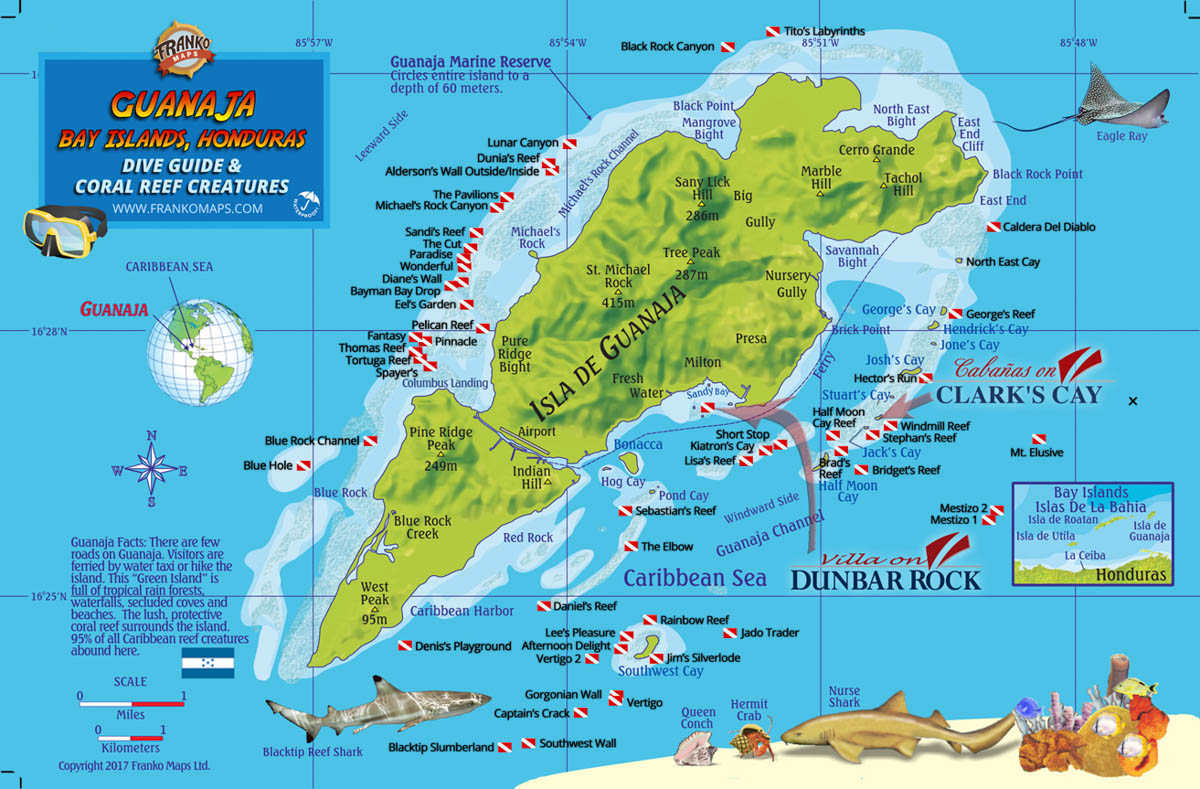
Guanaja operators describe more than 50 named sites around the island, including vertical walls, pinnacles, tunnels, shallow reef systems and wrecks. The Clark’s Cay guide to Guanaja’s dive sites lists sites such as Michael’s Rock and The Pinnacle alongside the island’s best-known wreck, the Jado Trader.
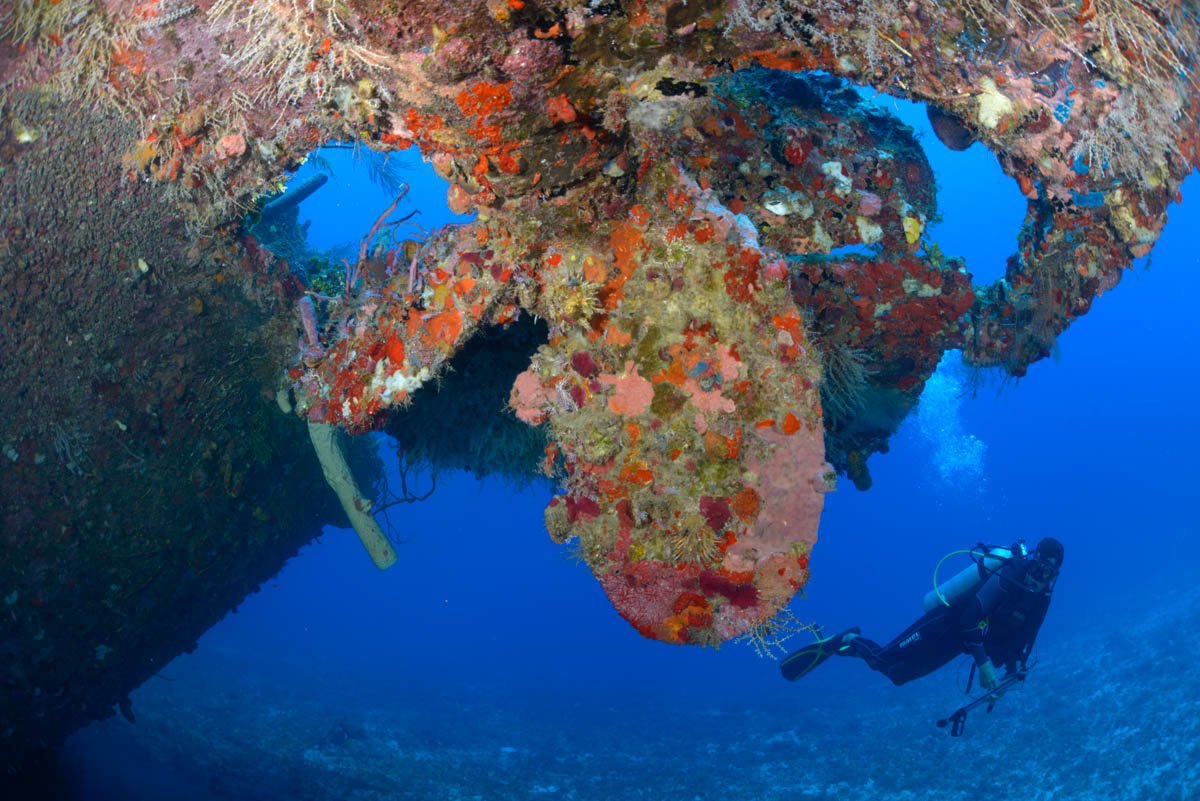
The Jado Trader is a 240-foot refrigerated freighter sunk in 1987 to create an artificial reef. It now rests upright on sand at roughly 80 to 110 feet, making it a dive for suitably experienced divers. The wreck has become heavily colonised by marine growth and is one of Guanaja’s signature dives.
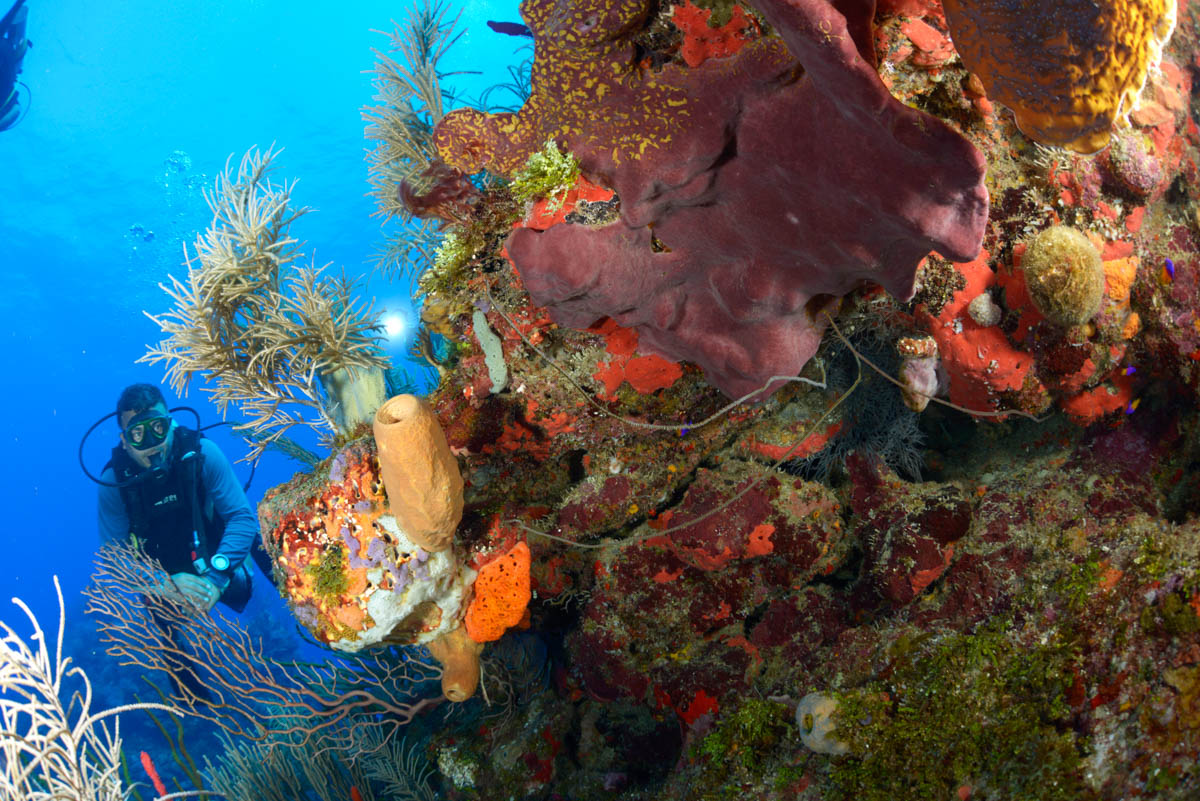
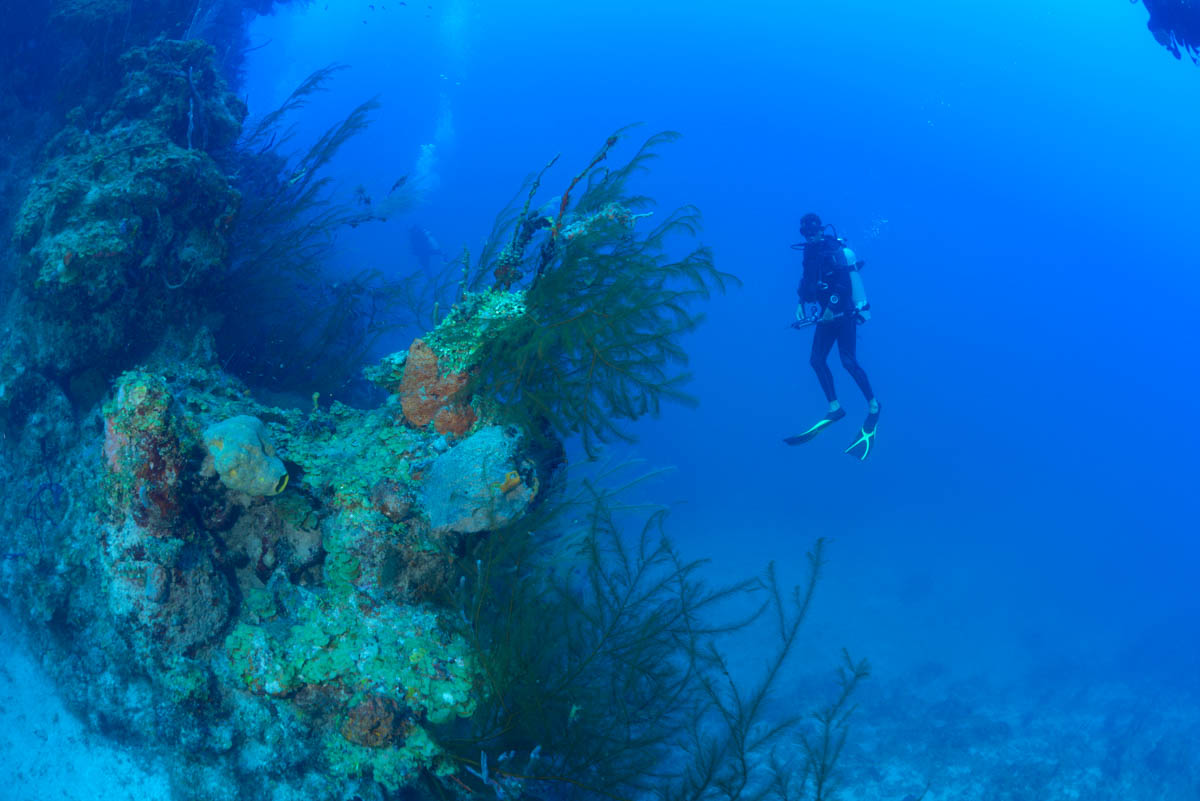
Elsewhere, the attraction is the reef itself. Pinnacles rise from deeper water, walls fall away into blue, and cracks and channels create the kind of topography that gives a dive shape even before the marine life enters the picture.
The Case for Looking Smaller
Guanaja’s strongest wildlife story may not be the one divers first expect from the Caribbean.
Rather than building the destination around promises of frequent large-animal encounters, much of its appeal lies in what can be found by slowing down.
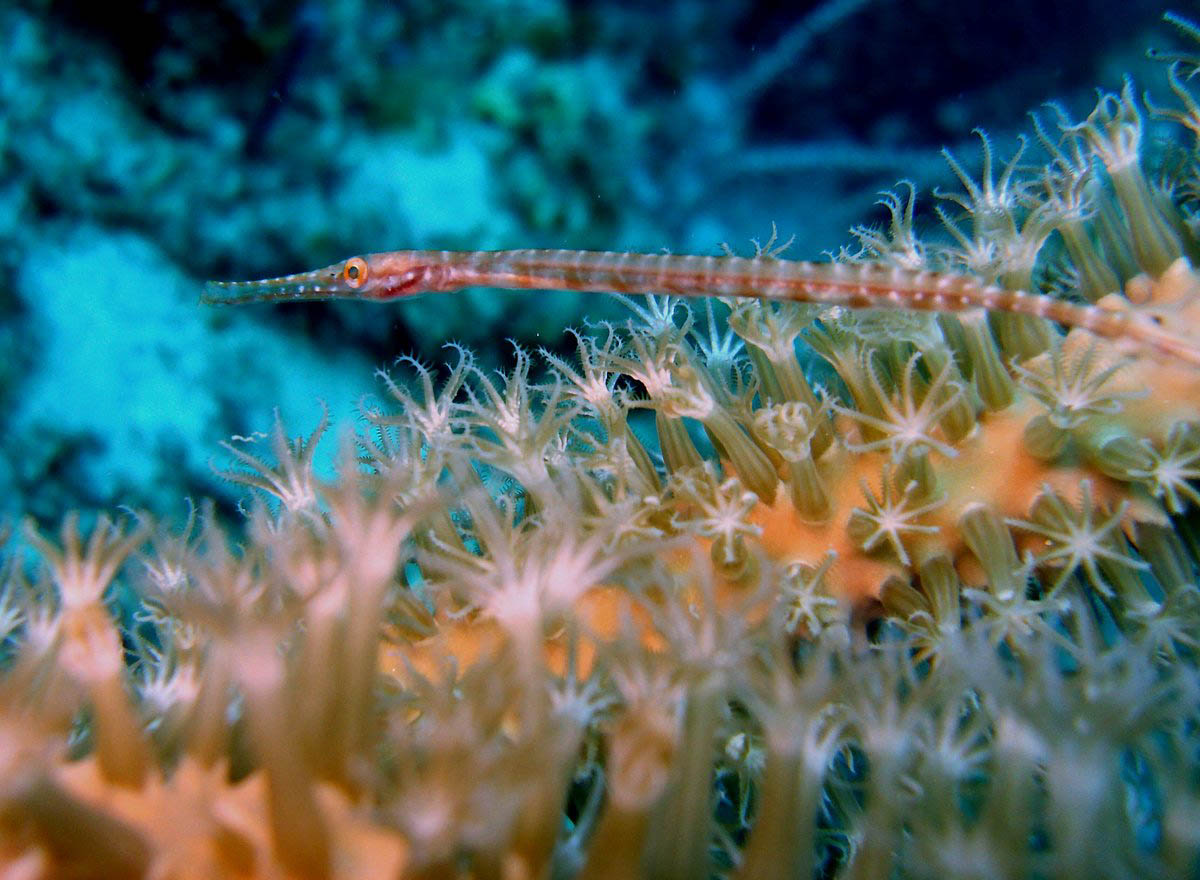
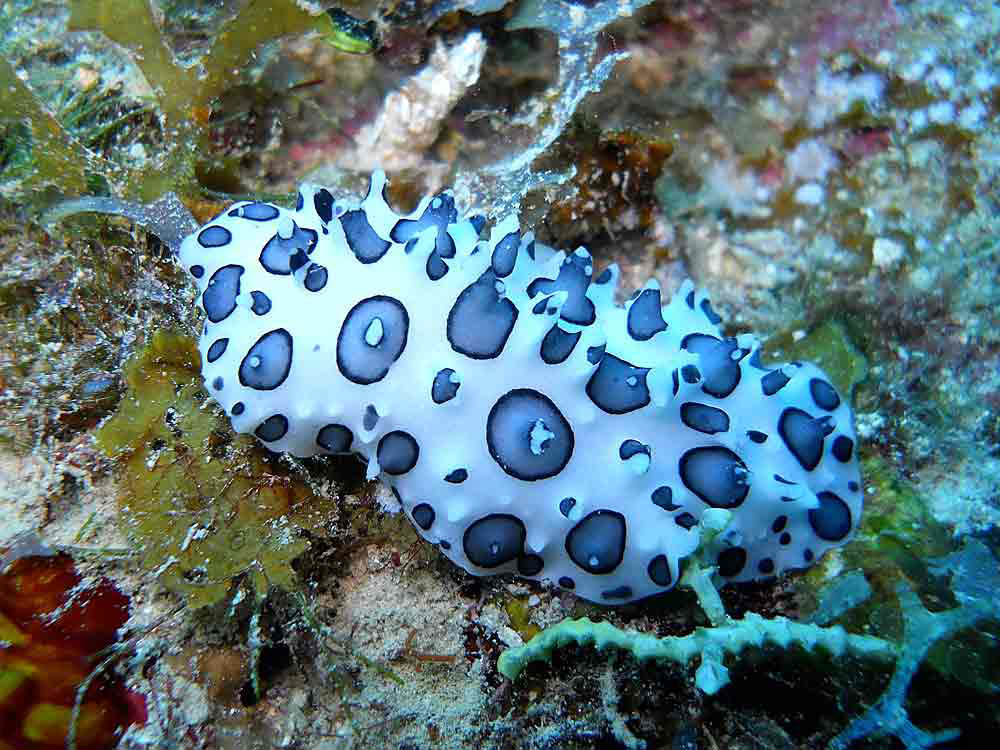
PADI specifically highlights Guanaja for macro photography, including nudibranchs and the smaller life associated with coral, sponge, sand and rubble habitats. The Villa on Dunbar Rock diving guide similarly encourages divers to spend time looking closely at the reef, where camouflage can hide nudibranchs, shrimp, crabs and other small subjects in plain sight.
That gives Guanaja a clearer identity. Roatán and Utila already have powerful names in the international dive market. Guanaja does not need to imitate them. Its proposition is stronger when it leans into less crowded sites, varied underwater terrain, macro discovery and a slower style of diving.
For underwater photographers and naturalists, a reef becomes more interesting when the objective changes from covering distance to finding detail: a nudibranch against a sponge, a small crustacean tucked into coral, an octopus disappearing into rubble or a carefully framed section of reef structure.
Where Divers Stay
Guanaja’s smaller tourism footprint means accommodation and diving tend to be closely connected.
Among the established options are Cabañas on Clark’s Cay and Villa on Dunbar Rock, two properties serving the same destination from very different settings.
Clark’s Cay occupies a private cay and in 2026 expanded its adaptive-diving infrastructure, including four accessible family cabañas and extensive accessibility improvements around the resort.
Dunbar Rock is built around a small cay just offshore from Guanaja. Alongside boat diving, divers staying there can explore the shallow water immediately around the property.
For groups, there is another unusual possibility that we will explore separately. Under the right booking arrangements, groups of divers, friends or extended families can effectively make one of these properties their own.
That changes the character of a dive holiday considerably and deserves a closer look in its own right.
Getting to Guanaja
Guanaja’s remoteness should be treated as part of the planning rather than a surprise.
PADI’s destination information notes that visitors commonly connect through Roatán or the Honduran mainland before continuing to Guanaja by domestic flight, ferry or boat transfer.
For guests staying at Clark’s Cay or Dunbar Rock, arranging the final transfer directly with the property makes sense because schedules and practical requirements can change. That becomes particularly important when coordinating international flight times with onward connections.
A Bay Island Worth Knowing on Its Own Terms
Guanaja is unlikely to replace Roatán or Utila in the vocabulary of Caribbean diving, and that is not really the point. Its value lies in offering something different within the same Honduran island chain.
There are wrecks and walls for divers who want dramatic structure, shallow reefs for those prepared to linger, and enough macro life to give photographers a reason to stop measuring a dive by how far they travelled.
Add comparatively low dive traffic and the sense of being somewhere that still requires a little effort to reach, and Guanaja begins to make a compelling case on its own terms.
For divers who already think they know the Bay Islands, the third island may be the one that still has something new to show them.
Comments