


Saudi Arabia is increasingly treating scuba diving as more than a recreational attraction, with regulation, professional licensing, marine tourism investment and environmental research beginning to form the foundations of a broader diving industry.
A recent Saudi Press Agency report described diving as a developing high-value sector connected to Saudi Vision 2030 and the Kingdom’s expanding blue economy.
Behind that description is a much larger programme to develop Saudi Arabia’s coastline for marine tourism while putting formal structures around the businesses and professionals operating within it.
More Than 500 Diving Sites
The scale of the potential market is considerable.
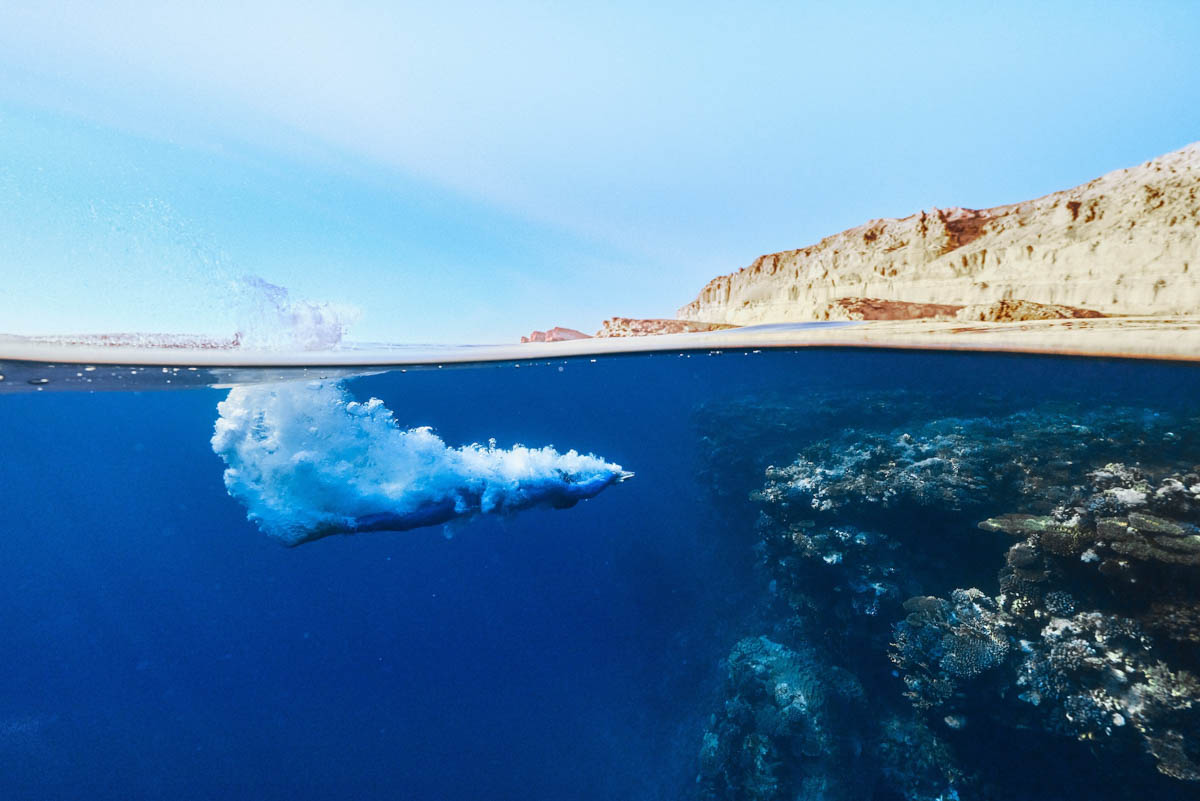
The Saudi Red Sea Authority says the country’s Red Sea coast contains more than 500 diving sites, alongside more than 1,000 islands, over 150 beaches and more than 20 blue holes.
Not all of those locations should be regarded as established recreational dive sites with mature tourism infrastructure. However, the figure illustrates the size of the marine resource that Saudi Arabia is attempting to bring into its developing coastal tourism economy.
The Authority was established to regulate and develop coastal tourism along the Saudi Red Sea. Its responsibilities include licensing and permits, policy development, infrastructure requirements, environmental protection, investment and the development of marine tourism activities.
Diving is specifically included among the activities within that framework.
The Authority has also identified individual diving areas for visitors. Around Jeddah these include Abu Madafi, home to the historic SS African wreck, Umm Al-Hajar with the Chicken and Marble wrecks, and Abu Tair, where another wreck lies among hard and soft corals.
Farther north, reefs around King Abdullah Economic City include Nizar Reef, Shark Reef and Al-Fahal, the latter also serving as a research location near King Abdullah University of Science and Technology.
Elsewhere, Yanbu, Umluj and the Farasan Islands form part of the Kingdom’s established and emerging Red Sea diving geography, while diving also takes place on Saudi Arabia’s Arabian Gulf coastline.
From Dive Sites To An Industry
What makes the current development particularly significant is the infrastructure being constructed around the diving itself.
The Saudi Water Sports & Diving Federation describes itself as the national organisation responsible for developing and supporting marine sports and diving in Saudi Arabia, including establishing regulations and providing training.
Its services include national licensing for professional divers and membership for diving centres.
Individual registered centres can be authorised for activities extending well beyond recreational training. These can include organising dive trips, equipment sales and rental, air and nitrox fills, technical-diving equipment and first-aid training.
That creates the framework for an increasingly formal domestic diving economy encompassing instructors, professional divers, dive centres, equipment suppliers, boat operators and other supporting businesses.
Saudi Arabia is simultaneously developing the marine infrastructure around those activities.
The Saudi Red Sea Authority is building a regulatory environment covering marine tourism agents, marinas, yachts, chartering and tourism watercraft. Diving activities undertaken from yachts are also subject to specific requirements.
This matters for the international dive industry because successful dive destinations depend on considerably more than attractive reefs. Dive centres, vessels, marinas, trained professionals, transportation, accommodation, equipment supply and regulatory certainty all form part of the ecosystem required to support an international diving destination.
Diving Inside A Much Bigger Tourism Strategy
Diving represents only one component of Saudi Arabia’s coastal ambitions.
The Saudi Red Sea Authority has set a target for the overall coastal tourism sector to contribute SAR 85 billion to Saudi GDP by 2030, generate SAR 123 billion in spending and support 210,000 jobs.
Those figures apply to coastal tourism as a whole and should not be interpreted as projections for the diving industry alone.
Nevertheless, scuba diving sits directly inside the same marine-tourism ecosystem.
For international dive businesses, that potentially creates opportunities extending from recreational training and dive-centre operations to liveaboard-style vessels, equipment distribution, professional training, marine services and hospitality.
Saudi authorities are also openly discussing investment in marine tourism infrastructure. Recent official reporting around the Al-Lith islands, for example, has identified diving centres, low-impact accommodation and marine services among potential areas for development.
The Environmental Question
Rapid development of a diving destination containing extensive coral ecosystems also creates an obvious challenge: how to increase access without degrading the resource attracting visitors in the first place.
Saudi Arabia is investing heavily in understanding that resource.
The National Center for Wildlife has conducted field surveys across more than 400 Red Sea sites, examining coral reefs, seagrass beds and mangroves to identify environmentally sensitive areas and help inform future marine protected areas.
The Center reports more than 300 coral species in the Red Sea.
A separate environmental DNA research programme conducted with King Abdullah University of Science and Technology analysed more than 2,000 water and sediment samples and generated more than 12.8 billion genetic sequences.
The resulting database is intended to improve monitoring of changes in marine biodiversity and help researchers assess threats including pollution, habitat degradation and climate change.
Environmental protection also appears explicitly within the Saudi Red Sea Authority’s tourism mandate, including coral protection, marine waste management and the installation of mooring buoys.
Whether protection keeps pace with the scale of tourism development will therefore be one of the important issues to watch as the sector expands.
A New Market For The Global Dive Industry
Saudi Arabia is not starting from zero.
The country already has dive centres, instructors, professional divers and established recreational diving communities. Diving itself has much older cultural roots through the pearl-diving traditions of communities on both the Red Sea and Arabian Gulf coasts.
What is changing is the scale and structure surrounding it.
Regulation, professional licensing, coastal infrastructure, tourism investment and environmental science are increasingly being assembled around a resource that Saudi authorities say includes hundreds of potential diving locations.
That does not automatically make Saudi Arabia a mature international diving destination. Building international awareness, developing reliable access to sites and expanding the supporting tourism infrastructure will take time.
But the direction is increasingly clear.
For a global dive industry accustomed to looking at Egypt farther north on the same sea as one of the world’s major diving destinations, the development taking place along Saudi Arabia’s much longer Red Sea coastline deserves attention.
Saudi Arabia is no longer simply promoting places to dive.
It is beginning to build an industry around them.
Comments