


Affiliate Disclosure: Some content on The Scuba News may include affiliate links. Find out how this supports our work.
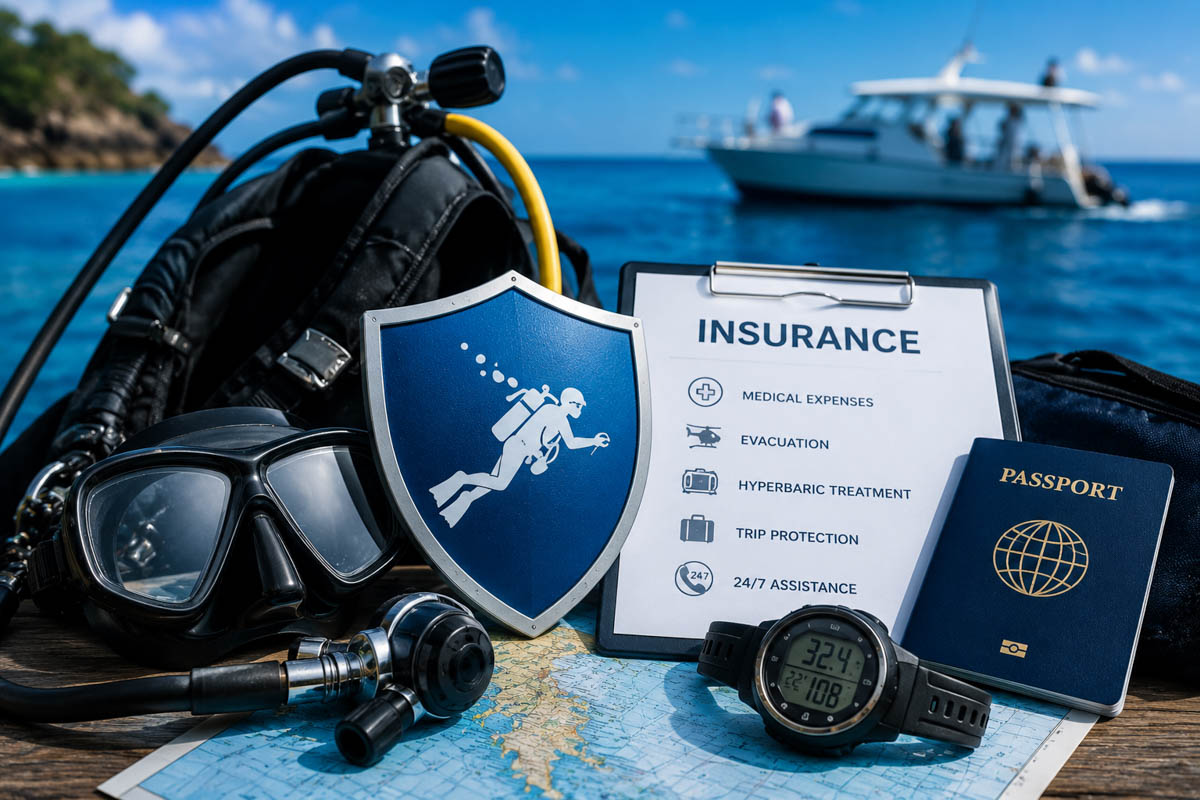
Scuba diving is one of the safest adventure sports when practised within training limits, but when something does go wrong, the costs can escalate rapidly. A single emergency evacuation or hyperbaric chamber treatment can cost thousands, or even tens of thousands of dollars depending on where the incident occurs.
That’s why experienced divers often carry specialist dive insurance alongside any standard travel or medical insurance.
But not all policies are created equal.
Some only cover diving accidents. Others combine dive accident protection with travel insurance. Professional instructors require additional liability cover, while technical divers need to ensure their chosen policy specifically includes the type of diving they undertake.
Here’s what every diver should know before buying a policy.
Why Regular Travel Insurance May Not Be Enough
Many travellers assume their standard travel insurance automatically covers scuba diving.
Sometimes it does.
Sometimes it doesn’t.
Many general travel insurance policies:
- exclude scuba diving altogether
- only cover dives to specified recreational depths
- exclude technical diving
- exclude decompression sickness
- exclude cave or wreck penetration
- require diving to be conducted through recognised operators
- have limits on emergency evacuation or hyperbaric treatment
For that reason, organisations specialising in diving recommend checking policy wording carefully rather than assuming any travel insurance includes dive-related risks.
What Is Dive Accident Insurance?
Dive accident insurance is specifically designed for injuries and emergencies arising from diving.
Depending on the provider and plan selected, benefits may include:
- emergency medical treatment
- hyperbaric chamber treatment
- physician fees
- emergency evacuation
- medical transportation
- search and rescue (where included)
- repatriation following a serious incident
- accidental death or disability benefits
Exact benefits, limits and exclusions vary significantly between insurers and individual plans.
Recreational Divers
If you mainly dive on holiday or enjoy occasional local diving, your priorities are usually:
- emergency evacuation
- chamber treatment
- hospital costs
- emergency medical assistance
- worldwide coverage
- access to specialist diving medical support
For many recreational divers, annual cover can be more economical than buying short-term insurance for multiple trips throughout the year. DiveAssure offers both annual and short-term dive accident policies, while DAN’s dive accident insurance is available as annual coverage in applicable regions.
Technical Divers
Technical diving introduces different risks compared with recreational diving.
Divers using:
- mixed gases
- rebreathers
- cave configurations
- ice diving
- decompression procedures
should never assume every insurer automatically provides cover.
For example:
- DiveAssure states that its DiveSafe plans include mixed gas, rebreather, cave diving and ice diving, with no stated depth limit provided divers dive within the protocols and certification limits of recognised agencies.
- DAN Europe states that its Sport Plans are designed to cover recreational, technical and rebreather diving worldwide, although cover depends on the specific plan purchased and policy terms.
Regardless of insurer, technical divers should always read the policy wording carefully before assuming a particular activity is covered.
Dive Professionals
Professional divers have different insurance needs.
A dive instructor or divemaster isn’t simply protecting themselves, they may also need protection against claims arising from teaching or guiding.
Professional policies commonly include:
- professional liability insurance
- legal defence costs
- cover while teaching
- cover while guiding certified divers
- instructor-specific benefits
DAN Europe offers dedicated Professional Plans for instructors, divemasters and dive guides that include professional liability cover and legal defence. These plans are designed for recreational and professional diving, including technical and rebreather activities.
DiveAssure also offers General Liability insurance designed for diving professionals and operators, separate from its dive accident insurance products.
Understanding DAN Membership
One point that often causes confusion is that DAN membership and DAN insurance are not the same thing.
For example, DAN World membership provides benefits such as:
- 24/7 emergency hotline access
- emergency medical evacuation benefits (subject to membership terms)
- medical information services
- eligibility to purchase dive accident insurance
Insurance is an additional product purchased separately where available.
DiveAssure’s Approach
DiveAssure offers several different insurance products rather than a single policy.
These include:
- Dive Accident Insurance
- Dive & Travel Insurance
- General Liability Insurance
- Short-term and annual options (depending on product)
The company also operates the StartDive programme, providing complimentary introductory accident coverage for entry-level students participating in eligible beginner courses through participating agencies.
Questions Every Diver Should Ask Before Buying
Instead of comparing policies on price alone, consider asking:
- Does it cover decompression illness?
- Does it include emergency evacuation?
- Are hyperbaric treatments covered?
- Is there worldwide coverage?
- Are my certification level and diving activities covered?
- Does it include technical diving?
- Does it include rebreathers?
- Is search and rescue included?
- Does it cover medical expenses only, or travel issues too?
- If I’m an instructor, does it include professional liability?
The answers will vary between providers, countries and individual plans.
Dive Insurance vs Travel Insurance
One of the biggest misconceptions is that these are interchangeable.
They are not.
A dive accident policy generally focuses on injuries arising from diving.
Travel insurance may cover:
- cancelled trips
- baggage
- flight delays
- non-diving medical emergencies
Some products combine both types of protection, while others require separate policies. Always review the policy wording to understand exactly what is included.
Before You Buy
Before purchasing any policy:
- Read the full policy wording.
- Check exclusions.
- Confirm your country of residence is eligible.
- Verify the activities you undertake are specifically covered.
- Check whether professional liability is required.
- Understand any excesses, limits and conditions.
Insurance products change over time, so relying on old information, or assuming your previous policy still provides the same cover, can lead to unpleasant surprises.
Final Thoughts
Nobody plans to have a diving accident.
Yet even a relatively straightforward evacuation and hyperbaric treatment can result in substantial costs, particularly when travelling overseas.
Choosing specialist dive insurance isn’t simply about meeting the requirements of a liveaboard or dive operator. It’s about ensuring you have access to appropriate emergency assistance, specialist medical support and financial protection if something unexpected happens underwater.
The right policy depends on how and where you dive.
Whether you’re an occasional holiday diver, a deep technical explorer or a full-time instructor, taking time to compare the available options before your next trip could be one of the most important pieces of dive planning you do.
Compare DiveAssure and DAN Europe before your next dive trip
