

From measuring centuries-old wrecks to recording fragile archaeological sites, trained scuba divers are playing an increasingly important role in uncovering one of history’s darkest chapters beneath the waves.
For many recreational divers, a shipwreck is an opportunity to explore history underwater. For a growing community of maritime archaeologists and volunteer scientific divers, however, these submerged sites are also places of remembrance, education and cultural preservation.
Recent interest surrounding genealogist and diver Shellie Baxter’s archaeological training in the Florida Keys has shone a spotlight on a specialised branch of diving that goes far beyond exploration. Rather than searching for treasure, divers are using scientific survey techniques to help document historic shipwrecks connected to the transatlantic slave trade.
The work combines advanced diving skills with meticulous underwater recording, producing detailed measurements and site plans that allow archaeologists to better understand and protect fragile wreck sites for future generations.
Diving with a purpose
One of the organisations leading this effort is Diving With a Purpose (DWP), a non-profit that trains experienced divers in maritime archaeology. Founded in 2005, the organisation works alongside professional archaeologists, NOAA, the National Park Service and other heritage organisations to document historically significant shipwrecks, many of them linked to the Atlantic slave trade.
Training extends well beyond conventional recreational diving. Participants learn archaeological survey methods including baseline mapping, trilateration, underwater measurements, sketching, photography and detailed documentation. The emphasis is on recording sites accurately while leaving them undisturbed.
Since its creation, hundreds of volunteer divers have contributed thousands of hours documenting wrecks and assisting archaeological investigations around the world.
The legacy of the Henrietta Marie
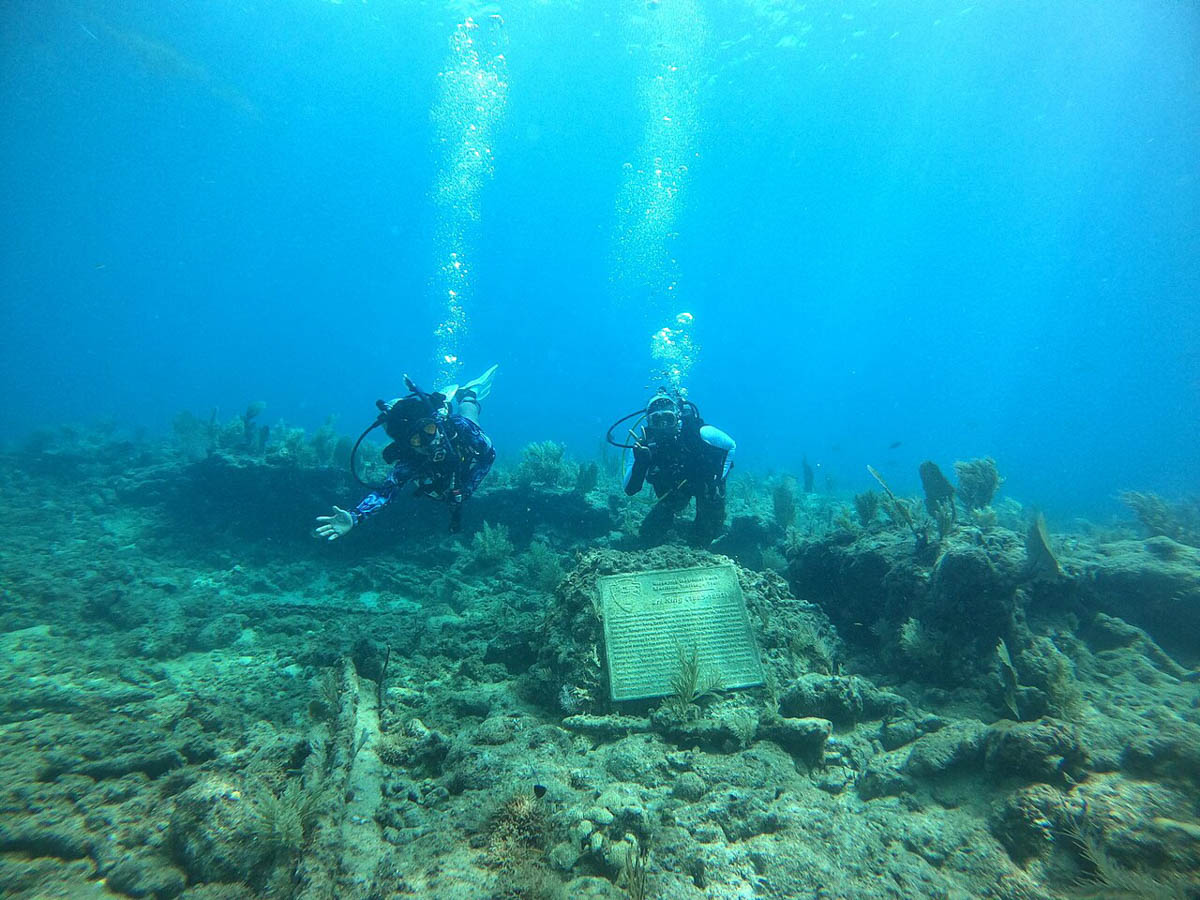
Among the most significant wrecks in American waters is the Henrietta Marie, one of the few positively identified slave ships ever discovered.
The English vessel transported captive Africans across the Atlantic before sinking off the Florida Keys around 1700 while returning to England after selling enslaved people in the Caribbean. The wreck was first located during a magnetometer survey in 1972 before archaeologists later confirmed its identity through the discovery of the ship’s bell bearing its name.
Unlike many famous wrecks, the Henrietta Marie holds little interest as a source of treasure. Instead, it provides an important archaeological record of the transatlantic slave trade and serves as a memorial to the thousands of lives affected by one of history’s greatest humanitarian tragedies.
Recovered artefacts, including iron shackles known as bilboes, trade goods and sections of the ship itself, have helped historians better understand the realities of the Middle Passage and the global trade that transported millions of enslaved Africans across the Atlantic.
Scientific diving, not treasure hunting
Underwater archaeological work bears little resemblance to popular depictions of wreck diving.
Divers spend much of their time taking precise measurements, recording the positions of artefacts, photographing features and producing detailed sketches that can later be converted into archaeological site plans. Every action is carefully controlled to avoid disturbing the wreck or damaging the surrounding marine environment.
This documentation allows researchers to monitor how sites change over time due to storms, corrosion, biological growth and climate-related impacts while creating permanent records for future study.
The same techniques are also used on military wrecks, ancient trading vessels, aircraft and other culturally significant underwater sites around the world.
Preserving underwater cultural heritage
Slave shipwrecks are increasingly recognised not simply as archaeological sites but as underwater memorials.
Organisations including the Slave Wrecks Project work with museums, universities and local communities to locate, document and protect these sites while training new generations of maritime archaeologists from around the world. Community education and diver training form a key part of that mission, ensuring that descendant communities are actively involved in preserving their own history.
As interest in maritime archaeology continues to grow, scuba divers are finding new opportunities to contribute their skills to scientific research and cultural heritage conservation.
For many participants, the reward is not discovering a lost ship, but helping preserve stories that remained hidden beneath the sea for centuries.

