


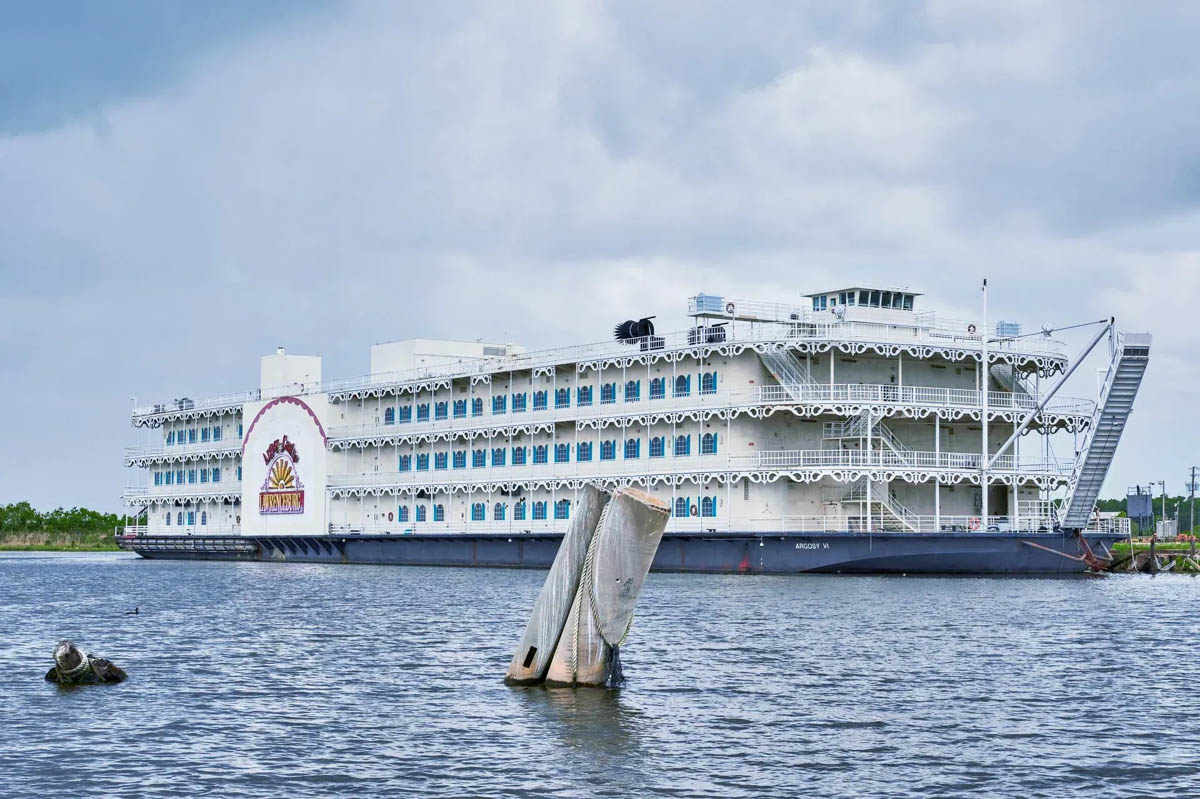
A former floating casino that once hosted thousands of gamblers on the Ohio River is preparing for its final voyage – one that will see it transformed into one of the largest artificial reefs in the United States.
The 408-foot Argosy VI is scheduled to be intentionally sunk on 1 July approximately 23 nautical miles south of Orange Beach, Alabama, where it will come to rest in 122 feet (37 metres) of water. Rather than ending its life as scrap, the vessel will provide a new habitat for marine life while creating another significant destination for recreational divers and anglers.
The vessel will become part of the Dr. Robert (Bob) Shipp Alabama Artificial Reef Zone, an area already home to more than 400 reef sites, including the well-known LuLu and New Venture wrecks. Once deployed, the Argosy VI will rank among the largest structures ever added to the reef system.
Originally built as a four-deck casino riverboat, the Argosy VI operated in Lawrenceburg, Indiana, until 2009 before being relocated to Alabama. In preparation for its new underwater role, crews have spent months removing fuels, hydrocarbons and other materials that could harm the marine environment, leaving a clean steel structure suitable for reef deployment.
Artificial reefs provide hard surfaces for corals, sponges and other marine organisms to colonise, creating shelter and feeding grounds for countless fish and invertebrate species. Over time, these structures often become thriving ecosystems while also helping reduce pressure on natural reefs by concentrating recreational diving activity.
Alabama’s artificial reef programme is the largest of its kind in the United States, with more than 1,100 square miles of designated offshore reef areas managed by the Alabama Department of Conservation and Natural Resources. The programme has become internationally recognised for converting retired ships and other large structures into productive marine habitats that support both fisheries and dive tourism.
For divers, the Argosy VI represents another substantial wreck to explore along Alabama’s Gulf Coast. Its size, multiple decks and expansive interior profile are expected to make it an attractive destination once marine growth establishes itself over the coming years.
The sinking continues a long tradition of giving retired vessels a second life beneath the sea, where ships that once served commerce or entertainment are reborn as living reefs supporting marine biodiversity for decades to come.
Comments