


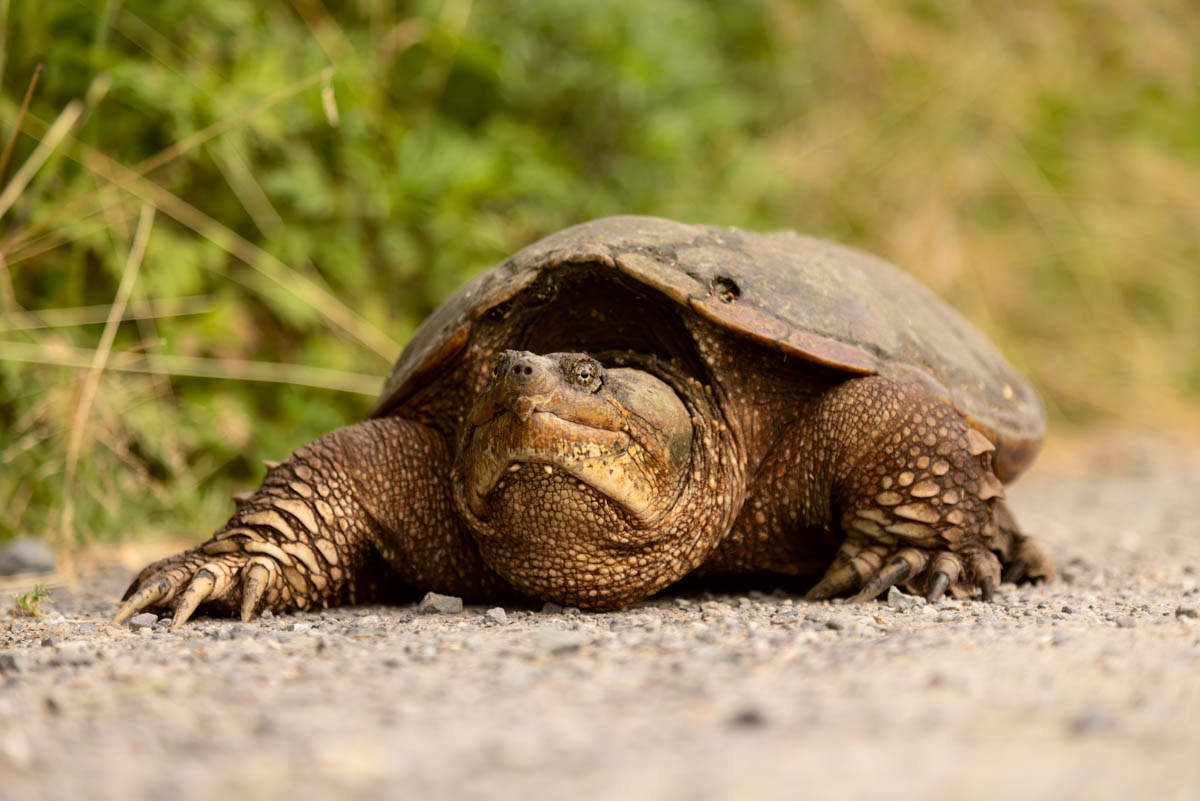

“Yes Virginia, snapping turtles are in Canatara Park”

In Sarnia’s Canatara Park, visitors frequently spot two specific turtle species inhabiting Lake Chipican and its connecting waterways.

The Resident Turtles
While both are local fixtures, they have very different origins:

- While less frequent than their smaller cousins, Snapping Turtles are still a regular fixture of Lake Chipican’s ecosystem. As the largest species in the lake, they are easily distinguished by their rugged, prehistoric appearance.
- Red-Eared Slider: Although widespread, this turtle is actually an invasive species in Canada. Often dubbed the “pet shop turtle,” these reptiles are frequently purchased as small, manageable pets.
The Impact of Abandonment
The prevalence of Red-Eared Sliders in Lake Chipican is largely due to irresponsible pet ownership. When these turtles eventually outgrow their enclosures or become too difficult to maintain, owners often release them into the lake. This illegal abandonment introduces non-native competition into the environment, impacting the balance of the local habitat.
Behavior and Characteristics of the Snapping Turtle
Understanding how these turtles navigate their environment is key to coexisting with them:
- On Land: Because they cannot fully retract into their shells for protection, Snapping Turtles may become defensive or aggressive if they feel cornered while traveling across land.
- In Water: Contrary to their “tough” reputation, they are quite shy in their natural element. When encountered in the lake, they typically prefer to glide away and submerge themselves to avoid interaction.
Though they might look like relics from the dinosaur era, these impressive reptiles play a vital role in maintaining the health of the local waterways.
Snapping Turtles in Ontario face a unique biological “bottleneck” that makes their populations incredibly fragile. Because they prioritize long-term survival over rapid reproduction, the loss of just a few adults can lead to a local population’s total collapse.
Why Every Adult Counts
The risk to this species is tied to their specific life cycle:
- Late Maturity: A Snapping Turtle often needs 15 to 20 years before it can begin laying eggs.
- Low Survival Rates: Out of hundreds of eggs laid, fewer than 1% will survive to adulthood.
- Replacement Time: Because of these odds, it can take a female turtle nearly 60 years just to replace herself with one surviving adult offspring in the population.
Primary Threats
Because they cannot “bounce back” quickly, human-driven factors are particularly devastating:
- Road Mortality: Roads are a major threat. Females are often attracted to the soft, sandy gravel on road shoulders to nest, putting them directly in the path of vehicles.
- Hunting and Poaching: While Ontario officially banned the snapping turtle hunt in 2017, poaching remains a concern. Because these turtles are long-lived, they also accumulate toxins like PCBs and mercury in their fat, making them unsafe to eat.
- Habitat Loss: The drainage of wetlands for development fragments their territory, forcing turtles to travel further (and cross more roads) to find food or mates.
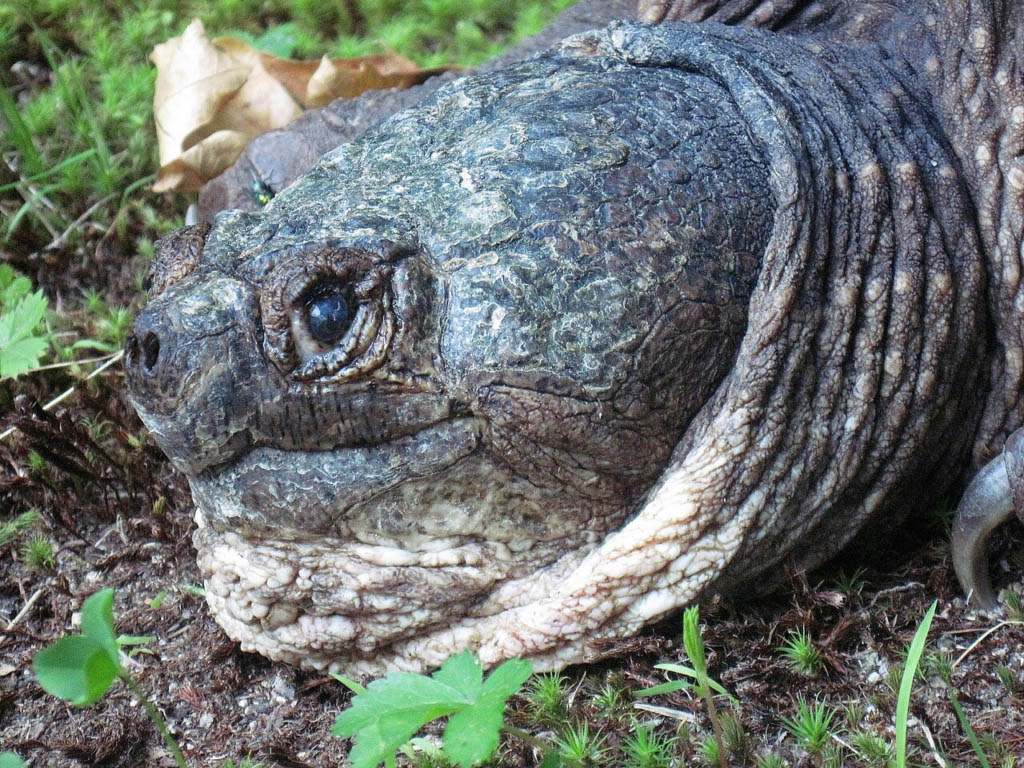
While it is a common myth that a standard Snapping Turtle can easily bite off a human finger, the reality is still quite serious. Their beak-like jaws are incredibly powerful and sharp, capable of inflicting significant physical trauma.
Understanding the Bite Risk
A Snapping Turtle’s strike is lightning-fast and functions similarly to a pair of heavy-duty shears. Here is a breakdown of the actual dangers:
- Potential for Injury: While they typically lack the force to snap through solid bone, their bite can easily crush bone, tear deep into muscle, and cause severe bruising. Such injuries often require professional medical care, including stitches.
- Disease and Infection: Beyond the physical wound, these turtles carry various aquatic bacteria. A bite—or even a minor scratch from their claws—can introduce pathogens into the bloodstream, making a course of antibiotics a common necessity.
- The “Shell” Factor: Unlike many other species, Snapping Turtles have a small bottom shell (plastron) that prevents them from tucking inside for safety. Because they can’t hide, they use their “snap” as a primary defensive mechanism when they feel cornered on land.
How to Stay Safe
It is important to distinguish between the turtle’s behavior in different environments:
- In the Water: They are remarkably shy and will almost always choose flight over fight, posing very little risk to swimmers.
- On Land: Most injuries occur when people try to handle, move, or provoke the turtle. To avoid a defensive strike, it is best to maintain a respectful distance and never place your hands near the front half of the animal.
Note: While the Common Snapping Turtle found in Ontario is dangerous, the much larger Alligator Snapping Turtle (found in the Southern U.S.) possesses significantly higher bite force and remains the primary subject of those “severed finger” legends.
In short, while a Snapping Turtle can live for 100 years, its survival as a species depends on a very thin margin. Removing even a small number of breeding adults every year creates a deficit that the population simply cannot out-reproduce.
Canatara Park
Situated at the northern edge of Sarnia, Canatara Park is a premier destination featuring nearly two kilometers of pristine, sandy shoreline. Its scenic environment makes it a popular hub for the community, serving as a go-to spot for family gatherings, reunions, and outdoor picnics.
Beach and Swimming Conditions
The park is well-regarded for its high environmental standards and recreational amenities:
- Water Quality: Visitors can enjoy exceptionally clear, blue water and a well-maintained beach area.
- Safety: To ensure a safe experience for swimmers, professional lifeguards are stationed at designated sections of the beach during the peak summer season.
Whether you are looking for a quiet place to swim or a spacious venue for a family event, Canatara Park offers a clean and welcoming natural setting.
Report sightings of turtles, injured turtles, and turtle nests. If you find an injured turtle, call the Ontario Turtle Conservation Centre immediately at 705-741-5000 to ensure it receives care.
Comments