



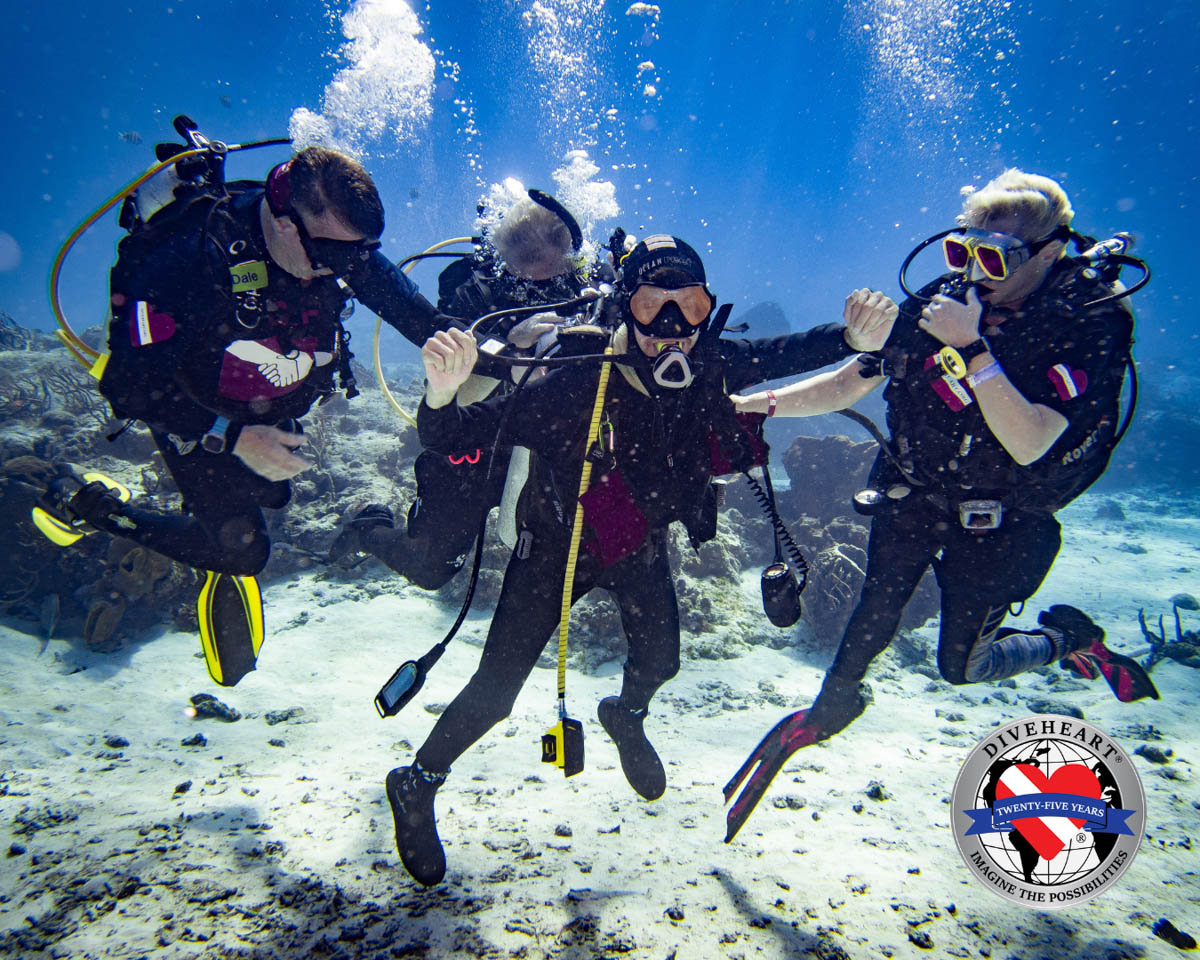
A diver slips beneath the surface for the first time since losing mobility due to Amyotrophic Lateral Sclerosis (ALS).
A blind veteran reaches out to safely touch a shipwreck in the Great Lakes while communicating with his dive buddy through touch.
A child with autism, overwhelmed by the noise and chaos of everyday life, suddenly becomes calm underwater.
For 25 years, Diveheart has been creating moments like these through adaptive scuba diving — helping thousands of people with disabilities, veterans, and adaptive athletes discover freedom and confidence underwater.
What started as a small nonprofit in the Midwest has grown into one of the most recognized adaptive scuba organizations in the world, helping influence diver training, accessibility, and even research into the therapeutic benefits of scuba diving.
Now, as Diveheart celebrates its 25th anniversary, the organization is focused not just on where adaptive scuba has been — but on where it is going next.
The Beginning of Diveheart
Diveheart founder Jim Elliott never originally set out to change the dive industry.
Before launching Diveheart in 2001, Elliott spent years teaching blind skiing while raising a blind daughter and supporting disability-focused programs. After becoming a scuba instructor in the late 1990s, he began introducing people with disabilities to diving and quickly noticed something powerful happening underwater.
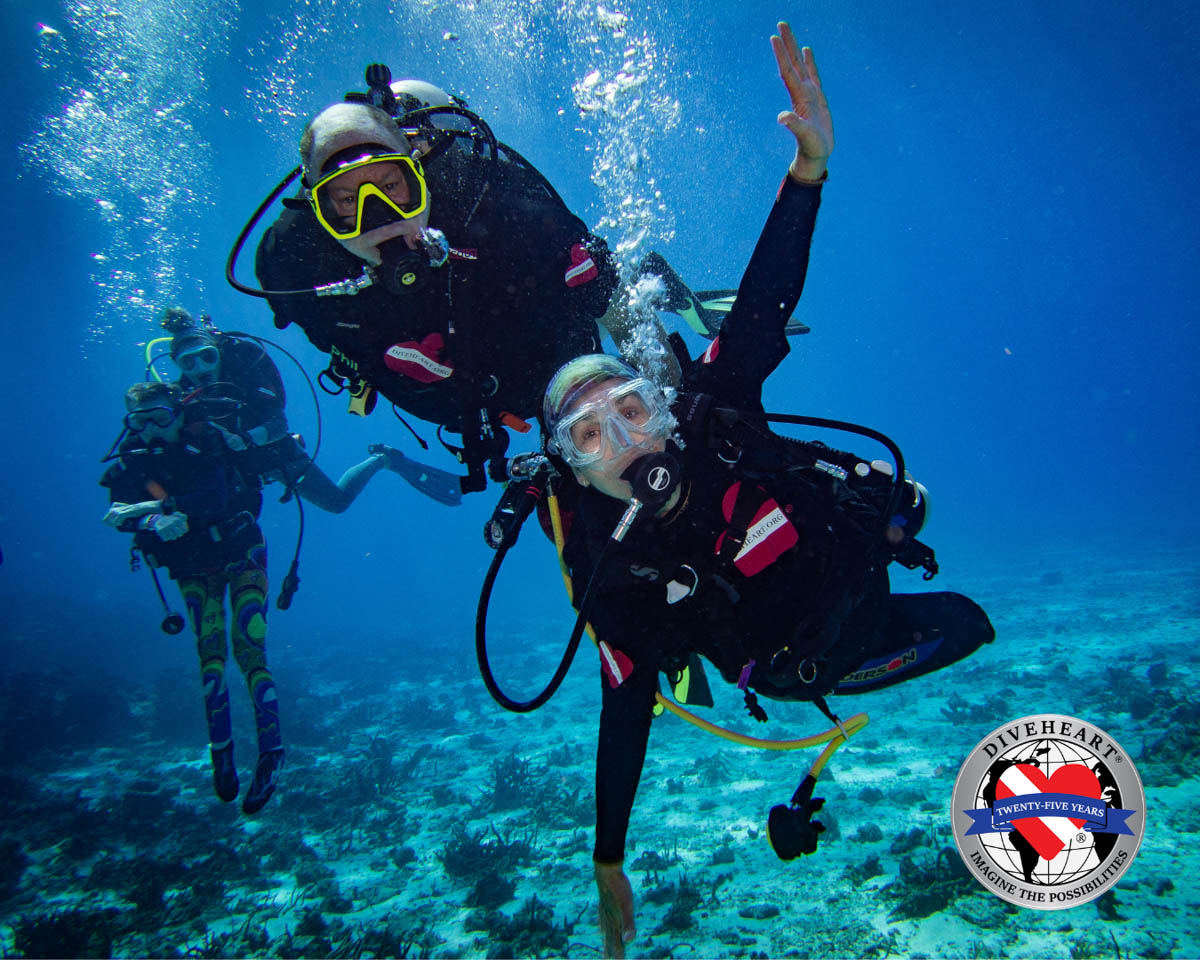
For many participants who are wheelchair users, scuba diving created what Diveheart often calls an “astronaut moment” — the first experience of true weightlessness and freedom from gravity.
Underwater, wheelchairs disappeared.
Divers who relied on others for mobility on land suddenly found themselves floating independently in three-dimensional space. Veterans coping with PTSD appeared calmer. Divers with physical and cognitive disabilities experienced confidence and freedom in ways they often could not on the surface.
“Imagine the Possibilities” became the foundation of Diveheart’s mission.
At a time when adaptive scuba was still relatively uncommon, Diveheart began developing training methods for instructors, volunteers, and adaptive dive buddies to safely support divers of all abilities.
Over the years, those efforts helped push adaptive diving further into the mainstream dive world.
More Than Just Diving
For many participants, adaptive scuba is not simply recreational.
It can be transformational.
The underwater environment offers something difficult to replicate anywhere else. Neutral buoyancy reduces pressure on joints and muscles. Slow, controlled breathing encourages relaxation. The sensory experience of being underwater often helps divers focus entirely on the moment.
For veterans and individuals living with anxiety, trauma, or PTSD, that environment can feel therapeutic.
For others, it is about rediscovering confidence.
Diveheart has spent years working alongside researchers, rehabilitation professionals, and medical experts exploring how scuba may support physical and emotional wellness. Programs have included wounded veterans, children with autism, individuals with spinal cord injuries, amputees, and people living with neurological conditions.
The organization believes adaptive scuba has the potential to become far more integrated into rehabilitation, wellness, and healthcare programs in the future.
Expanding Training and Industry Reach
As Diveheart enters its next chapter, Executive Director Tinamarie Hernandez is focused on expanding the organization’s training programs and increasing awareness of adaptive scuba within both the disability and medical communities.
That includes growing the number of adaptive scuba instructors and dive buddies worldwide while strengthening relationships with rehabilitation centers, healthcare providers, veteran organizations, and disability advocacy groups.
Diveheart leaders believe greater collaboration between the dive industry and healthcare professionals could open new opportunities for therapeutic diving programs, research partnerships, and accessible training initiatives.
The organization also continues encouraging dive resorts, manufacturers, and training agencies to improve accessibility and create more inclusive opportunities throughout recreational diving.
Today, adaptive divers are increasingly visible throughout the scuba community — something many early advocates worked hard to achieve. Diveheart hopes the next generation of divers, instructors, and industry leaders will continue pushing inclusion even further.
The Deep Pool Project
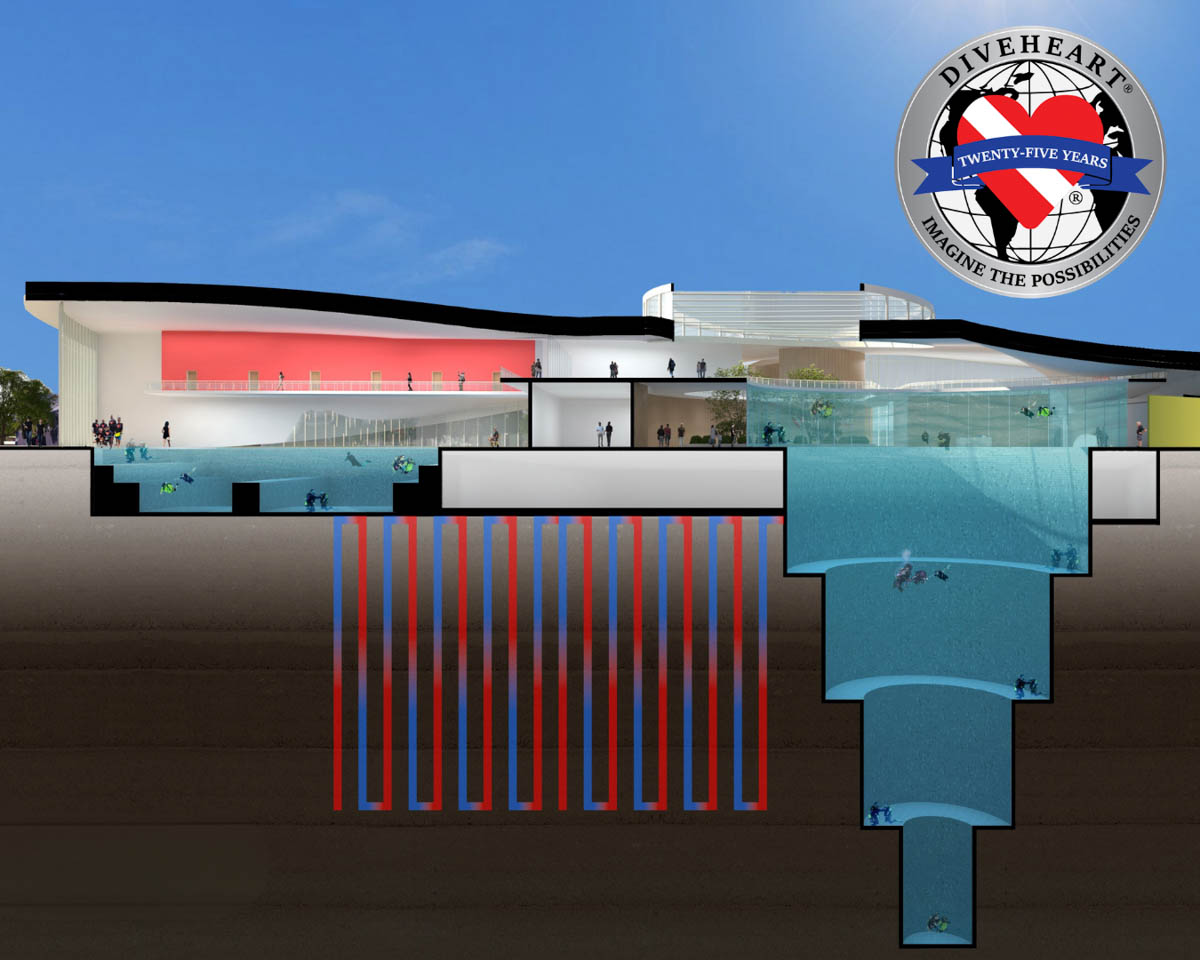
As Diveheart looks ahead to the future, its most ambitious vision may be the Diveheart Deep Pool Project.
The proposed facility would become the world’s first deep warm-water pool specifically designed for adaptive scuba, therapy, rehabilitation, training, and research.
More than a dive facility, the project is envisioned as a global center for adaptive diving innovation.
The pool’s design includes three patents focused on accessibility, adaptive diving, and therapeutic applications — reinforcing Diveheart’s commitment to advancing both the science and accessibility of scuba therapy and adaptive aquatics.
Plans include:
- Warm water designed for therapy and rehabilitation
- Multiple depth levels for training and research
- Fully accessible infrastructure
- Adaptive scuba education programs
- Research partnerships studying scuba therapy
- Veteran wellness initiatives
- Space for instructors, therapists, and medical professionals to collaborate
The facility would allow Diveheart to expand year-round programs while creating a centralized location for advancing adaptive scuba worldwide.
For the organization, the Deep Pool Project represents the next evolution of adaptive diving — bringing together recreation, rehabilitation, education, and science under one roof.
A Family Beneath the Surface
One of the things longtime volunteers and participants mention most about Diveheart is the sense of community.
Adaptive scuba requires teamwork, trust, and communication. Divers, instructors, safety divers, medical professionals, family members, and volunteers all work together to create successful experiences underwater.
Over time, many participants say the organization becomes more like family than a typical nonprofit program.
That community has helped Diveheart grow from local pool sessions into international dive trips, adaptive training events, symposiums, and partnerships around the world.
Looking Ahead
Twenty-five years after its founding, Diveheart’s mission remains rooted in the same belief that started it all: disability does not define human potential.
The organization hopes the next chapter of adaptive scuba will go even further — with stronger industry partnerships, expanded therapy research, greater accessibility, and more opportunities for people of all abilities to experience diving.
For some divers, that first breath underwater changes everything.
Diveheart has spent the last 25 years helping make those moments possible — and the organization believes the future of adaptive scuba is only beginning.
Get involved at Diveheart
Comments