





Operation Fish represents one of the most daring and high-stakes logistical feats of the Second World War. As the threat of a German invasion loomed over the United Kingdom, the British government initiated the secret relocation of the nation’s gold reserves and negotiable securities to Canada for safekeeping. This massive undertaking was designed to ensure that, even if the British Isles were occupied, the nation would retain the financial means to continue the war effort from overseas.
The scale of the operation was unprecedented, involving the mobilization of numerous cruisers and merchant ships to ferry wealth across a North Atlantic infested with U-boats. Despite the immense risks, the mission was a resounding success; not a single bullion bar or crate of securities was lost to the enemy. Ultimately, Operation Fish stands as the largest known movement of physical wealth in history, a testament to the extraordinary measures taken to preserve the economic sovereignty of the Allied forces.
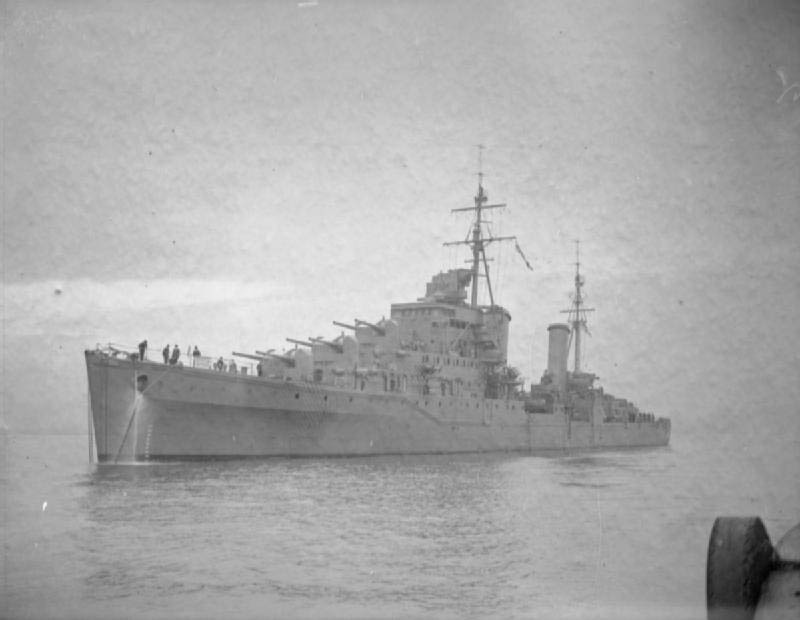
In September 1939, the British government tightened its financial grip by requiring all residents to register their foreign securities with the Treasury. This move predated the formal start of Operation Fish, as the nation was already using massive quantities of gold and currency to fund military procurement from the United States. One early mission was entrusted to Commodore Augustus Agar, commander of the light cruiser HMS Emerald. On the night of October 3, 1939, shortly after docking in Plymouth, Agar received highly sensitive orders from Rear Admiral Lancelot Holland regarding a high-stakes transport mission to Halifax.

The directive called for the Emerald to be loaded with gold bullion valued at £2 million—an amount equivalent to roughly £97 million today. The logistics were precise: on the morning of October 7, a train was scheduled to deliver 444 heavy wooden crates, each weighing 130 lbs and specifically labeled from Z 298 to Z 741. Agar was tasked with maintaining a strict security detail over the railway cars the moment they arrived at the pier. Under the cover of early daylight, his crew was responsible for the supervised transfer of every individual box from the tracks to the ship’s hold, ensuring a meticulous chain of custody that concluded with a formal receipt sent to the Commander-in-Chief of the Western Approaches.
The mission began on October 7, 1939, when the HMS Emerald departed Plymouth, carrying a massive shipment of Bank of England gold destined for Montreal. These riches were intended to finance the purchase of vital military supplies from the United States. To maintain a veil of total secrecy and mislead any German intelligence assets watching the port, the crew was issued tropical white uniforms, creating the false impression that the ships were heading for the warmer climates of the South Atlantic or the Mediterranean rather than the frigid North.
The journey proved to be a harrowing ordeal against the elements. Sailing alongside her sister ship, the Enterprise, the cruiser Caradoc, and the aging battleships Resolution and Revenge, the Emerald was battered by some of the most violent seas Commodore Agar had ever witnessed. By the time the fleet finally reached the safety of Halifax, Nova Scotia, the relentless weather had taken a heavy toll on the vessel. The Emerald arrived significantly damaged, having been stripped of its lifeboats, rafts, and depth charges, while its Fairey Seafox spotter plane and various other essential pieces of deck equipment had been swept away by the waves.
Upon establishing his administration, Winston Churchill sought to ensure that the British Empire could maintain its resistance even if the British Isles fell to an enemy invasion. Central to this survival strategy was a clandestine arrangement to relocate the nation’s immense financial assets to the safety of Canadian soil. Utilizing emergency wartime authority, the government seized the various foreign securities that citizens had been required to declare earlier that year. These assets were moved under heavy guard to Greenock, Scotland, where they were loaded onto the HMS Emerald by personnel bound by strict oaths of confidentiality.
On June 24, 1940, the Emerald departed for the Atlantic crossing, shielded by a destroyer escort. The mission faced a terrifying crisis when a violent storm struck, forcing the convoy to reduce its speed to a crawl and leaving the ships dangerously vulnerable to German U-boat attacks. Fortunately, the fleet navigated the gale safely and docked in Halifax on July 1, 1940. Once ashore, the vast fortune was split for maximum security: the gold reserves were transported by rail to Ottawa, while the massive cache of securities was moved to a specialized underground vault within the Sun Life Building in Montreal.
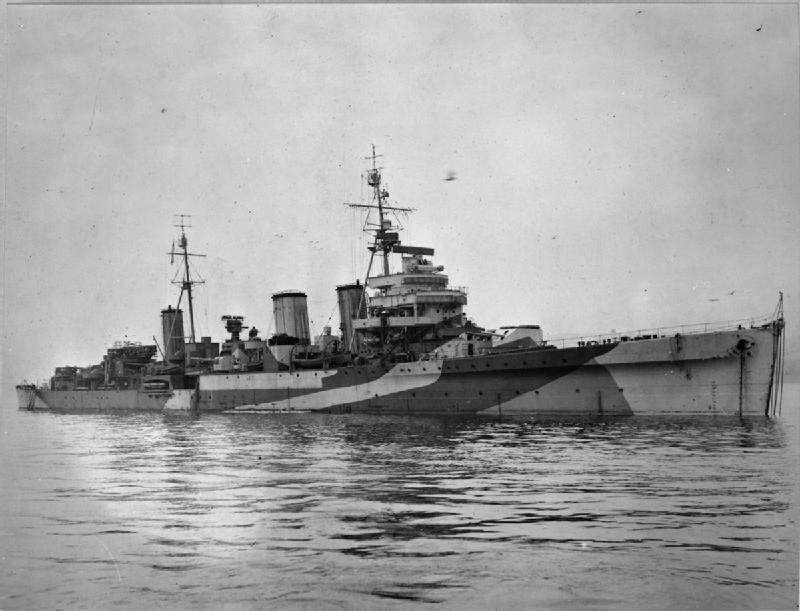
MINISTRY OF DEFENCE (FOXHILL), Public domain, via Wikimedia Commons

On July 5, 1940, the most substantial leg of the operation commenced as a five-ship convoy departed from the Scottish port of Greenock. This fleet carried a staggering $1.7 billion in assets—a sum equivalent to over $39 billion today—marking it as the single greatest transfer of physical wealth ever recorded. To protect this immense fortune, the convoy was met at sea by a powerful defensive screen consisting of the battleship HMS Revenge, a cruiser, and a fleet of destroyers.
The mission was nearly compromised when the Batory, a Polish vessel carrying a portion of the treasure, suffered a mechanical failure and was forced to fall behind. Left with only the HMS Bonaventure for protection, the two ships soon found themselves stalled in a dense fog. Paralyzed by the dual threats of drifting icebergs and prowling German submarines, the vessels remained stationary and highly vulnerable. Fortunately, the Batory’s crew managed to complete the necessary engine repairs, allowing both ships to resume their journey and safely reach Halifax just a few days after the rest of the fleet had arrived.
To house the massive influx of British assets, a high-security vault was rapidly excavated three floors beneath Montreal’s Sun Life Building. Under the constant watch of the Royal Canadian Mounted Police, this subterranean stronghold became the headquarters for the ultra-secretive United Kingdom Security Deposit. To explain away the sudden surge in armed guards and unusual activity, officials intentionally leaked a rumor that the Crown Jewels had been moved there for protection. This misdirection was so effective that the 5,000 employees working in the offices above remained completely unaware that the floor beneath them held the financial lifeline of the British Empire.


Throughout the conflict, financial experts working within the vault quietly liquidated these securities on the New York Stock Exchange to fund the Allied war machine. The logistical success of the operation was nearly miraculous: despite the involvement of thousands of personnel, from dockworkers to bankers, Axis intelligence remained entirely in the dark. After an exhaustive effort by accountants to inventory every shipment, it was confirmed that $2.5 billion (approximately $57.45 billion today) had been successfully relocated. Ultimately, the mission was completed with such precision that not a single gold bar or crate went missing during the entire transit.
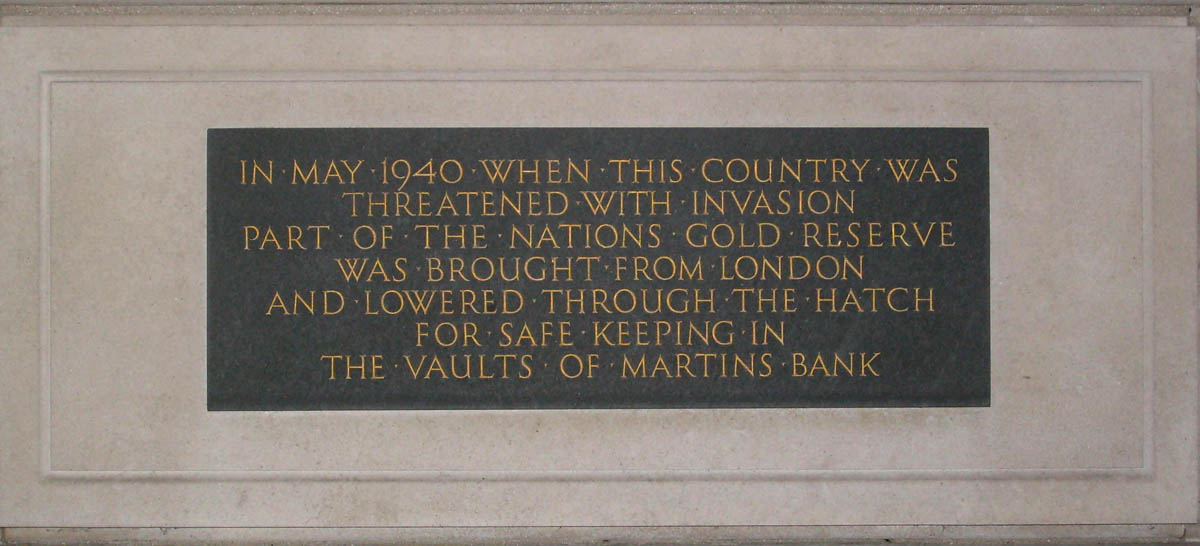
John Bradley, CC BY-SA 3.0, via Wikimedia Commons

The historical significance of the operation is preserved today in the architecture of Liverpool. On the exterior of the Martins Bank Building located on Water Street, a commemorative stone plaque marks the site’s role as a temporary fortress for the nation’s wealth. The inscription recalls the desperate days of May 1940, noting that as the threat of an enemy invasion intensified, a significant portion of the British gold reserves was transferred from London to the bank’s secure underground vaults. The plaque specifically highlights how the bullion was lowered through a specialized hatch, serving as a permanent reminder of the city’s critical involvement in safeguarding the empire’s resources before their final journey across the Atlantic.
Comments