




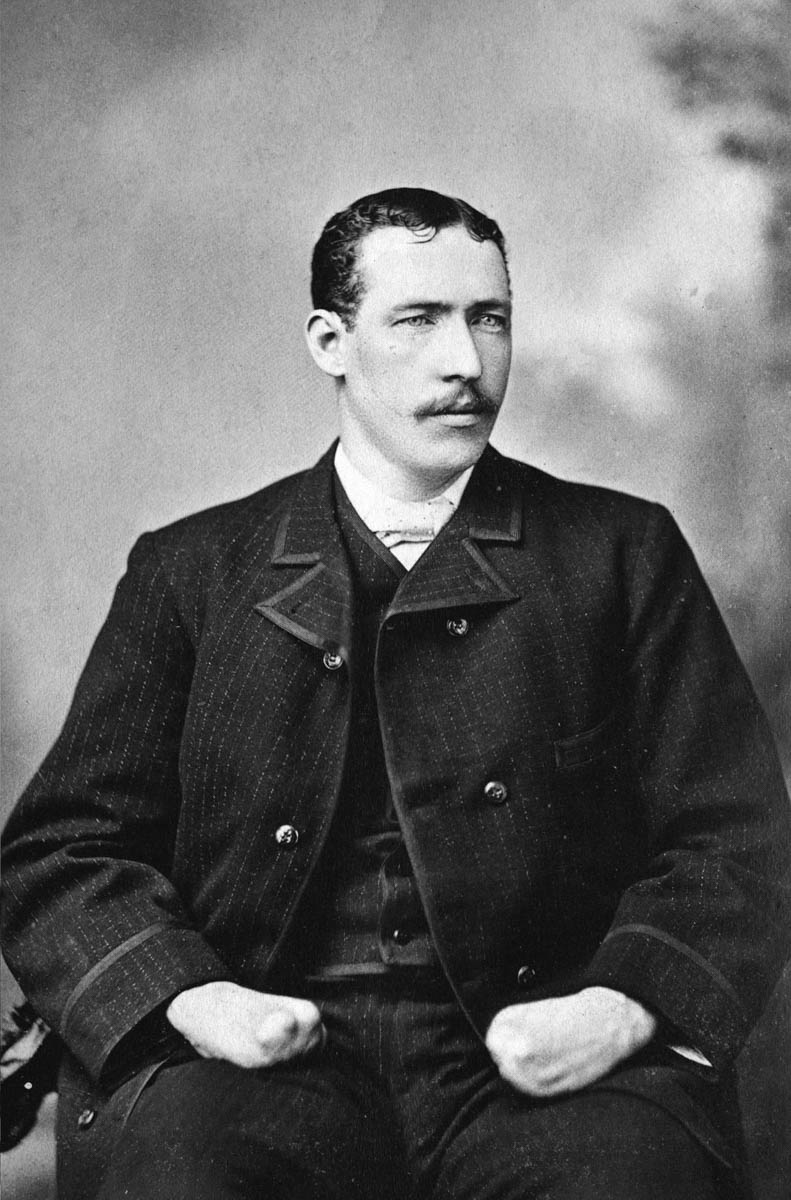
Howard Blackburn’s life is a testament to the sheer force of human will. After a harrowing 1883 fishing expedition left him adrift in a dory and cost him his fingers and toes to severe frostbite, he defied the odds to become a thriving businessman in Gloucester, Massachusetts. Driven by an unyielding spirit of adventure, he eventually returned to the sea to sail solo across the Atlantic—not once, but twice—setting record speeds and proving that his physical limitations were no match for his legendary grit.

In 1859, Howard Blackburn was born in Port Medway, Nova Scotia. Seeking a life on the water, he relocated to Massachusetts at age 18 to pursue a career in the fishing industry, eventually establishing deep roots within the maritime circles of Gloucester.
Blackburn’s legendary reputation began during a grueling fishing trip in 1883. While working aboard the Grace L. Fears, he and his partner, Thomas Welch, were cut off from their primary vessel by a violent winter gale. Realizing his hands were destined to freeze after losing his mittens, Blackburn intentionally curved his fingers around the oars so they would solidify into a permanent grip, enabling him to continue rowing. In a desperate attempt to protect one hand with a sock, he inadvertently exposed his feet to the cold, resulting in severe damage to his toes without actually saving his fingers.

While Welch tragically succumbed to the elements on the second day, Blackburn refused to leave him behind, eventually ferrying his companion’s body to land. Following five days of agonizing exertion without nourishment or rest, he reached the coast of Newfoundland. Although he survived, the frostbite was too advanced to treat; he ultimately lost every finger, several toes, and the tips of both thumbs.
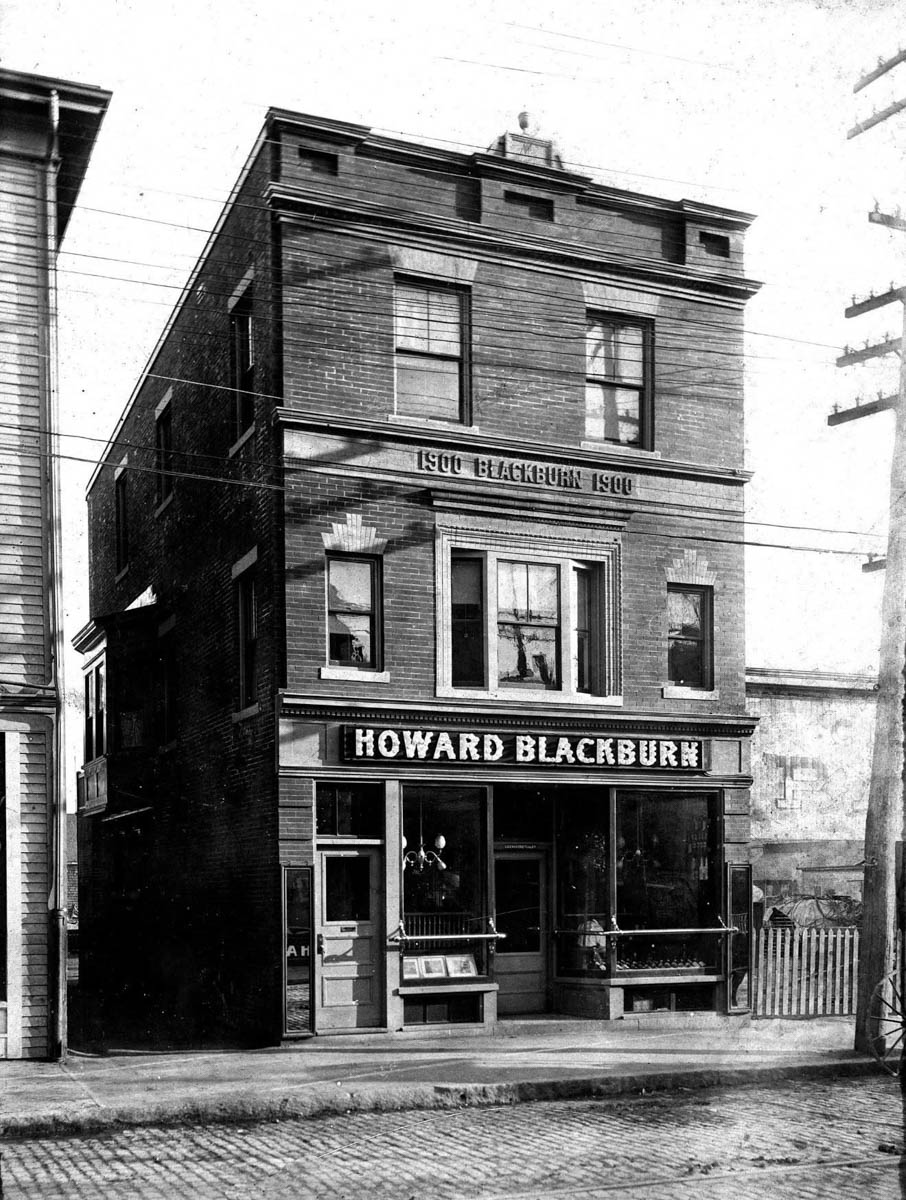
Upon his return to Gloucester, Blackburn was greeted as a local legend. With community support, he opened a prosperous tavern, but his restless spirit soon drew him toward the Klondike Gold Rush. Eschewing the traditional land route, he and his associates opted for a grueling sea voyage around Cape Horn. However, the venture ended prematurely for Blackburn; following a dispute with his partners and a brief detour to Oregon to trade lumber, he abandoned the expedition in San Francisco and headed home without ever prospecting for gold.
Seeking a new way to test his limits, Blackburn set his sights on a solo transatlantic crossing. While pioneers like Alfred Johnson and Joshua Slocum had already proven solo long-distance sailing was possible, the feat seemed nearly impossible for someone without fingers. Nevertheless, in 1899, he departed Massachusetts in the Great Western, a specially modified fishing sloop. He arrived in Gloucester, England, 62 days later.
Even as his business ventures flourished, Blackburn’s appetite for the sea remained. In 1901, he crossed the Atlantic again, reaching Portugal in just 39 days aboard the Great Republic. A subsequent 1903 attempt in the dory America was thwarted by severe weather, but he successfully completed a massive circuit of the Eastern United States, navigating the Mississippi River and returning via the Atlantic coast.
When Blackburn passed away in 1932, the city of Gloucester turned out in force to honor him. He was laid to rest in Beechbrook Cemetery’s “Fishermen’s Rest” section. Today, his legacy survives through the preserved vessels Great Republic and America at the Cape Ann Museum, as well as in folk music, such as Allen Estes’ tribute song, “Not With Ya Hands.”
The structure that once housed the Blackburn Tavern remains at 289 Main Street in Gloucester. While the waters of Vincent Cove formerly reached the tavern’s rear entrance during high tide, the area has since been reclaimed and filled in; however, the building itself has undergone very few structural changes over the years.
The legacy of Howard Blackburn lives on through the Blackburn Challenge, a yearly 20-mile competition that circles Cape Ann. This open-water event welcomes all forms of human-powered vessels, and the race marked its 36th anniversary on July 15, 2023.
The original site of Blackburn’s tavern remains a fixture of Gloucester at 289 Main Street. Although the landscape has shifted—Vincent Cove used to wash up against the building’s back door at high tide before it was eventually filled in—the structure itself has stayed remarkably preserved.
Comments