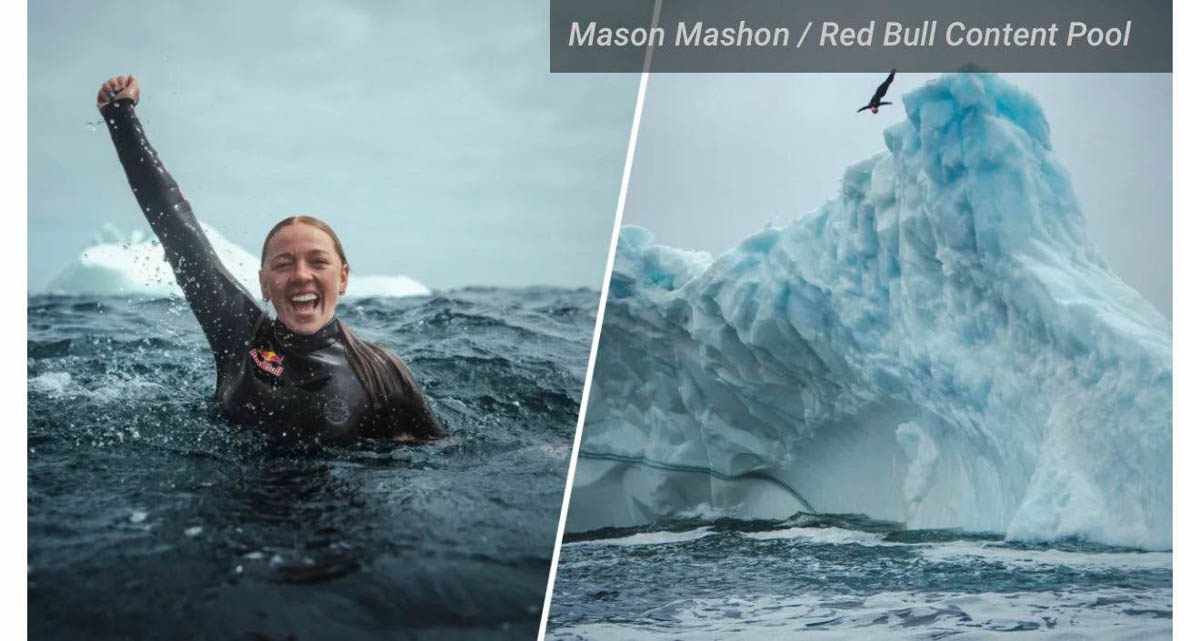

Canadian high diver and social media creator Molly Carlson made history as the first woman to dive off a freestanding iceberg, a feat captured on video near Twillingate, Newfoundland. Before taking the cold plunge—which took place in June 2026 and was recently released to the public—the Red Bull Cliff Diving World Series runner-up prepared specifically by training in ice climbing to safely navigate the frozen terrain.
Raised in Thunder Bay, Molly got her start with the local Diving Club before advancing to represent Canada at the 2014 Youth Olympics and training for the 2016 Olympic Games. Today, she is an internationally decorated athlete who excels in both traditional high diving and extreme cliff diving. Due to the tremendous impact force generated from such immense heights, high divers must always land feet-first in the water to prevent fatal injuries.
Over the past year, high-profile Canadian athlete Molly Carlson has executed an extraordinary series of feats, from jumping out of a moving helicopter into shark-filled waters to setting a personal height record off a 27-metre platform. Most recently, she became the first woman to dive off a floating iceberg. Despite these extreme accomplishments, the 28-year-old Thunder Bay native readily admits she is far from fearless. Rather than trying to conquer fear, she views it as a natural mechanism for safety and personal growth. As a premier contender in cliff diving—where athletes leap from 21-metre platforms, execute acrobatic flips, and reach speeds up to 85 km/h before landing feet-first—navigating intense anxiety is an essential part of her daily routine.
Beyond her athletic career, Carlson has built a massive online following exceeding eight million people across TikTok, Instagram, and YouTube. Through her media brand, Brave Gang, she promotes self-acceptance and everyday courage. Her groundbreaking iceberg jump off the coast of Newfoundland was documented in the 30-minute film Red Bull Iceberg Dive. Inspired by legendary diver Orlando Duque’s 2018 Antarctic dive, the project was four years in the making and required half a year of specialized preparation. To get ready for the 14-metre leap into 1°C water, she trained in frigid conditions and learned ice-climbing skills under the guidance of world-renowned adventurer Will Gadd.
Executing a dive off an iceberg presented severe, unpredictable risks compared to fixed platforms or rocky cliffs. Because icebergs constantly shift and risk rolling over, safety experts had to locate a rare, exceptionally stable specimen with a safe launching shelf. The constant uncertainty of whether the dive would even happen created immense emotional stress, though Carlson and Gadd agreed they would immediately abort if safety conditions were compromised. Until 30 minutes before the actual leap, the team was unsure if the attempt could move forward.
The dive itself demanded pure athletic intuition. Standard high diving relies on precise height measurements, but drone estimates of the iceberg were imprecise, forcing Carlson to adjust her rotational speed mid-air solely by sight. Reaching the peak was equally daunting, as she had to ice-climb to the top with Gadd’s guidance while managing intrusive thoughts in high winds. Once she initiated her backflip into the ocean, however, she described feeling pure serenity during the fall, ultimately achieving a clean, splashless entry.
Carlson’s modern perspective on fear stems from her personal history with high-school anxiety and recovering from an eating disorder during her early competitive years. Rather than wasting energy fighting negative emotions, she now views fear as a helpful signal that keeps her grounded. She hopes her openness about mental health demonstrates that bravery is not the absence of fear, but the willingness to act in spite of it.