




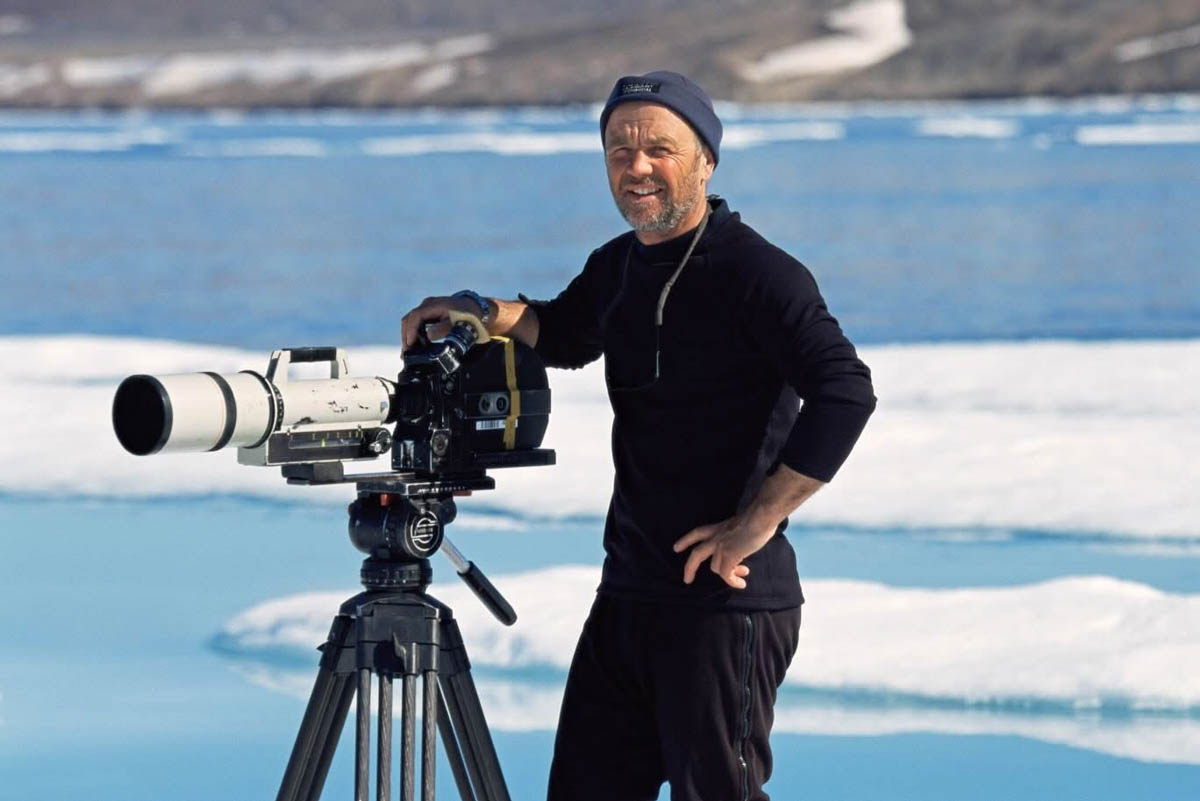

The global diving and wildlife filmmaking community is mourning the loss of Doug Allan, the pioneering underwater cameraman whose work helped shape how the world sees the ocean. He has died aged 74 while trekking in Nepal, according to reporting from The Guardian.

His passing marks the end of a remarkable career that placed him at the forefront of some of the most influential natural history productions ever made. For decades, Allan brought audiences face to face with the underwater world, often working in extreme and unforgiving environments that few others would attempt.
Best known for his long-standing collaboration with David Attenborough, Allan played a central role in landmark BBC series including The Blue Planet and Planet Earth. His work helped redefine wildlife storytelling, blending technical innovation with a diver’s instinct for patience, timing, and respect for the natural world.

Over the course of his career, Allan spent thousands of hours underwater, much of it in polar regions where conditions are as dangerous as they are visually spectacular. From beneath Antarctic ice to the open ocean, his footage captured behaviours and environments that had rarely, if ever, been documented before.
Widely recognised as one of the pioneers of modern wildlife filmmaking, Allan’s career and contributions are also documented by sources such as Encyclopaedia Britannica, reflecting the scale of his influence beyond the diving community.
While widely respected within broadcasting, his impact runs just as deep within diving itself. His work did more than document marine life; it helped inspire countless divers to explore, protect, and better understand the underwater world.
Reports indicate that Allan died on 8 April 2026 while trekking in Nepal. At the time of writing, no further details surrounding the circumstances of his death have been publicly released.
What remains beyond doubt is the scale of his legacy. In an era before high-end underwater imaging became widely accessible, Allan was among the small group of individuals pushing the boundaries of what was possible beneath the surface.
For many divers, his work was not just something to watch, but something that shaped their first curiosity about the ocean. For the industry, it set a standard that still defines excellence today.
Doug Allan leaves behind a body of work that will continue to influence both filmmaking and diving for decades to come.
Comments





1 Comment
Respect