



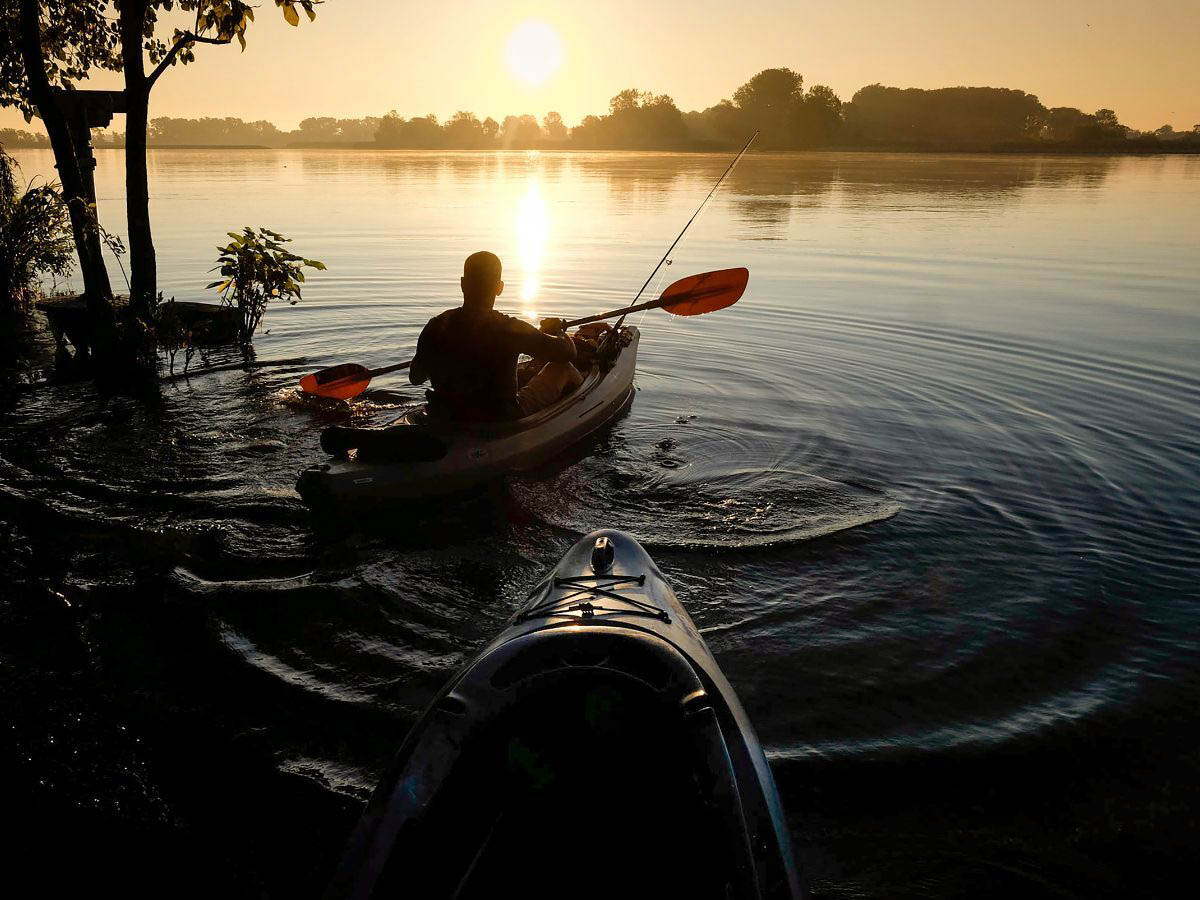

Big boats promise range and power, but they also block access to some of the most productive water. That leaves anglers standing on the shoreline wondering what they’re missing just beyond reach.
A kayak solves that problem. Its shallow draft and quiet movement open paths into water that most anglers never touch. These are 7 fishing spots only a kayak can reach, highlighting how small craft access creates real advantages on the water.

Hidden Backwater Pockets
Backwater pockets sit behind fallen timber, reed walls, and winding channels. Most boats avoid them because tight turns and submerged debris make navigation risky.

A kayak glides through these obstacles with ease. Once inside, you’ll often find calm water packed with baitfish and ambush predators waiting in cover. Bass, redfish, and pike frequently patrol these quiet corners.
Shallow Grass Flats
Grass flats stretch across water that often measures less than two feet deep. Prop-driven boats struggle here, especially when thick vegetation wraps around motors.

Kayaks skim across these flats without disturbing the water. That quiet approach lets anglers sight-cast to cruising fish and follow subtle movements across the grass beds. Early morning often produces the best action before sunlight pushes fish deeper.
Mangrove Tunnels and Overhangs
Mangrove tunnels form narrow corridors where roots weave together above and below the surface. A kayak slips beneath the canopy and into shaded water where snook, tarpon, and juvenile gamefish wait.
Fish use the tangled roots as protection and feeding lanes. You’ll need accurate casting and controlled paddling to avoid spooking fish.
Remote Creek Mouths
Creek mouths act like feeding stations. Moving water funnels bait into predictable lanes, which attracts predators waiting just outside the current.
Many productive creeks sit far beyond public ramps or shallow sandbars. Kayaks cover those distances quietly and reach water that rarely sees pressure. These areas reward patience, especially during tidal movement.
Dock Systems and Tight Structure
Large marinas and dock systems hold fish year-round, but navigating tight gaps requires precision. Kayaks maneuver easily between pilings and under low walkways.
Precise boat control becomes even more valuable here. Many anglers also install positioning technology to hold their spot while they fish structure. Holding steady near structure increases casting accuracy and keeps presentations in the strike zone longer.
Isolated Marsh Cuts
Marsh systems have countless narrow cuts that snake through grass and mud banks. These channels also create ideal feeding lanes during tidal movement.
Kayaks travel easily through these winding paths without stirring sediment or noise. Redfish and speckled trout often stage here during incoming tides.
Quiet Reservoir Coves
Reservoir coves hide behind steep banks, rock walls, and submerged timber. Larger boats sometimes avoid them due to limited turning space and shallow entrances.
Kayaks slide through these openings and reach calm water untouched by boat wakes. Bass frequently swims near submerged trees and rocky drop-offs inside these coves.
The top 7 fishing spots only a kayak can reach prove that small craft open entirely new opportunities. Next time you plan a trip, look beyond the obvious locations. The most productive water is the places where bigger boats stop.
Comments