






Maud, a ship named in honor of Queen Maud of Norway, was constructed for Roald Amundsen’s second Arctic expedition. Specifically designed for his journey through the Northeast Passage, the vessel was built in Asker, a town located near Oslo, the capital of Norway.
Maud was launched either in June 1916 or on 17 June 1917 at Vollen. During the naming ceremony, Roald Amundsen broke a piece of ice against the ship’s bow as a symbolic gesture.
“It is not my intention to dishonor the glorious grape, but already now you shall get the taste of your real environment. For the ice you have been built, and in the ice you shall stay most of your life, and in the ice you shall solve your tasks. With the permission of our Queen, I christen you Maud.”
Roald Amundsen

Ansgar Walk, CC BY-SA 2.5, via Wikimedia Commons

Maud fulfilled the symbolism of her christening by remaining trapped in Arctic ice until 2016. Unlike Amundsen’s other exploration ships, Gjøa and Fram, which are preserved at the Norwegian Maritime Museum, Maud experienced a far more challenging journey. After a difficult and extended attempt to navigate the Northeast Passage—a voyage that took from 1918 to 1924 rather than proceeding as originally intended—she eventually arrived in Nome, Alaska. In August 1925, the vessel was sold in Seattle, Washington, on behalf of Amundsen’s creditors.
The ship was purchased by the Hudson’s Bay Company and renamed Baymaud. The company planned to use her as a supply ship for its remote posts in the western Canadian Arctic. Before setting out on this new mission, she underwent refurbishment in Vancouver, British Columbia, under the supervision of Tom Halliday, who would later design the RCMP vessel St. Roch, inspired by Maud’s design. In 1926, during a winter expedition, the ship became icebound at Cambridge Bay and eventually sank there in 1930. Her remains rested just off the shore, across the inlet from the old Hudson’s Bay Company store. Nearby stands the location of the former Cambridge Bay LORAN Tower, constructed in 1947.
In 1990, the Hudson’s Bay Company sold the remains of the ship to the municipality of Asker, with the hope that she would eventually be brought back to her place of origin. Although a permit to export the cultural property was granted, the estimated cost of restoring and transporting the vessel was 230 million Norwegian kroner (approximately $43.2 million), and the permit eventually expired.
Jens Christian Krebs Lange, CC BY-SA 3.0, via Wikimedia Commons

In 2011, a company based in Asker, Tandberg Eiendom AS, launched the “Maud Returns Home” project, aiming to bring the ship back to Norway. Their plan included constructing a museum in Vollen—close to where Maud was originally built—and acquiring a barge to transport the vessel. However, the proposal sparked concerns among residents of Cambridge Bay, Parks Canada, the Government of Nunavut, the International Polar Heritage Committee, and some individuals in Norway.
The Canadian federal government initially denied a new export permit, citing the absence of a comprehensive archaeological assessment. This decision was later overturned on appeal in March 2012. Salvage efforts began during the summer of 2015, with the goal of transporting the ship’s hull back to Norway by the summer of 2016.
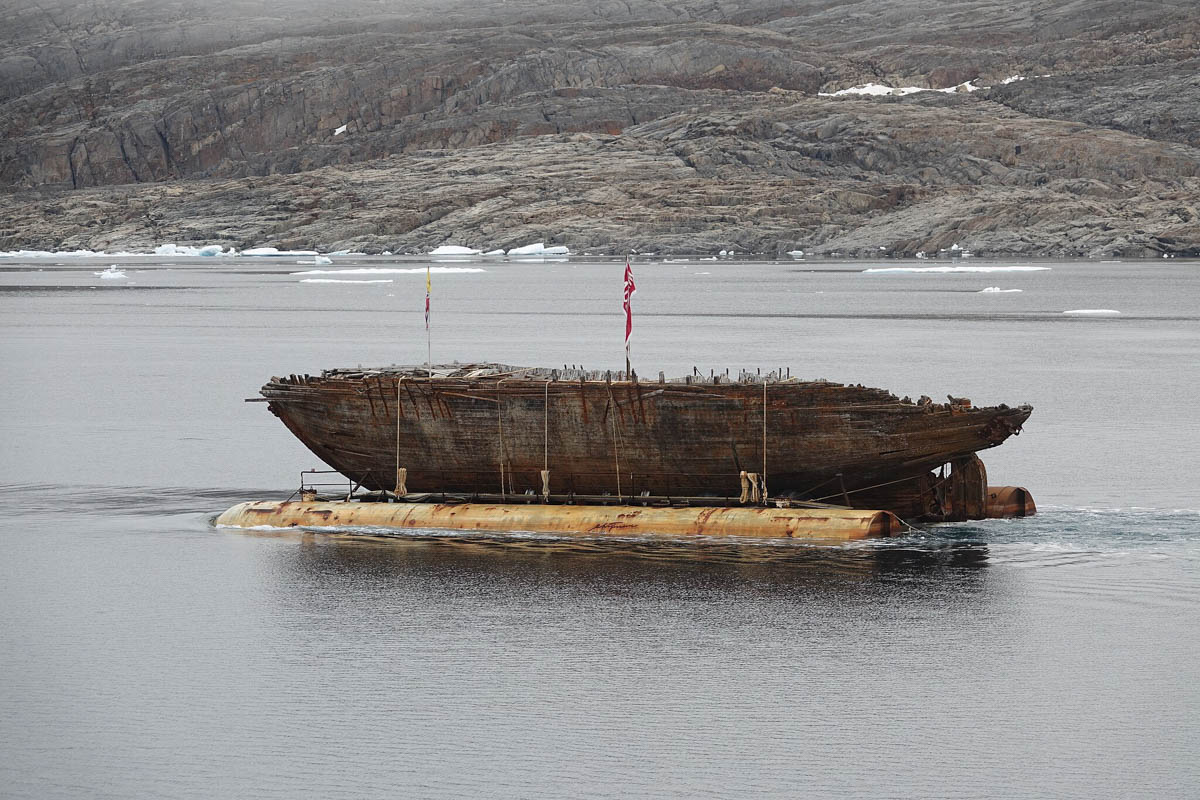
On July 31, 2016, it was reported that Maud’s hull had been successfully lifted from the seabed and placed onto a barge, ready for transport back to Norway. In August 2017, the vessel began her long-awaited return journey, towed through the Northwest Passage. By September 2017, she had reached Greenland, where she remained over the winter months.
Maud finally arrived in Bergen, Norway, on August 6, 2018—almost 100 years after setting out with Roald Amundsen. Following her arrival, she was towed along the Norwegian coastline and reached Vollen, the place of her construction, on August 18.
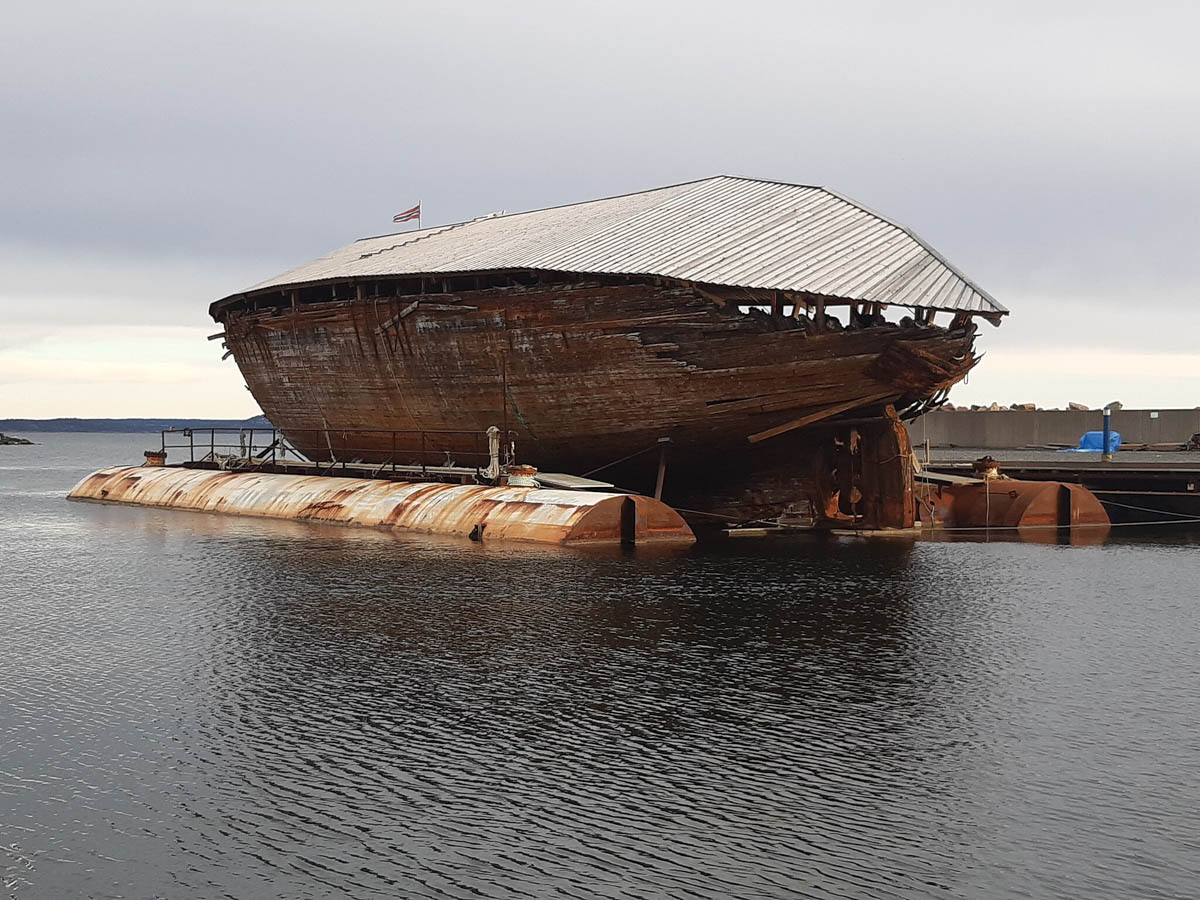

Maud’s return to Norway was marked by nationwide celebration. As she was towed south toward Vollen—now part of Asker, just 11.5 miles by sea from Oslo—tens of thousands of people gathered to welcome the crew and witness the historic moment.
Comments