





On October 4, 1967, residents of the small fishing community of Shag Harbour, located on Nova Scotia’s Atlantic coast, reported seeing a large unidentified object crash into the nearby waters. The event drew attention from multiple agencies, including Canadian civilian authorities like the RCMP and Coast Guard, as well as military branches such as the Canadian Navy and Air Force. Additionally, the U.S.-based Condon Committee, which was investigating UFO phenomena at the time, also took interest in the incident.
Air Canada flight 305
On a flight from Halifax International Airport to Toronto, while cruising at an altitude of 3,658 metres (12,001 feet) over the Quebec towns of Sherbrooke and Saint-Jean, Air Canada Flight 305 encountered something unusual. At around 7:15 p.m., First Officer Robert Ralph alerted Captain Pierre Charbonneau to an unusual sight on the left side of the aircraft. According to the captain’s later report, they observed a brightly illuminated, rectangular-shaped object flying on a parallel path a few miles from their plane, with a trail of smaller lights following behind it. Then, at 7:19 p.m., the crew witnessed a large, silent explosion near the object. Just two minutes later, a second explosion occurred, which gradually formed into a blue cloud surrounding the unidentified object.
The Yellow Object
While sitting on the front porch of their home in Mahone Bay, Darrel Dorey, his sister Kaykay, and their mother observed a large object moving in the sky above the southwestern horizon. Curious and unsettled by the unusual sight, Darrel wrote a letter the following day to the commander of RCAF Greenwood, inquiring about any aircraft that might have been flying over the water that evening, noting that the object was unlike anything he had seen before.

Captain Leo Howard Mersey was at the wheelhouse of his vessel when he noticed four stationary blips on his Decca radar. Looking out the window, approximately 28 kilometres (17 miles) away, he spotted four bright lights in the sky arranged in a loose rectangular pattern. The unusual sight caught the attention of the entire crew—about twenty fishermen—who gathered on deck to observe the objects in the northeastern sky. Captain Mersey contacted both the rescue coordination centre and the Halifax harbour master by radio to request an explanation. After returning to port, he submitted a formal report to the Lunenburg RCMP detailing what he and his crew had witnessed.
At around 10:00 p.m., numerous callers contacted the newsroom of The Chronicle-Herald and local radio stations to report sightings of unusual glowing objects in the sky over Halifax. Witnesses described strange lights moving through the air, prompting media outlets to cover the event based on the widespread public reports.
On the night of October 4, 1967, at approximately 11:20 p.m. Atlantic Daylight Time, reports emerged of an object crashing into the waters near Shag Harbour, Nova Scotia. At least eleven witnesses described seeing a brightly lit object flying low over the area before heading toward the harbour. Several of them recalled hearing a sequence of unusual sounds: a whistling noise resembling that of a falling bomb, followed by a “whoosh,” and finally a loud bang. The object was never definitively identified and was officially labeled as an unidentified flying object (UFO) in Canadian government records.
The Canadian military later became involved in a search and potential recovery operation. The first report came from Laurie Wickens, a local resident, who was driving along Highway 3 through Shag Harbour with four friends when they noticed a large object descending into the water. After moving to a better vantage point, they saw the object floating roughly 250 to 300 meters (820 to 980 feet) offshore. Wickens contacted the Royal Canadian Mounted Police (RCMP) detachment in Barrington Passage, believing they had witnessed a large aircraft or small airliner crash into the harbour.
Search and Rescue Effects
About 15 minutes after an apparent aircraft crash, two officers from the Royal Canadian Mounted Police (RCMP) arrived at the scene. Concerned about the possibility of survivors, they contacted the Rescue Coordination Centre (RCC) in Halifax to report the incident and inquire whether any aircraft were missing. However, before any rescue efforts could begin, the object — still illuminated — began to sink beneath the water and eventually vanished from sight.
A rescue operation was launched quickly. Within 30 minutes of the crash, local fishermen headed to the area in the Gulf of Maine near Shag Harbour to search for survivors. They were soon joined by a Canadian Coast Guard search and rescue vessel dispatched from Clark’s Harbour. Despite a thorough search, no wreckage, bodies, or survivors were found.
By the next morning, RCC Halifax confirmed that no aircraft, either commercial, private, or military, were missing from any locations along the Atlantic provinces or the New England coast. Although the search continued, the captain of the Coast Guard cutter received a radio update confirming that all known aircraft were accounted for.
That same morning, RCC Halifax issued a high-priority telex to the Air Desk at air force headquarters in Ottawa, the department responsible for investigating both civilian and military UFO sightings. Since standard explanations — including aircraft or flares — had been ruled out, the incident was officially categorized as a “UFO Report.” The head of the Air Desk then forwarded a priority message to the navy, suggesting an underwater search be initiated. In response, the navy sent its own directive to Fleet Diving Unit Atlantic to carry out the task.
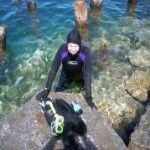
Two days after the object was first seen, a team of navy divers from the Fleet Diving Unit was deployed. Over the course of the next three days, they conducted an extensive underwater search of the seafloor in the Gulf of Maine near Shag Harbour. Their final report concluded that no evidence of any object was found.
Comments