





The Human Chum Bucket: A Diver’s No-BS Guide to Surviving Seasickness
I’ve been diving for 16 years now, and for all 16 of them my inner ear has apparently been trying to assassinate me.
Seriously. My body hates mixed motion signals with the fiery passion of a thousand suns.
If my eyes and ears disagree about literally anything, my stomach immediately starts drafting resignation paperwork.

Shaky handheld movies? Cloverfield and District 9 can both personally apologize to my stomach. Calling them “motion sickness triggers” dramatically understates the humanitarian crisis they created in my living room.
Aggressive first-person shooter games? My stomach does not approve.
Watching somebody else’s POV roller coaster video on YouTube? Straight to nausea jail.
And boats?
Oh baby. Boats.
Long before scuba diving entered my life, I remember going out on a fishing charter with my dad and getting unbelievably seasick. Not “a little queasy.” I mean pale, sweaty, questioning-my-life-decisions seasick.
So naturally, years later, I decided:
“You know what hobby sounds amazing? Spending entire days on boats.”
Brilliant.
Catalina Island: My Slow-Motion Descent Into Misery
My scuba checkout dives were off Catalina Island in California, and the boat ride over was basically a slow, gentle cruise directly into the land of nausea.
At first I thought:
“Hey! This isn’t so bad!”
Then the sweating started.
Then the weird warmth.
Then the realization that my body had quietly entered DEFCON Barf.
Experienced divers know this feeling. There’s a point where your body stops asking questions and starts preparing a full evacuation plan.
That was the beginning of my long war against seasickness.
Over the years, I have tried just about everything short of ancient sea curses and sacrificing a goat to Poseidon.
Some things helped.
Some things did absolutely nothing.
And some belonged in the category of “wellness products designed by people who have apparently never been on a boat.”
Before I continue, let me be very clear:
“I am not a doctor, medical professional, or healthcare provider. This article is purely anecdotal and based entirely on my personal experience. Any medication should absolutely be discussed with your physician.”
Now that the responsible disclaimer is out of the way… Let’s talk about vomit.
Over-the-Counter Remedies That Did Not Save Me
Dramamine
For me? Basically useless. I know some people swear by it. I am genuinely happy for those people. Unfortunately, my vestibular system apparently looked at Dramamine and said: “That’s adorable.” Little to no effect.
Bonine
Bonine was the first thing that made me think I might finally be gaining ground.
During daylight hours, when I had a strong visual horizon reference, it definitely helped reduce symptoms. So naturally, after some successful daytime diving, a buddy with a dive boat suggested: “Hey, let’s do a night dive.”
Excellent idea. Absolutely catastrophic outcome.
And when I say the seasickness hit the second it got dark, I mean THE SECOND. Apparently my brain was using visual references to barely hold reality together, and the moment the horizon disappeared, my vestibular system immediately declared bankruptcy. Once visual references vanish, my inner ear apparently assumes the apocalypse has begun.
Ginger or Peppermint Chews
Maybe a tiny bit of relief. Maybe. Hard to say. At best, I’d call ginger or peppermint chews “marginally comforting candy with aspirations.”
Acupressure Wristbands
Absolutely useless for me. Those little bracelets with the pressure nub? Nothing.
The Electric Pulse Wristbands
Also useless for me. Apparently lightly electrocuting my wrist did not convince my stomach to remain loyal. Who could have predicted this?
The Night I Learned You Can Absolutely Throw Up Through A Regulator
A few months later, I had another brilliant idea. I decided to do a shore dive off Rancho Palos Verdes without taking anything for seasickness. After all: “No boat, no problem, right?”
Wrong. Horrificially wrong.
Turns out my motion sickness isn’t strictly about boats. It’s about motion conflict. Surge underwater can absolutely wreck me too.
I got so seasick underwater that I can personally confirm something many divers have heard whispered about in training classes:
Yes. You absolutely can throw up through a regulator and continue breathing like a champion.
Not fun. Not recommended. But survivable. Human beings are adaptable creatures. Disgusting, but adaptable.
Unfortunately, the fun didn’t stop there. Even after getting out of the water, my body stayed fully committed to the experience. An hour later, I was still throwing up.
We eventually stopped in Redondo Beach, where I stood in a parking lot on a Saturday night chugging 7-Up and repeatedly vomiting into the darkness like some kind of broken ocean cryptid. To anybody driving by, I probably looked like just another drunk guy making poor life choices in Southern California.
But nope. Just a scuba diver losing a war against his own inner ear.
Then came the drive home to the California High Desert. Four hours after getting out of the water… I was still throwing up.
And honestly? That was the moment. That was the night I realized I had two choices: figure out how to control this, or accept that diving might not be sustainable for me long term.
That’s when I finally talked with my doctor about scopolamine.
Scopolamine: My Miracle In A Patch
Then I discovered scopolamine patches. For me, this was the biggest game changer I found.
One important thing I learned: scopolamine is not an “apply it at the dock five minutes before departure” kind of solution. The patch should generally be applied several hours before exposure to motion. Personally, I usually put mine on the night before a dive trip so it has plenty of time to kick in.
For me, the biggest side effect is serious dry mouth. Like “wandering the boat looking for water like a lost desert traveler” dry mouth. But honestly? If that side effect gets me to drink more water before diving, that’s probably not the worst thing in the world.
Like any prescription medication, scopolamine can have side effects and isn’t appropriate for everyone. Now let me be very clear: This stuff is not magic. I can still get seasick. I still have triggers. I still need to manage my behavior carefully.
But scopolamine dramatically takes the edge off for me, and it has consistently helped me on dive trips in a way nothing else ever has. It is also worth noting that out of everything on this list, scopolamine is the only thing that required an actual prescription.
Not ginger candy. Not magical wrist beads. Not electro-zap bracelets pretending to be Star Trek props.
The one thing that genuinely changed the game for me? Prescription medication. Funny how that works.
Again, every diver’s body is different, and you absolutely need to talk with your physician before using prescription medications. But for me personally, scopolamine changed diving from a “survival exercise” to “actually enjoyable.”
And after years of trial and error, I developed a whole system around it. Because yes, I have absolutely ripped patches off accidentally while removing a neoprene hood. That’s a special kind of heartbreak.
My Scopolamine Patch Routine for Dive Trips
Here’s what I personally do before dive trips.
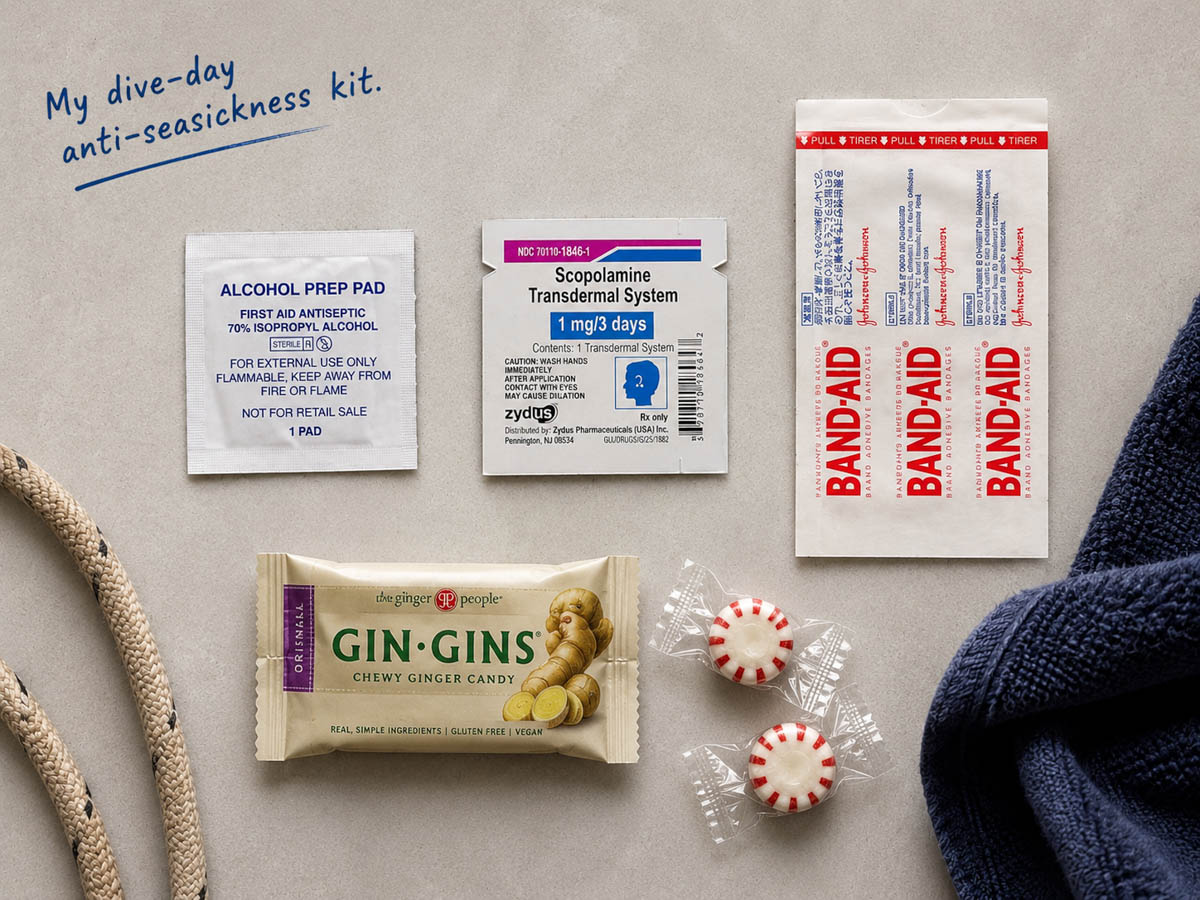
Step 0: Put It On Early
I personally apply my patch the night before a dive trip. Scopolamine needs time to start working, and I’ve found that applying it well ahead of boat departure works much better than trying to slap one on right before leaving the dock.
Step 1: Clean the Area
I wipe the area behind my ear with an alcohol prep pad first. Clean skin helps the patch stick better, especially in hot, sweaty, salty dive environments.
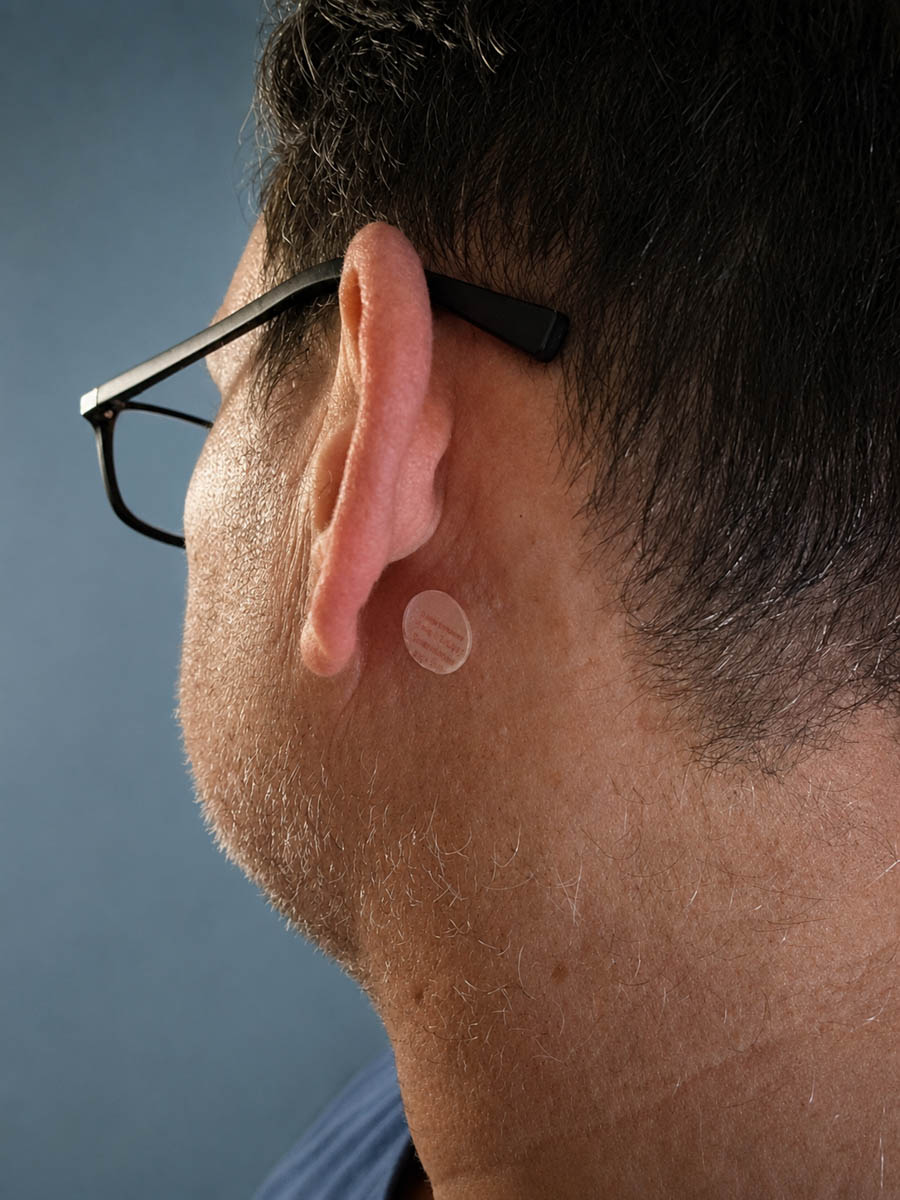
Step 2: Apply the Patch
Behind the ear. Simple enough.
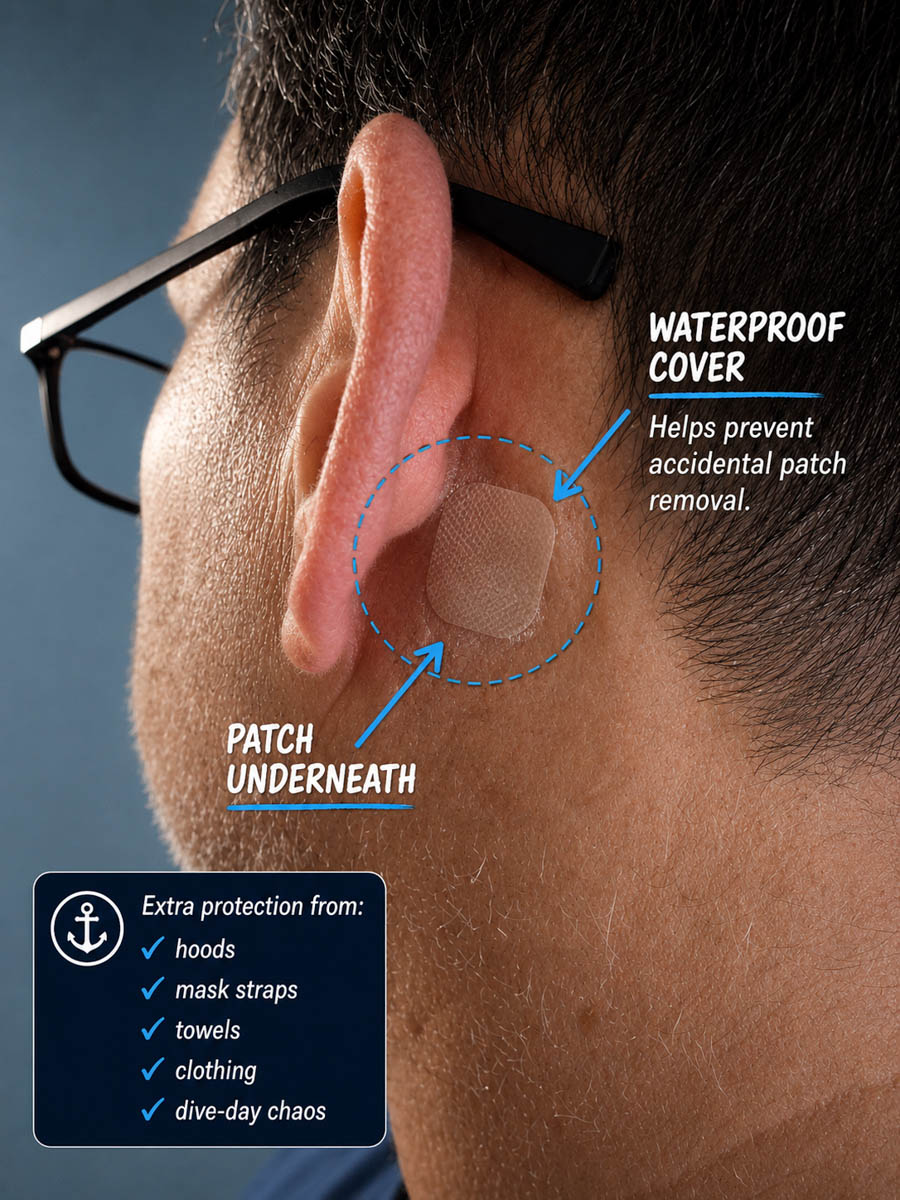
Step 3: Waterproof Bandage Over the Top
This has been huge for me. I cover the patch with a waterproof Band-Aid Hydro Seal style bandage. That extra protection helps prevent the patch from getting peeled off by hoods, mask straps, towels, clothing, random chaos, or the universe.
Step 4: Be Careful With Hoods
Nothing ruins your day quite like unknowingly launching a prescription patch into the ocean while gearing up. Ask me how I know.
My Personal Seasickness Survival Rules on the Boat
Over the years, I’ve learned that avoiding seasickness isn’t just about medication. It’s about avoiding triggers. And I have learned my triggers the hard way. Violently.
Rule #1: Don’t Overeat
This may honestly be the biggest one for me. If I board a dive boat overly full, my body immediately begins plotting revenge. And through painful experimentation, I learned that a gigantic bowl of Fruity Pebbles before a dive trip is an exceptionally bad idea. Not only did it come back up… it came back up scratchy and rainbow-colored, like some kind of furious unicorn revenge attack. There are moments in life you never forget. That was one of them.
Rule #2: Avoid Greasy Or Acidic Foods
Greasy sausage before a rough boat ride? Absolutely not. Orange juice? Dangerous gamble. Coffee? Complicated relationship. I still drink coffee sometimes because I’m human and weak, but I usually soften the blow with enough milk to calm the acid apocalypse. Cranberry juice tends to treat me much better.
Rule #3: Avoid Going Below Decks
This is a huge trigger. If you put me below decks without visual reference to the horizon, my body starts speedrunning nausea. For me, below deck equals: darkness + motion + confusion + regret. Absolutely barf-tastic combination.
Rule #4: Sleep If Possible
This one sounds weird, but it works for me. If I sleep on the boat, I often reset the nausea timer. Because yes, I genuinely feel like my body has an internal countdown clock. At around the two-hour mark of being awake on a moving boat, the queasiness starts creeping in hard. Sleep interrupts that cycle.
Rule #5: Stay Near The Center Of The Boat
The further you move from the center of the boat, the more motion you experience. Front of the boat? Hard pass. Upper deck? No thank you. Back near the engines and diesel fumes? Absolutely cursed. Center of the boat is where I try to live.
Rule #6: Avoid Diesel Fumes
Diesel fumes and seasickness combine together like Voltron. A horrifying nausea robot.
Rule #7: Stay Upwind Of Other Sick People
Listen. If somebody else starts throwing up nearby, move. Immediately. Apparently misery loves company, and barf is contagious psychologically. The sound alone can trigger sympathetic gagging across an entire dive boat population. Nature is beautiful.
The Reality of Motion Conflict: Low Stats vs. Strategic Dive Days
Ironically, once I’m actually underwater? I usually feel great.
The boat ride is the enemy. The surface interval is suspicious. But underwater? Peaceful. Weightless. Calm.
It’s honestly one of the reasons I stuck with diving despite all this nonsense. The ocean itself rarely makes me sick. Getting to the ocean is the problem.
And before anything else needs to be said: Seasickness is not a character flaw.
It’s not weakness. It’s not toughness. It’s just how some vestibular systems respond to motion conflict.
Some divers win the genetic lottery. Some of us become intimately familiar with buckets. If you struggle with seasickness while diving, you are absolutely not alone. Some of us just rolled low stats in the vestibular system category.
But that doesn’t mean diving is off the table. It just means you may need to approach dive days strategically.
Experiment carefully. Talk to your doctor. Figure out your triggers. Find what works for your body.
And maybe… just maybe… avoid the family-sized bowl of Fruity Pebbles before boarding a boat.
Trust me on that one.
Comments