




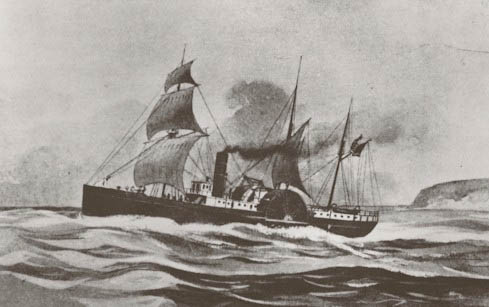

The arrival of the steamship Brother Jonathan in Fort Victoria on March 12, 1862, marked the beginning of a catastrophic era for British Columbia. Among the 350 people on board was a Californian gold seeker who unknowingly carried the smallpox virus. This single arrival ignited a massive outbreak that tore through the province, resulting in a disproportionate and heartbreaking loss of life within Indigenous nations.

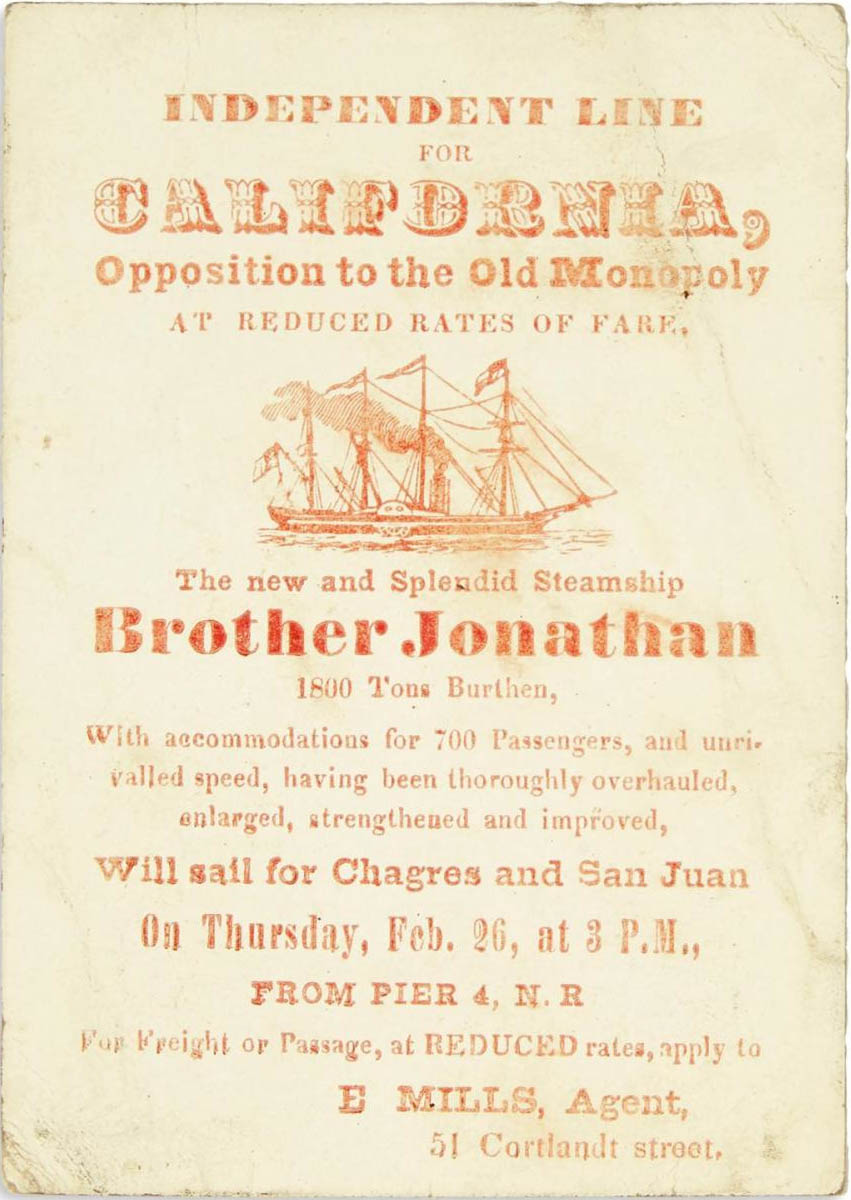
Constructed in Williamsburg, Brooklyn, by the firm Perrine, Patterson, and Stack, the vessel was first launched on November 2, 1850. The ship was the brainchild of Edward Mills, a New York entrepreneur looking to capitalize on the shipping demands of the California Gold Rush. Named after the “Brother Jonathan” folk figure : a personification of New England—the steamer originally measured nearly 221 feet in length and 36 feet in width. It gained immediate fame on its New York-to-Panama route by completing its maiden round-trip in a record-breaking 31 days. During this era, travelers would disembark in Panama, cross the isthmus, and board a separate vessel to complete their journey to the gold fields of California.
In 1852, the vessel was acquired by the tycoon Cornelius Vanderbilt, whose enterprise managed a specialized transit route through Nicaragua. However, by 1861, the ship’s condition had deteriorated significantly. It was subsequently bought by the California Steam Navigation Company, which performed extensive renovations and returned the ship to its original name. Reassigned to the northern corridor between San Francisco, Portland, and Vancouver, it became a vital link for miners traveling to the Salmon River Gold Rush. The overhaul was a success; the vessel became celebrated as a premier Pacific steamer, known specifically for its impressive speed, maintaining a consistent 69-hour transit time in both directions.

Despite its reputation for swift travel, the Brother Jonathan is most infamously linked to a catastrophic health crisis. Among the 244 people on board was an individual carrying the smallpox virus. Once the ship docked, the disease moved with terrifying speed from the gold seekers into the vulnerable camps of Indigenous populations across British Columbia. This outbreak, carried alongside a valuable cargo of gold, resulted in a lethal epidemic that devastated local communities.
Following the arrival of the Brother Jonathan, the smallpox virus tore through migrant settlements with devastating speed. Rather than implementing essential public health measures like quarantines or vaccinations, the British colonial authorities responded by incinerating the encampments. The Indigenous residents were then forcibly displaced and sent back to their home territories. This forced migration acted as a catalyst for the virus, carrying it deep into coastal regions where it became incredibly deadly. The scale of the 1862 smallpox epidemic is reflected in the staggering, though varying, mortality figures provided by historians and researchers.
Anthropologist Robert T. Boyd from Portland State University calculates that 14,000 Indigenous individuals along the coastline perished by the close of that first year alone. Other scholarly accounts are even more grim, suggesting the death toll reached at least 30,000 as the virus continued its path. This loss represented at least half of the coastal Indigenous population, creating a landscape of abandoned settlements and mass burial sites. The resulting societal breakdown and deep communal trauma left the region vulnerable, significantly easing the path for further colonial expansion.
Shortly after departing San Francisco for its final journey toward Portland and Victoria, the Brother Jonathan was overtaken by a fierce gale. The turbulent weather left most passengers confined to their cabins with seasickness. Although the steamer found temporary shelter in Crescent City on Sunday, July 30, 1865, the conditions worsened significantly once it returned to the open ocean. Near the border of California and Oregon, the captain attempted to retreat to the safety of the harbor, but the vessel struck a submerged rock during the turnaround. The impact was catastrophic; a heavy ore crusher in the cargo hold plummeted through the hull, which had been recently repaired. Realizing the ship was sinking rapidly, the captain gave the order to abandon ship just minutes after the collision.
The evacuation was marked by chaos and heartbreak. Despite having an adequate number of lifeboats for everyone on board, the violent seas made launching them nearly impossible. The first boat to hit the water overturned immediately, while the second was crushed against the side of the sinking steamer. In the end, only one surfboat, carrying nineteen people, including several women and children, successfully reached the shore. Though rescuers in the harbor attempted to assist the foundering vessel, the intensity of the storm forced them to turn back, leaving the rest of the passengers and crew to the mercy of the sea.
When the vessel set sail for the last time, it was essentially a floating treasury. Its hold was filled with significant gold shipments meant for government obligations and commercial deliveries for Wells Fargo. This official cargo was supplemented by the private wealth of the travelers, much of which was stored alongside gold bars and fine jewelry in a secure onboard safe. The sheer scale of this wealth was enormous; by current financial standards, the gold lost in the wreck would be worth a staggering $50 million, making the ship one of the most valuable maritime losses of its time.
Comments