



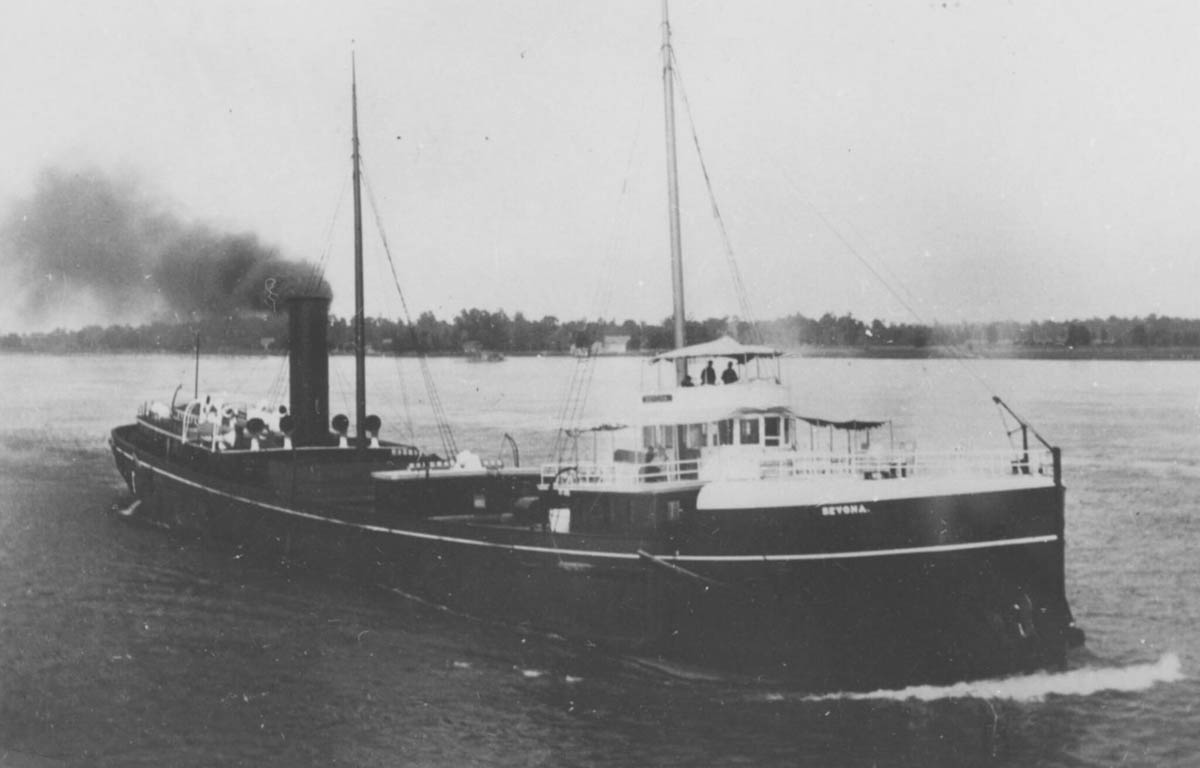
The Sevona was a steel-hulled freighter that went down in Lake Superior near Sand Island, located in Bayfield County, Wisconsin.
When the Sevona departed from the Allouez ore docks near Superior the night before, the weather forecast had predicted clear conditions. Bound for Erie, Pennsylvania, the steel steamship was transporting 6,000 tons of iron ore and a few passengers. In total, there were twenty-four people on board, including four women.

Later that night, an unexpected storm swept through the area. By midnight, winds had intensified to gale force. Around 6:00 a.m. on September 2, the Sevona struck a shoal and split in two. With no nearby ships able to offer assistance, the crew on the stern section launched lifeboats to escape. Meanwhile, those stranded on the bow, cut off from the lifeboats, were forced to build a raft using hatch covers and doors. Tragically, all those on the improvised raft perished in the storm. (7) The severe weather also claimed three other vessels, including the schooner-barge Pretoria.


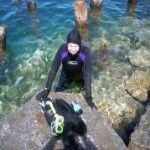
In 1909, the United States Army Corps of Engineers, concerned that the Sevona wreck posed a danger to navigation, used dynamite to destroy what remained of the ship. Some portions of the vessel were retrieved and brought ashore after the blast, while the remaining structure eventually became a popular destination for scuba divers. Today, the wreck site is jointly overseen by the Wisconsin Historical Society, the Apostle Islands National Lakeshore, and the Wisconsin Department of Natural Resources.
Sam Fifield, a former Lieutenant Governor of Wisconsin, owned a summer retreat on Sand Island and recovered some of the Sevona’s debris. Using this salvaged material, he constructed a cottage on the island, which he named the Sevona Memorial Cottage. The building still stands and has been preserved over the years.

In 1993, the site of the Sevona wreck was officially listed on the National Register of Historic Places.
Comments