






When we published our recent report on Record-Breaking Diver Luca Pedrali’s death during exploration at Su Gologone in Sardinia, the response was immediate. Readers flooded our inbox and social feeds with one burning question: Why would anyone cave dive?
For those who have never entered an overhead environment, it can seem unfathomable that anyone would willingly swim into darkness, knowing that a direct ascent to the surface is impossible. Yet, among those who do, the reasons are as complex and compelling as the labyrinths they explore.

Walter Pickel, Public domain, via Wikimedia Commons
Exploration and the Pull of the Unknown
Cave diving attracts explorers who feel an almost magnetic pull toward what lies beyond the next restriction. Legendary diver Rick Stanton once described it as the chance to “explore where no man has been before.” For him, the thrill isn’t in the danger but in the discovery – finding new passages, mapping hidden tunnels, and connecting systems that have never been seen by human eyes.
Early pioneer John Stewart Buxton explained his motivation simply. As a dry-caver who found water at the end of a passage, he couldn’t stop wondering “what was at the other end.” That curiosity, shared by generations of divers since, continues to fuel the exploration of underwater worlds that remain largely unmapped.
For many, the act of going where few have gone is a deeply personal challenge. It’s not about adrenaline but about discovery, both external and internal.

Photo by Thant Aung on Unsplash
Beauty, Awe, and Connection
Cave divers often describe their experiences in spiritual terms. Explorer Jill Heinerth has said that swimming through subterranean rivers feels like “being in the veins of Mother Earth,” a reminder of how intimately connected these environments are to the planet’s life systems.
Fellow diver Cristina Zenato calls caves “the closest environment we have to space.” For her, the isolation and silence strip life down to the essentials. “Time does not tick,” she explains. “I live in the now.”
It’s a sentiment echoed across countless accounts from the community: the allure lies not only in what divers see but in how they feel – suspended in darkness, surrounded by the ancient architecture of the Earth, utterly present in the moment.
Focus, Fear, and the Mindset of Control
Cave diving is as much mental as it is physical. Jesper Stechmann describes it as “being fully aware of everything,” where one lapse in concentration can have fatal consequences. In the words of one Reddit user, “You have to focus intensively on one thing and not think about the crap going on in the world.”
That level of concentration is what many divers find addictive. Another community member wrote, “It’s addictive. Going places that few people will ever see.” These sentiments, echoed in online forums and personal blogs, reveal how cave diving can serve as a meditative escape – an immersion so total that fear becomes focus.
Even Heinerth has admitted that her work “terrifies most people,” but she uses fear as a tool, not a deterrent. It sharpens awareness, forces precision, and keeps her alive. As she once wrote in Scuba Diving Magazine, “An error may limit my chance of survival to a single breath.”
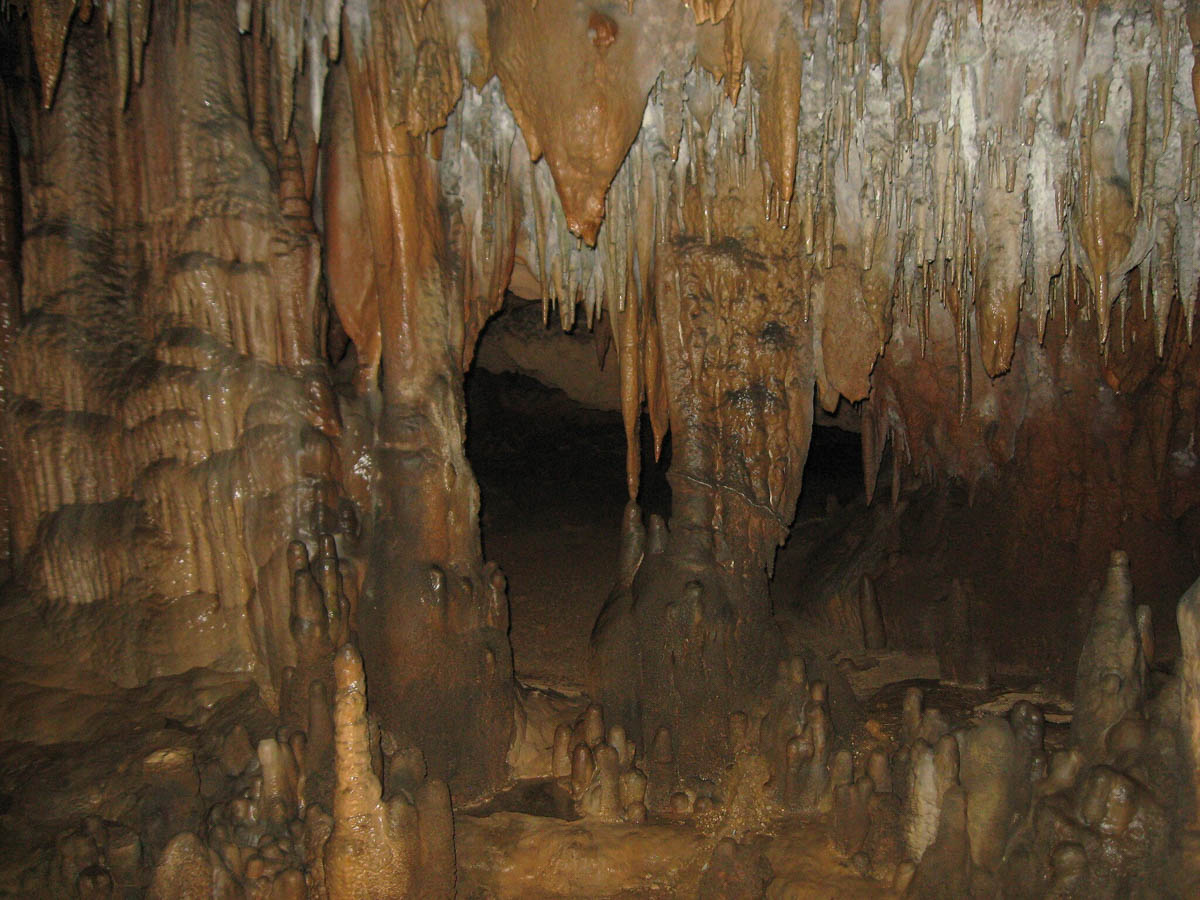
Bruin79, CC BY-SA 4.0, via Wikimedia Commons
Challenge and Mastery
The appeal also lies in technical mastery. Phil Short recalls reading The Darkness Beckons and feeling compelled to “venture deep underwater to some long-forgotten places.” The complexity of gas management, line-laying, and navigation transforms each dive into an intricate puzzle.
For some, the motivation is progression. As one diver explained in a TDI blog, “My motivation was not to become a cave diver, but to expand my skills … I didn’t want my abilities to be the limiting factor.” Cave diving represents not recklessness, but competence under pressure – a mindset that values discipline as much as daring.
Community, Heritage, and Identity
Cave diving is built on mentorship, camaraderie, and shared respect for risk. Divers often form tight-knit circles based on trust and training. The late Artur Kozłowski embodied this spirit – pushing boundaries while documenting and sharing his explorations so others could learn safely from his work.
Many divers see themselves not as adventurers but as stewards of the underground world. Stanton once said he views himself “less as a diver and more as an underwater explorer.” The distinction matters: for those who cave dive, it’s not about bravado. It’s about preserving, understanding, and respecting what lies below.
Risk and Reality
Cave diving’s dangers are not overstated, but they are often misunderstood. In the words of one experienced diver on Reddit, “Caves are hazardous … you have to solve your problem in place or be prepared to swim out, which can be several hundred yards or more.”
The overhead environment allows no shortcuts. Visibility can vanish in seconds, gas management is unforgiving, and orientation errors are often irreversible. Yet, those who train rigorously argue that the activity, when done correctly, is statistically safer than it appears.
As another diver commented, “Most trained and equipped cave divers are actually incredibly safe … Cave diving and extremely deep open water diving are pretty safe statistically speaking, as long as you have the right equipment, experience, and support.”
The consensus is clear: the majority of fatalities occur when divers exceed their training, ignore limits, or enter caves without proper equipment or guidance. Within the community, safety is culture, not suggestion.
After Pedrali: What the Feedback Revealed
The loss of Luca Pedrali at Su Gologone resonated deeply with divers and non-divers alike. For many outside the technical community, it was a shocking reminder of the risks involved. For those within it, it was a call to reflection – not on whether cave diving should exist, but on why it continues to inspire.
This feature isn’t written from personal experience; it reflects the words of those who live it. They speak of beauty, mastery, exploration, and self-discovery – of entering the darkness not to court death, but to touch something ancient, hidden, and profoundly alive.
To the outside world, that may never make complete sense. But to cave divers, that mystery is exactly the point.
Comments