





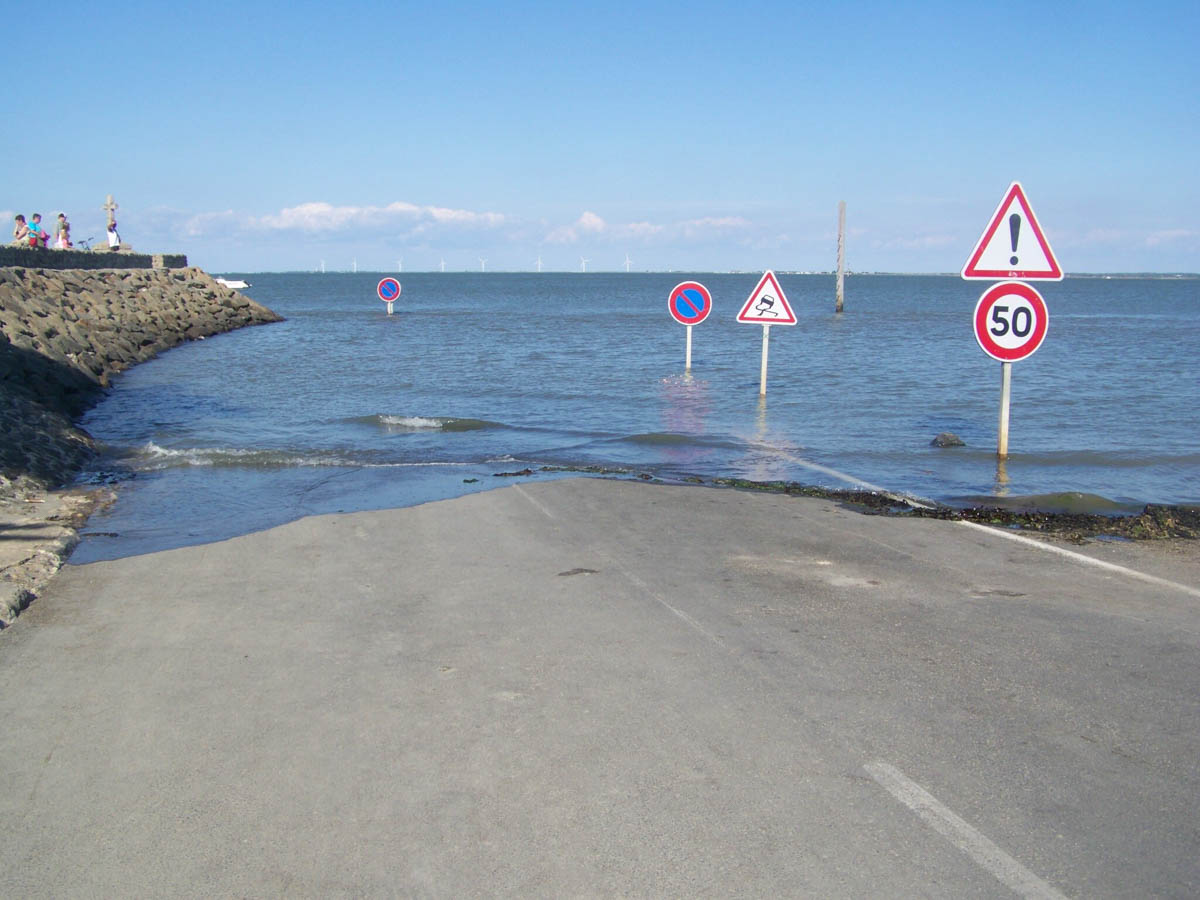
The Gôa, also known as the Passage du Gois, is a causeway that connects Beauvoir-sur-Mer, in Vendée, on France’s Atlantic coast, with the island of Noirmoutier. The causeway is twice a day inundated by high tide and spans 4.125 kilometres (2.6 miles). Along the causeway is a road.
The Foulées du Gois, a foot race, is held annually across it beginning at the beginning of high tide.
In the second stage of the 1999 Tour de France, the Passage du Gois was traversed. The slick surface resulted in a crash that proved to be contentious. A six-minute separation in the peloton caused by the incident destroyed the chances of several of the race’s favourites, including Alex Zülle, who would go on to finish second overall.

In the 2011 event, the Passage du Gois served as the opening stage’s starting location once more.
Prior to traversing the Gois channel, confirm the tide times. If the average coefficient is higher than 70, you can cross 1.5 hours before low tide and 1.5 hours after low tide. Not only is the Gois tunnel a legendary route that connects Noirmoutier Island to the continent, but it’s also a gifted transformist that can emerge in two distinct ways. The Gois always have a theatrical flair, whether they are concealed or emerging, and they always put up a delightful show for their audience.
Comments