



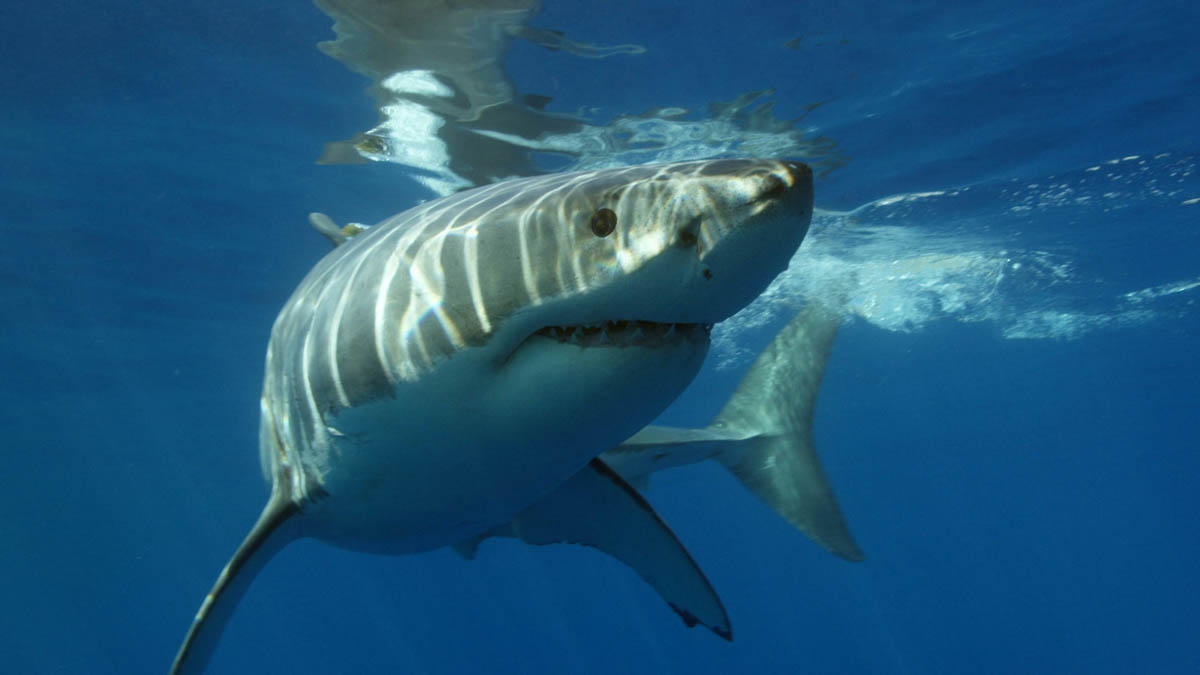
A recent close encounter between scuba divers and a great white shark off South Australia’s south-east coast has drawn renewed attention to a region already experiencing heightened shark activity. According to reporting by ABC News Australia, the incident occurred near Carpenter Rocks, an area well known to local divers for its dramatic limestone reefs, kelp forests, and seasonal pelagic visitors.
The divers involved described a calm but intense encounter with a large white shark estimated at around three metres in length. Footage shared publicly shows the shark passing within close range before moving away, an interaction that marine experts have characterised as investigative rather than aggressive. Authorities reiterated that such behaviour is typical of great whites in temperate southern Australian waters, particularly in areas where seal populations and migratory fish are common.

A Pattern of Recent Sightings
The Carpenter Rocks encounter does not appear to be an isolated event. In the days surrounding the incident, regional “shark alert” notices circulated on community and emergency channels along the Limestone Coast, warning water users of confirmed white shark sightings near Cape Banks and neighbouring dive sites. These alerts align with broader reporting on increased shark activity across southern Australia during the austral summer, a period when warmer water temperatures and prey movement bring apex predators closer to shore.

Additional national coverage has highlighted that shark sightings and beach closures have been reported across multiple states in recent weeks, reinforcing the idea that the South Australian encounter forms part of a wider seasonal pattern rather than a single anomaly. While these reports do not all relate directly to divers, they provide important context for understanding why encounters are being recorded more frequently in 2026.
What This Means for Divers
For divers operating in South Australia, particularly along the Limestone Coast and around known seal colonies, the incident serves as a reminder rather than a warning to stay out of the water. Great white sharks are a protected species in Australian waters, and encounters, while rare, are an established part of diving in this region. Local operators and experienced divers stress that awareness, planning, and adherence to established safety practices remain the most effective risk-management tools.

These include avoiding spearfishing activity on scuba, limiting dawn and dusk dives in high-risk areas, and staying informed through local shark alert systems before entering the water. Importantly, marine biologists continue to emphasise that the overall risk to divers remains extremely low when compared to other everyday activities, even in regions where white sharks are present.
Context, Not Crisis
From an editorial perspective, the Carpenter Rocks encounter underscores the reality of diving in biodiverse, predator-rich ecosystems rather than signalling an escalation in danger. South Australia has long been recognised as one of the world’s key habitats for great white sharks, and responsible diving has coexisted with their presence for decades.
As sightings continue to be reported through the summer season, divers in the region are encouraged to view these encounters through an ecological lens. Seeing a great white in its natural environment is a powerful reminder of why these waters are so biologically significant, and why informed, respectful interaction with the marine environment remains central to safe and sustainable diving in Australia.
Comments