




Thousands of commuters cross Sydney Harbour every day without realising that a remarkable piece of maritime history lies directly beneath their ferry routes.

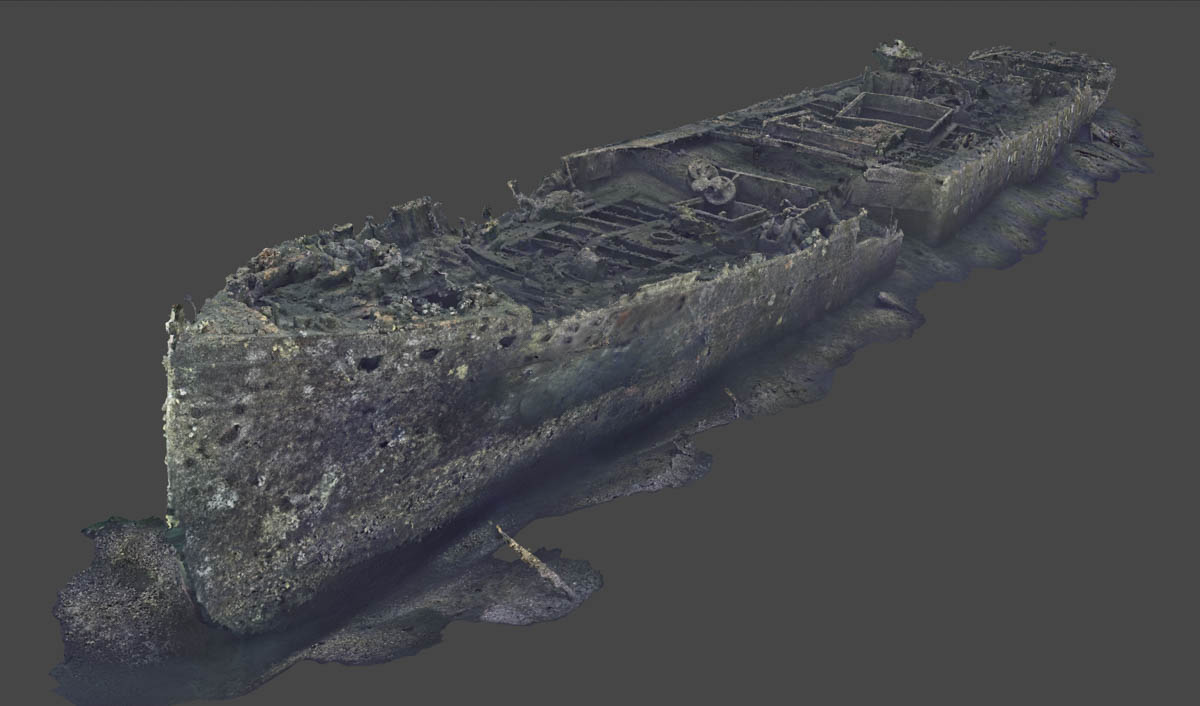
Now, an extraordinary new interactive 3D model has brought the TSS Currajong shipwreck back into view, allowing the public and maritime historians to explore the wreck in unprecedented detail more than a century after the vessel sank.

The project, created by the underwater documentation team submerg3d, digitally reconstructs the wreck using thousands of high-resolution images captured during a challenging dive survey beneath one of Australia’s busiest waterways.


A Forgotten Wreck Beneath Busy Ferry Routes
The wreck lies off Bradleys Head in Sydney Harbour, directly beneath modern ferry routes used by thousands of daily commuters.
Despite its location in one of Australia’s most iconic waterways, the Currajong remained largely unseen for generations due to the difficulty of diving the site. Strong currents, poor visibility that can drop below one metre, and seasonal bull shark activity make it a challenging environment even for experienced divers.

The newly released digital model changes that. Anyone can now explore the wreck virtually, revealing details that previously could only be studied during short, carefully timed dive windows.

The Story of the Currajong
The vessel began life as The Clarence before later becoming known as TSS Currajong, entering service in 1883 as part of Australia’s historic “sixty miler” fleet.
These coastal steamers were the backbone of Sydney’s industrial growth. They transported coal from the Hunter and Illawarra regions to the city, supplying homes, factories, and visiting steamships with vital fuel.
The Currajong’s working life ended abruptly on 10 March 1910.
While entering Sydney Harbour carrying coal from Bellambi, the ship was struck by the SS Wyreema, which was travelling on the wrong side of the shipping channel. The collision caused catastrophic damage.
Crew members attempted to beach the vessel at Bradleys Head, but the effort failed. The Currajong sank within minutes, claiming the life of one crew member.


The Wreck Tells the Story
More than a century later, the wreck still preserves the moment of its final struggle.
The 3D model clearly shows the collision damage and even reveals the rudder locked hard to starboard, evidence of the crew’s final attempt to steer the ship toward shore before it went down.
Today the Currajong is one of the largest and most intact shipwrecks in New South Wales waters. It offers a rare window into the design of coastal coal carriers and the working conditions of maritime crews during the late nineteenth and early twentieth centuries.
Because of its historical significance, the wreck is protected under New South Wales maritime heritage law.
Capturing a Digital Twin of the Wreck
Creating the model required an extensive underwater survey.
Over a period of two and a half months, a three diver team captured more than 10,000 high resolution images of the wreck. These images were later processed over several months to produce an accurate digital twin of the site.
The survey dives themselves were complex operations. The team relied on dive propulsion vehicles, multiple cylinders, and carefully planned dive windows to safely work beneath the harbour shipping lane.
The result is one of the most detailed visual records ever produced of a historic Australian shipwreck.
Preserving Maritime History
The digital model does more than provide a new way to explore the Currajong. It also preserves the wreck for the future.
Like many shipwrecks, the Currajong will eventually collapse and deteriorate on the harbour floor. By capturing it in such detail today, the survey team has created a permanent digital record that will allow historians and divers to study the vessel long after the physical structure is gone.
For divers, historians, and maritime enthusiasts, it is a rare opportunity to explore a hidden wreck that has quietly rested beneath Sydney Harbour for more than a century.
Comments